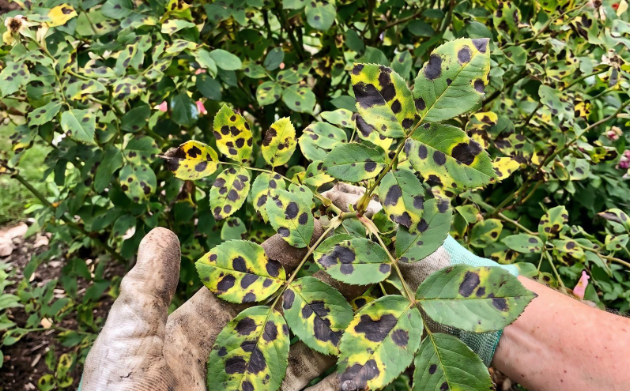
Roses can lose their beauty in just a few days. First small dark spots appear on the leaves, then they increase, the leaves turn yellow and start to fall. If nothing is done, the bush weakens, blooms worse and does not manage to prepare well for winter.
Why do black spots appear?
Most often the cause is a fungal disease that spreads quickly during warm and humid weather. Thickened plantings, watering on the leaves and poor air circulation only accelerate the development of the disease.
What to do first
Before treatment, be sure to cut off all leaves with black spots and remove them from under the bush. Do not leave the affected leaves on the ground and do not add them to the compost.
What to spray the roses with
A solution based on a copper preparation helps well. For home use, 1% Bordeaux mixture or another fungicide containing copper is often used. Spray not only the upper part of the leaves, but also the underside, as well as young shoots.
If the disease has already spread strongly, it is better to use a systemic fungicide according to the manufacturer’s instructions. Such preparations penetrate into the plant tissues and help stop the development of the fungus.
How to carry out the treatment correctly
- Choose a dry and windless evening or morning.
- Do not spray before rain.
- After 7–10 days repeat the treatment if the problem has not disappeared completely.
How to prevent reappearance
Water the roses only at the roots, regularly thin the bushes so that they ventilate well, and do not leave fallen leaves under the plants. It is prevention that best protects roses from re-infection.
If you react in time to the first black spots, the roses will quickly recover and will continue to delight with abundant and bright flowering for a long time.