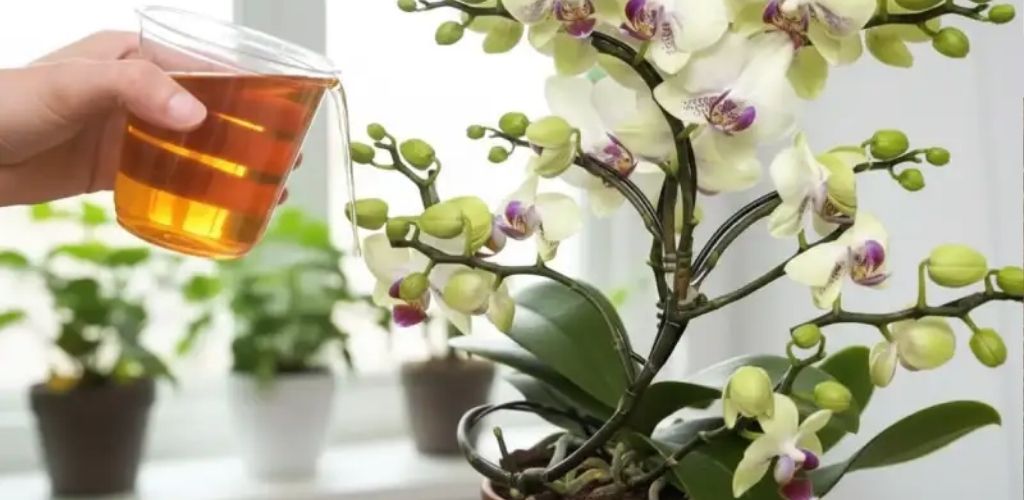
Orchids are known for their exquisite beauty and delicate flowers, making them a popular choice among plant lovers. Although orchids can be a bit finicky, with the right care and attention, you can encourage them to bloom profusely . In this article, we will look at 20 simple steps that will help your orchid bloom, turning it into a real decoration of your home or garden.
Enjoy the bloom: When the orchid blooms, admire its beauty and continue to care for it with care.
Choose the right orchid: Start by choosing a healthy plant with strong green leaves and a well-developed root system.
Provide adequate light: Orchids need bright but diffused light. Place the plant away from direct sunlight.
Maintain a stable temperature: the optimal temperature during the day is 18–24 °C, slightly lower at night.
Provide adequate humidity: Orchids grow well in a humidity range of 40–60%. Use a tray of water or mist the plant regularly.
Follow the watering regimen: water the orchid once a week, allowing the substrate to dry almost completely between waterings.
Use a well-drained substrate: repot the orchid in a special orchid mix.
Feed moderately: once a month, apply a balanced orchid fertilizer at half strength.
Prune dry stems and leaves: remove yellowed or dead parts to stimulate new growth.
Ensure air circulation: Good ventilation helps prevent mold and fungal diseases.
Choose the right pot: use a pot with drainage holes to avoid root rot.
Monitor the condition of the roots: periodically check the roots for rot or disease.
Repot as needed: Repot every 1–2 years or when the substrate begins to decompose.
Provide support: Use sticks or clips to support tall flower stalks and even growth.
Prune faded flower stalks: trim old shoots to stimulate the appearance of new buds.
Use a special fertilizer for flowering: fertilizer with a high phosphorus content promotes flower formation.
Be consistent: orchids love consistent care, so it’s important not to change the regimen.
Check for pests: watch for the appearance of aphids or mealybugs and take action as needed.
Avoid overwatering: overwatering is one of the main causes of orchid death, so it’s better to underwater than overwater.
Be patient: orchids may take time to re-bloom, so don’t be discouraged if the results aren’t immediate.