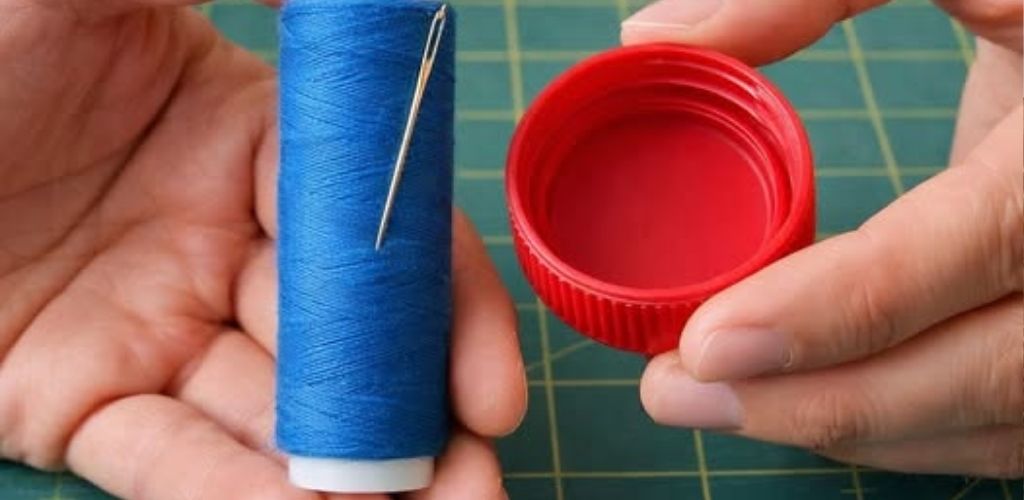
How to Thread a Needle Instantly: Easy Sewing Hacks and Tricks
Threading a needle can quickly turn a relaxing sewing project into a frustrating test of patience, but mastering a few simple sewing hacks can change everything. The secret to success lies almost entirely in how you prepare your sewing thread before attempting to pass it through the needle’s eye. Always use a pair of ultra-sharp fabric shears to cut the tip of your thread at a sharp diagonal angle, which prevents the tiny fibers from splitting and fraying. To make the tip even more rigid, you can lightly moisten it with water or a bit of saliva, flattening it between your fingers so it glides smoothly through the opening without bunching up. For more beginner-friendly textile advice, be sure to visit our [Essential Sewing Guide for Beginners] on our website.
Improving Visibility and Using the Contrast Method
Poor visibility is another major hurdle that makes learning how to thread a needle much harder than it needs to be. Working under dim household bulbs causes eye strain, so you should always position your hands directly under a bright desk lamp or near a sunny window. An incredibly effective trick used by professional tailors is to place a contrasting background right behind the needle’s eye while you work. By holding a solid piece of white paper behind a dark needle, or a black card behind a silver needle, the tiny opening will instantly pop into view, allowing your eyes to focus perfectly on the target.
Quick Solutions for Quick Threading
| Method Type | How It Works | Best For |
| The Diagonal Cut | Cleans up frayed edges at a sharp 45-degree angle | All standard cotton and polyester threads |
| The Contrast Trick | Places a white/black paper background behind the needle | Small needle eyes and low-light environments |
| The Hairspray Hack | Stiffens the very tip of the thread instantly | Thicker embroidery floss and wool yarns |
Brilliant DIY Needle Threader Alternatives
If you happen to misplace your commercial needle threader tool, there is no need to run to the craft store, as you can easily improvise one using common household items. A tiny piece of thin, flexible wire stripped from an old twist-tie or even a stiff loop of fishing line can act as an excellent makeshift guide to pull your thread through. Another popular DIY method involves spraying the tip of your thread with a tiny burst of hairspray or rubbing it against a block of beeswax to give it temporary structural rigidity. These quick, resource-driven adaptations ensure that you can keep your momentum going during any emergency mending situation without any specialized equipment.
The Importance of Patience and Steady Hands
Beyond the physical tools and materials, your mental approach plays a massive role in how smoothly your sewing preparation goes. Rushing through the process or forcing the thread when you are feeling stressed will only cause your hands to shake, making the task significantly more difficult. Take a deep breath, sit comfortably, and rest your elbows on a flat tabletop surface to stabilize your wrists and keep your hands completely steady. By executing slow, deliberate, and smooth micro-movements, your muscle memory will take over, and you will find that accuracy comes naturally when you remain calm.
With a little bit of consistent practice, these simple habits will become second nature, turning a tedious chore into a seamless, five-second step before you start crafting. Remember that even the most experienced fashion designers started exactly where you are today, relying on these identical foundational tricks to make their daily workflows smoother. If these practical sewing tips and household hacks made your DIY projects much easier today, please take a moment to subscribe to our page, give this post a big like, and share it with your friends and family on your favorite social media platforms! Let us know your favorite threading methods in the comments section below!