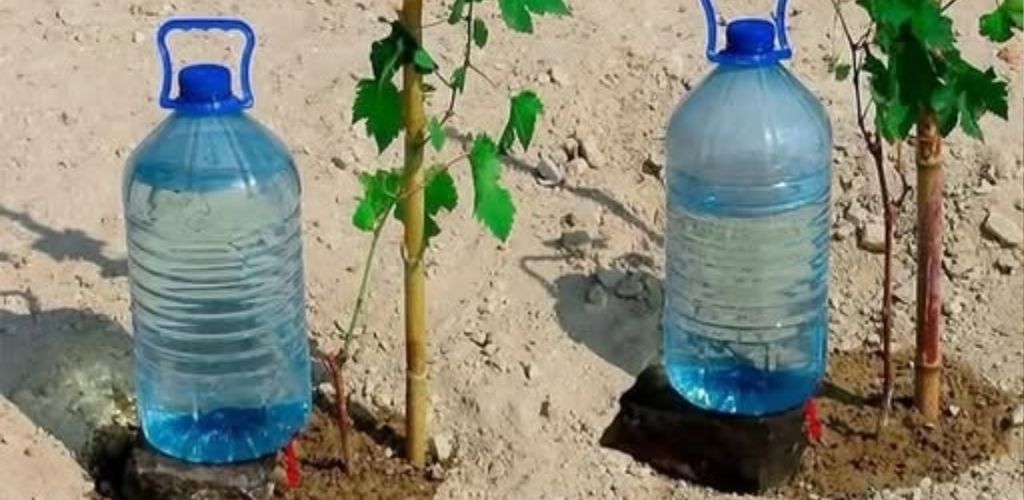
Maintaining soil moisture is a key aspect of plant care, especially during hot and dry periods ☀️. If you can’t water your garden daily, self-contained irrigation systems are an excellent solution 💧.
In this article, we’ll look at two simple and affordable ways to maintain optimal humidity levels without unnecessary expense or hassle.
🌾 Method 1: Deep Watering with a Plastic Bottle
This method is ideal for garden beds and plants that require uniform moisture 🌿.
📌 What you will need:
🏺 Plastic bottle (1.5–2 liters);
🔪 A sharp object (needle, awl or heated nail);
💦 Water;
🏕 Shovel or garden tool.
📖 How to do:
🧼 Prepare the bottle: Remove the stickers and rinse thoroughly. Mark two lines – one 15 cm from the bottom and the other 10 cm from the neck.
🛠 Make a hole: Poke a hole 7 cm from the bottom to allow water to drain out gradually.
🚰 Fill with water: Pour liquid up to the bottom mark and screw on the lid.
🌾 Place the bottle: Dig a small hole next to the plant, insert the bottle with the hole towards the roots, fill with soil up to the top mark.
🔄 Final step: Fill the bottle completely with water, leaving the neck above the soil surface.
✅ Advantages:
✔ Minimal water loss due to its gradual absorption into the roots 💧; ✔ Significantly reduces the frequency of watering ⏳; ✔ An excellent solution for vegetable crops and garden plantings 🥕🥒.
🌼 Method 2: Wick Watering for Indoor and Outdoor Plants
This method is especially convenient for indoor and balcony plants, as well as flowers in pots 🌸.
📌 What you will need:
🏺 Plastic bottle;
🧵 Thick cotton fabric or rope;
🔪 Sharp tool for holes;
💦 Water.
📖 How to do:
🧼 Prepare the bottle: Wash the container and make a small hole in the lid.
🪢 Install the wick: Thread a piece of cloth or string through the lid so that one end is inside the bottle and the other end reaches the soil.
🚰 Fill with water: Pour water into the bottle and make sure the wick is absorbent enough.
🔄 Place the bottle: Turn it upside down and place it next to the plant so that the rope touches the ground.
✅ Advantages:
✔ Maintains stable soil moisture without the risk of over-watering 🌧; ✔ Suitable for indoor and balcony plants 🏡; ✔ Requires virtually no care or monitoring ⏳.
🎯 Conclusion
These two methods will help you maintain optimal humidity levels even during extended absences 🚶♂️. They are easy to make, cost-effective, and environmentally friendly, and they make plant care much easier 🌍.
Try them in your garden or home and enjoy healthy, well-groomed plants without the hassle! 🌿✨