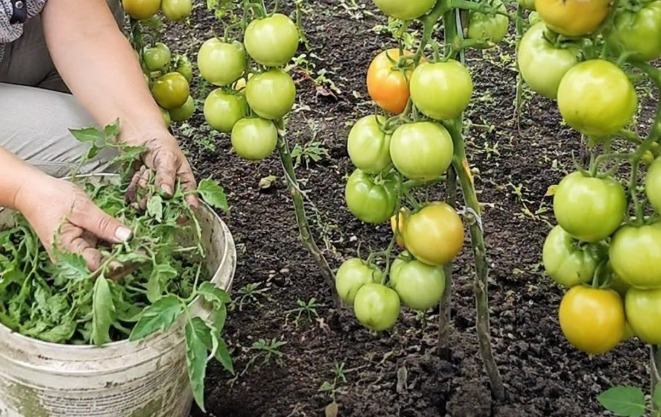
Many gardeners consider that the more leaves on the bush, the better. But this is not always so. Too dense foliage takes strength from the plant, shades the fruits and worsens air circulation. As a result tomatoes ripen longer, and the risk of the appearance of fungal diseases significantly increases.
So that the bush directs nutrition to the fruits, and not to excess greenery, leaves need to be removed gradually and at the right time.
Start with the lower leaves
First of all remove the leaves that touch the ground or are located very close to it. Exactly they most often become a source of infections after rain or watering.
Free the clusters as they ripen
When the fruits on the first cluster have already begun to fill, the leaves under it can be removed. As the following clusters grow gradually remove the leaves below them. This way the fruits will receive more sunlight, and the bush will become better ventilated.
Do not break off too many at one time
It is not worth removing half the foliage at once. At one time it is enough to remove 2–3 large leaves. Sharp pruning causes stress, and the plant can temporarily slow growth.
Do not touch the upper healthy leaves
The leaves above the clusters continue to nourish the fruits and protect them from the scorching sun. They are removed only in the case if they have yellowed, become diseased or strongly thicken the bush.
Choose the correct time
It is best to carry out pruning in the morning in dry weather. During the day the places of cuts will have time to dry, which will reduce the probability of infection. Work with a clean secateur or carefully break out the leaves with the hands, without damaging the stem.
Correct removal of excess leaves helps the bushes ventilate better, reduces the risk of late blight, accelerates the ripening of the fruits and allows the plant to direct more nutrients to the harvest. Exactly therefore tomatoes grow larger, sweeter and delight with stable fruiting until the end of the season.
This material was prepared by the editorial team using artificial intelligence tools. All information has been verified and edited before publication.