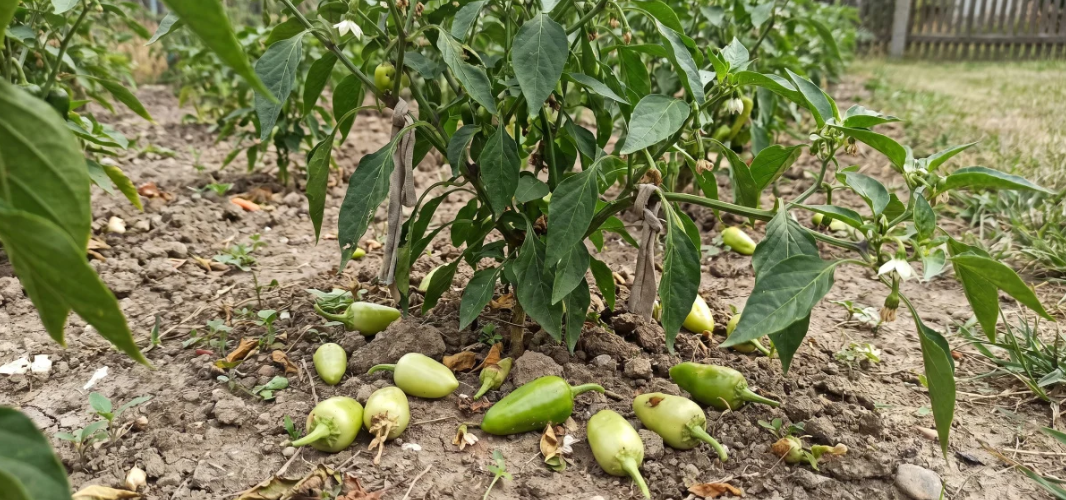
Flower drop in peppers at the beginning of July can surprise even when plants look strong and healthy green. Most often, it is not a disease, but a reaction to heat, watering fluctuations, or unsuitable fertilization.
Peppers protect their own survival in stress. When they do not have stable conditions, they simply drop part of flowers or freshly set fruits so they do not exhaust water and energy.
The good news is that the plant can flower again after removing the cause. However, quick and calm adjustment of care without sharp interventions decides.
Flower drop in peppers is not always a disease
Not every flower has to turn into a fruit. The plant naturally drops part of flowers that were not well pollinated or for which it does not have enough energy.
The problem occurs when most flowers or even small fruits drop. Then check temperature, soil moisture, nutrition, and the plant’s health status.
If leaves remain firm, without spots and without significant yellowing, it is often temporary stress. Peppers can continue growth after improving conditions.
First mistake: too high or low temperatures
Peppers love warmth, but extreme heatwaves do not benefit them. With long afternoon temperatures above approximately thirty degrees, pollen quality worsens and flowers pollinate worse.
Very warm nights worsen the problem. The plant does not rest, consumes more energy, and can drop flowers and freshly set fruits.
A sharp drop in night temperatures is equally unpleasant. Large differences between day and night cause stress, especially with young plants.
How to protect peppers from heat
During the hottest part of the day, light shading helps. Shading net should reduce strong sun, not create all-day shade.
Place the net above the plants so air flows between it and the leaves. Material laid directly on peppers can trap heat.
In a greenhouse, ventilate through doors, roof windows, and side openings. Open doors alone are often not enough to reduce temperature at the ceiling and between leaves.
Second mistake: irregular watering
Peppers like evenly moist, but not waterlogged soil. Alternation of long drought and abundant overwatering belongs among the most common causes of flower drop.
After drying, the plant closes stomata and limits growth. When it subsequently gets too much water, roots can remain without air.
Both extremes reduce the plant’s ability to maintain flowers and small fruits. The problem is more pronounced in containers where substrate dries faster.
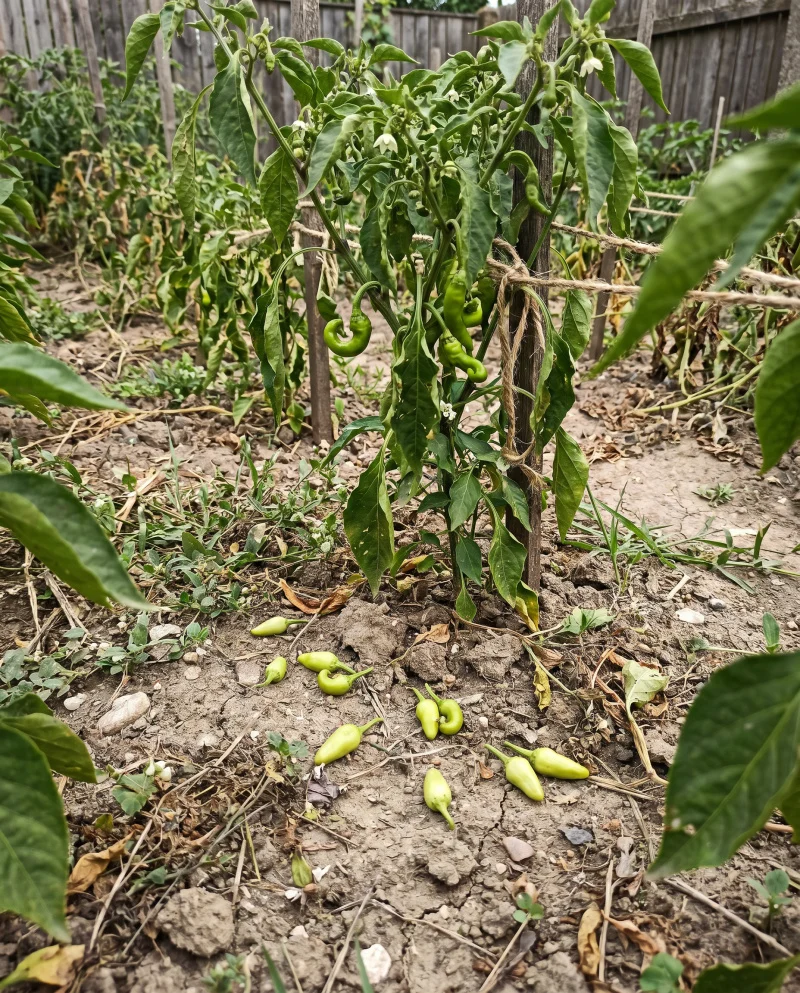
How to water peppers during July
Water early in the morning directly at the roots. Soil will have time to accept water before the greatest heat and leaves remain dry.
Before watering, check moisture several centimeters below the surface. A dry upper crust does not mean that the entire root zone is dry.
Water thoroughly but adjust frequency to soil. Sandy soil needs water more often, heavy soil holds moisture longer.
Mulch helps even out moisture fluctuations
A layer of straw, dried grass, or fine compost slows evaporation. Roots are then not exposed to sharp changes between drought and wet.
Do not place mulch directly at the stem. Leave a small free circle so constant moisture does not hold at the neck.
After rain, check if mulch did not remain clumped and waterlogged. Too thick wet layer can create a shelter for slugs and worsen air flow.
Third mistake: too much nitrogen
Nitrogen supports leaf and shoot growth. When peppers get too much of it, they can create a robust green plant with a small number of fruits.
Lush leaves consume a lot of water and energy. Flowers are harder to maintain and the plant continues foliage growth instead of crop formation.
Nitrogen excess is common after repeated use of nettle infusion, chicken droppings, or universal fertilizer with a high first number in the composition.
What fertilizer peppers need during flowering
After the start of flowering, peppers need more balanced nutrition. Potassium is important, which supports water management and fruit development.
Fertilizer intended for peppers, tomatoes, or fruit vegetables is suitable. Observe the manufacturer’s dose and do not fertilize completely dry soil.
If you recently fertilized the plants, do not add another dose just because flowers dropped. First adjust water and temperature.
Fertilizing will not solve heat stress
During heat, roots absorb nutrients more slowly. Another concentrated dose of fertilizer can increase salt content in the soil and worsen water uptake even more.
During extremely hot days, postpone fertilizing. Keep the plant evenly watered and fertilize only after weather moderates.
A weak dose is safer than an attempt to catch up growth at once. Peppers react better to regular mild nutrition.
Pollination can be another problem
Peppers have bisexual flowers and often self-pollinate. However, pollen must be released and reach the stigma.
In a closed greenhouse without air movement, pollination can be weaker. Gentle shaking of the support during a dry forenoon can help.
With very high humidity, pollen releases poorly, with extreme heat it loses viability. Therefore, pollination in unsuitable conditions will not help.
Small fruits drop with strong stress
When peppers drop an already set small fruit, it means they could not nourish it further. The most common cause is sudden drought, heat, or root damage.
The plant can also reduce too large a number of fruits. A young or weak pepper keeps only as much crop as it can nourish.
One-time dropping of several fruits therefore does not have to be a problem. Repeated and massive dropping is a warning.
Check roots and water drainage
Peppers in containers must have free drainage holes. Standing water in the saucer limits oxygen access to roots.
In a bed, compacted soil or a low place where water holds after rain is a problem. Roots in waterlogged soil cannot properly absorb nutrients.
Do not dig the soil right at the plant. Gently loosen the surface and improve drainage without damaging roots.
Watch for pests hidden in flowers
Dropping can be worsened by infestation with aphids, mites, or thrips. Small pests suck juice and damage flowers and young leaves.
Check the undersides of leaves, growth tops, and flower interiors. Look for tiny insects, sticky surface, webs, or silvery spots.
With confirmed occurrence, choose a procedure intended for the given pest. Do not spray blindly and during hot sunny day.
Disease usually manifests on leaves too
If dropping is accompanied by spots, wilting, stem rot, or significant yellowing, it may not be only stress. The plant may have damaged roots or infection.
Remove diseased parts with a clean tool and do not place them under the plant. With rapid worsening, it is suitable to determine the exact cause.
Adding water or fertilizer alone without diagnosis can worsen the condition. First monitor all symptoms, not only flowers.
Do not remove healthy leaves
During heatwaves, leaves shade fruits and cool the plant by evaporation. Radical defoliation increases fruit and soil temperature.
Remove only damaged leaves or those touching wet ground. Leave healthy leaf area.
Prune on a dry day and with clean scissors. Wet wounds are more susceptible to infections.
What to do immediately after discovering the problem
First check soil deeper and adjust watering. Then monitor temperature in the greenhouse or on a sunny bed.
If the plant is very lush and recently received nitrogen fertilizer, postpone further fertilizing. With heat, add light shading.
Make changes gradually. Sudden overwatering, strong fertilizing, and radical pruning in one day represent additional stress.
- Keep soil evenly moist without long drought and waterlogging.
- During extreme heatwaves, lightly shade peppers and ventilate the greenhouse.
- Limit nitrogen and use balanced fertilizer for fruit vegetables.
- Check flowers and undersides of leaves for pests.
- After adjusting conditions, give plants time for new flowering.
When peppers will start again
After moderating temperatures and stabilizing watering, plants can create new flowers within several days to weeks. It depends on their strength and the length of the stress period.
Monitor new flowers without unnecessary intervention. If they remain on the plant and small fruits appear, conditions have improved.
Old dropped flowers you will no longer replace, but the next part of the season can bring a good harvest. Peppers can fruit for a long time with favorable autumn.
Three mistakes can be corrected without panic
Flower drop in peppers most often relates to extreme temperature, irregular watering, or excess nitrogen. The plant thus limits the load it cannot handle at the given moment.
Adjust conditions calmly and gradually, not with a series of sharp interventions. Stable moisture, milder temperature, and balanced nutrition give peppers the best chance to set fruits again.