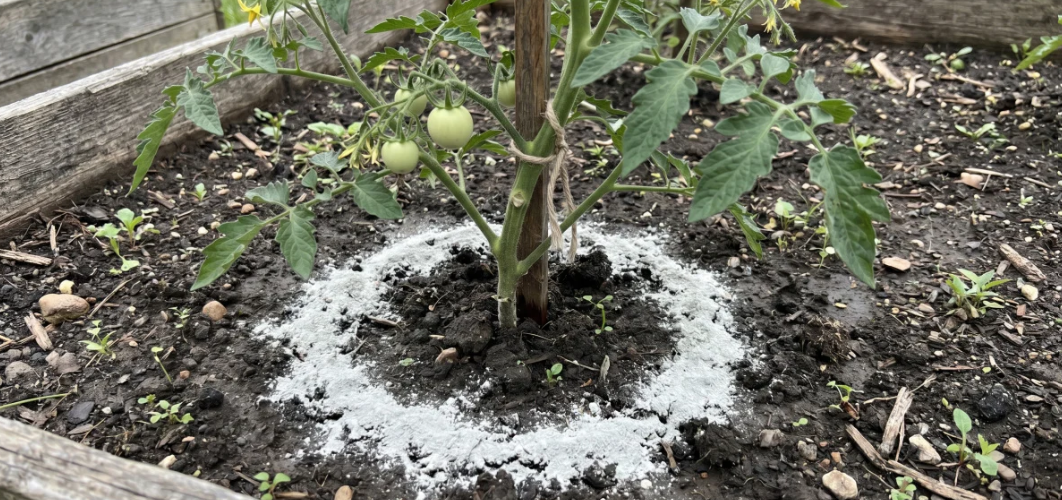
Wood ash for tomatoes after rain can create a temporarily drier surface and supplement part of minerals, but it is not a reliable means against molds. If you use it in large quantity or on alkaline soil, you can worsen nutrient uptake and weaken the plants.
After a downpour, slugs are more active and leaf diseases have favorable conditions. It is then tempting to sprinkle ash around every plant without checking the soil.
Ash, however, is not ordinary dry powder. It contains especially calcium, potassium, and other minerals, so it acts simultaneously as a strongly alkaline soil supplement.
Wood ash for tomatoes after rain has limited effect
Dry ash can for a short time change the soil surface to dusty and unpleasant for slugs. Fine particles stick to their moist body and make movement difficult.
This effect lasts only as long as ash remains dry. After another rain, dew, or watering, it connects with the soil and stops functioning as a physical barrier.
Ash therefore cannot be considered permanent protection against slugs. It is only one of short-term measures that must be combined with other steps.
Against tomato mold, ash does not work as treatment
Late blight and other leaf diseases are supported by long-term moisture on leaves, dense stand, and weak air flow. Ash sprinkled on soil does not remove these causes.
It is not a registered fungicide and cannot cure affected leaves or stems. The claim that ash after rain limits mold is therefore necessary to understand very carefully.
Quick drying of the stand, morning root watering, and regular leaf control have the greatest importance. With confirmed disease, follow recommendations for permitted plant protection.
What wood ash really contains
Composition depends on wood type and burning method. Most ash contains a lot of calcium, smaller amount of potassium, magnesium, and other minerals.
It almost does not contain nitrogen because it escapes during burning. Ash therefore is not a complete fertilizer and does not replace balanced tomato nutrition.
Its alkaline components increase soil pH. This can be useful on acidic soil, but undesirable where pH is already neutral or alkaline.
Before use, check soil pH
Tomatoes best absorb nutrients in slightly acidic to neutral soil. At too high pH, availability of iron, manganese, and some other elements worsens.
The result can be yellowing of young leaves even though there are enough nutrients in the soil. Further dose of ash would worsen the problem even more.
A simple soil test is therefore better than estimation. If pH is approximately seven or higher, rather do not add ash to tomatoes.
Use only ash from clean wood
Suitable is ash from unpainted, unimpregnated, and chemically untreated wood. It must be completely cooled and without plastic or waste residues.
Ash from coal, briquettes, colored paper, or chipboard does not belong in the garden. It can contain unwanted substances and high amount of harmful elements.
Do not use ash from a fireplace where garbage was burned either. The origin of the material must be unambiguous.
How much ash is still appropriate
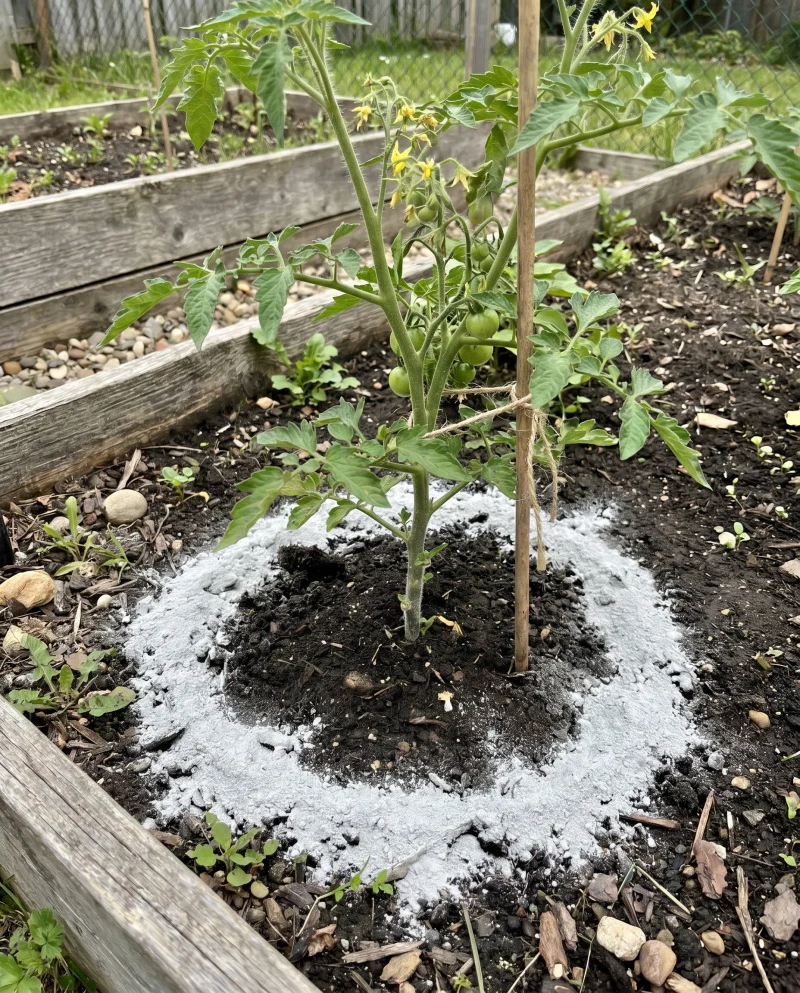
With tomatoes, use only a very thin dusting, not a continuous thick layer. Ash should not create a white crust over the whole bed.
On a small area, several tablespoons scattered in a wide area around the plant are enough. The exact amount, however, depends on pH, soil, and previous fertilizing.
If you have already added ash to the bed in spring or previous season, skip the next dose. Minerals can gradually accumulate in the soil.
Do not sprinkle ash directly at the stem
Leave a free circle of at least several centimeters at the tomato stem. Wet mixture of ash and soil can create alkaline environment right at sensitive tissues.
Sprinkle ash evenly further from the neck and gently work it only into the surface. Do not create a high ring that would retain water.
If you want a physical barrier against slugs, it must be dry and continuous. After wetting, however, do not renew it repeatedly regardless of total amount.
After rain, wait until the surface dries
Sprinkling ash on muddy soil has no meaning. It immediately wets, loses effect against slugs, and connects with the root layer.
First let the surface partially dry. Then you can use a small amount at places where slugs regularly move.
If it is going to rain again soon, postpone the application. Rain quickly washes away the barrier and can wash nutrients outside the root zone.
Ash after rain does not dry soil permanently
Fine powder can absorb part of surface moisture, but cannot dry a waterlogged bed. Water remains in deeper soil layers.
With poor drainage, drainage, compaction, or excessive watering must be solved. Further ash will not solve these problems.
On heavy soil, wet ash can create a less permeable surface together with fine particles. Therefore, carefully loosen the soil after drying.
Potassium from ash can benefit tomatoes
Potassium supports the plant’s water management, fruit formation, and tissue firmness. Tomatoes need it especially during flowering and ripening.
Ash, however, does not provide an exactly balanced dose. Potassium content changes according to wood type, so dosing is less predictable than with labeled fertilizer.
If the plant suffers from potassium deficiency, a suitable fertilizer according to instructions is more reliable. Ash can be only a mild supplement on suitable soil.
Calcium from ash will not cure blossom end rot
Black sunken spots at the ends of tomatoes often relate to irregular water supply and disrupted calcium transport to the fruit.
This does not mean that the soil always contains little calcium. Sprinkling ash therefore may not solve the problem and at high pH can harm.
Most important is even moisture, healthy roots, and non-overfertilized soil. Remove damaged fruits and stabilize watering.
Do not mix ash with nitrogen fertilizers
Strongly alkaline ash can, in contact with some nitrogen fertilizers, promote nitrogen losses in the form of ammonia. Therefore, do not apply fertilizers at the same time.
Do not mix it directly with fresh manure, urea, or concentrated infusions. Leave an interval between applications.
Ash does not belong in the layer right at the roots of young seedlings either. High salt concentration can damage fine roots.
When not to use ash for tomatoes
Skip it on alkaline soil, with yellowing of young leaves from iron unavailability, and with plants weakened by damaged roots.
Do not use it repeatedly after every rain. Even small doses add up during the season and can significantly change the chemical properties of the soil.
Do not add ash to containers without knowledge of substrate pH. Soil volume is small and change can occur much faster than in a bed.
Ash does not belong on acid-loving plants
Blueberries, rhododendrons, azaleas, and heathers need acidic environment. Ash would increase pH and limit nutrient uptake.
Do not use it near these plants either if rain could wash it to the roots. Leave sufficient distance between beds.
For acid-loving plants, use materials and fertilizers intended for low pH. Use ash residues elsewhere or hand them over according to local rules.
How to more effectively limit slugs after rain
The most reliable is a combination of multiple methods. Collect slugs in the evening or early morning when they are most active.
Remove boards, dense weeds, soaked remains, and other shelters in close vicinity of beds. Move watering to morning so the surface dries until evening.
With strong occurrence, you can use permitted baits with iron phosphate according to the label. They are more durable than ash and do not lose effect after short wetting as quickly.
Copper barriers work only with correct use
On raised beds and containers, a wide copper tape can help. The surface must remain clean and the slug must not be able to bypass it via leaf or support.
A narrow or dirty strip is usually less effective. Leaves touching the ground create a simple bridge for slugs.
Check barriers regularly after rain. They will not solve the problem by themselves if slugs are already inside the bed.
Against mold, drier foliage helps
Water tomatoes at the roots and best in the morning. Evening leaf wetting prolongs the time during which they remain wet.
Maintain spacing, tie shoots, and ventilate the greenhouse. Remove lower leaves touching soil only when the plant is dry.
After a long rainy period, check leaves daily. Treat suspicious spots in time and clean the tool between plants.
Mulch can help more than repeated ash
A layer of straw or other airy mulch limits splashing soil and maintains more even moisture. Tomatoes then suffer less from fluctuations between drought and waterlogging.
Mulch, however, must not lie directly at the stem and must not remain permanently soaked. Too wet thick layer creates a shelter for slugs.
After rain, spread it and check. If it is clumped or smells, remove part and let soil dry.
When working with ash, protect eyes and respiratory tract
Fine ash easily swirls and irritates eyes, skin, and respiratory tract. Sprinkle it during calm weather and use gloves.
Do not inhale dust and with larger amount use respiratory protection. Wash hands after work.
Store ash in a closed metal container only after complete cooling. Hidden glowing pieces can persist longer than it seems.
- Use only ash from clean untreated wood.
- First measure soil pH and do not add ash to alkaline bed.
- Sprinkle only a very thin layer further from the stem.
- Count on short-term effect against slugs until next wetting.
- Prefer dry foliage, ventilation, and regular plant control against mold.
Ash is a supplement, not a miraculous protection
Wood ash for tomatoes after rain can, on suitable soil, supplement part of potassium and short-term make slug movement difficult. It cannot, however, cure molds or long-term replace effective protection against pests.
Use it rarely, in small dose, and only after checking pH. Tomatoes benefit more from balanced nutrition, even watering, good ventilation, and quick reaction to first disease symptoms.