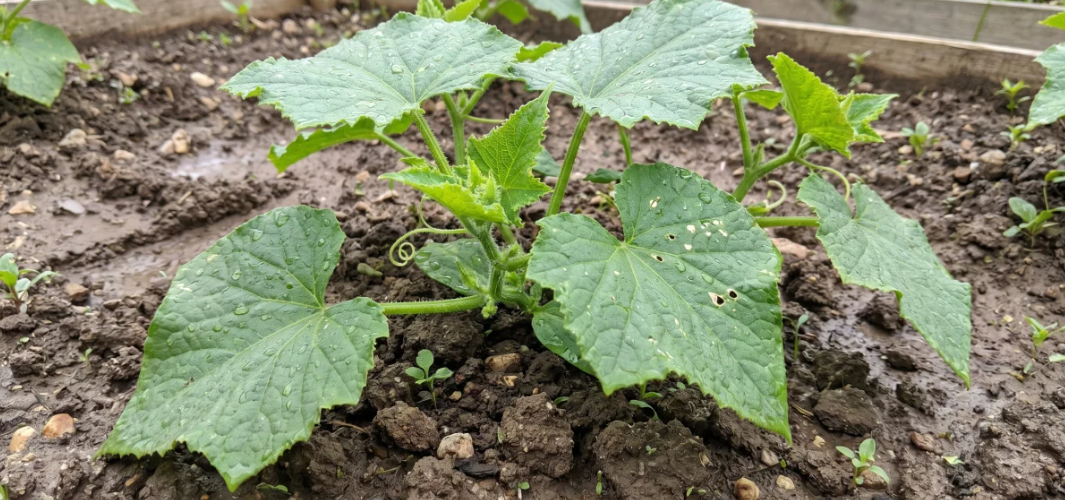
Natural fertilization does not have to cost almost nothing, but cheap mixture is not yet safe. Ash and cone infusion sound tempting, but mature compost, even watering, mulch, and regular harvest of young fruits bring a more reliable result.
Cucumbers grow quickly, have shallow roots, and during fruiting consume a lot of water. Every fluctuation therefore soon shows on leaves, number of fruits, and their taste.
The biggest mistake is looking for one miraculous liquid. Bitterness often arises not from fertilizer deficiency, but from stress, heat, drought, or overripening of fruits.
Why cucumbers sometimes become bitter
Bitter taste is caused by cucurbitacins, natural compounds typical for cucurbits. Their amount is influenced by variety and growing conditions.
Older varieties are more sensitive to bitterness. Modern hybrids have lower risk, but with strong stress, they can disappoint too.
Bitterness is strongest at the stem and just under the skin. From one bitter end, however, one cannot conclude that the whole bed needs more fertilizer.
The most common trigger is water stress
Cucumbers need evenly mildly moist soil during fruiting. Long drought and subsequent overwatering create conditions for deformed and taste-weak fruits.
Water at the roots, ideally early in the morning. Water should penetrate below the surface, not only moisten the top layer.
Before the next watering, check soil at a depth of several centimeters. Afternoon drooping of leaves with moist soil does not mean thirst.
Overgrown fruits slow further harvest
Check cucumbers every day or every other day. Fruit can easily hide under large leaves and overgrow in a short time.
An older fruit directs energy to seed ripening. The plant can then slow the formation of new flowers and young cucumbers.
Collect fruits at the recommended size for the specific variety. For pickling cucumbers, regular harvest is even more important.
Natural fertilization of cucumbers starts with compost
Mature compost supplies nutrients gradually and at the same time improves soil structure. It helps retain water without roots remaining in wet mush.
It is best to work it in before planting. During summer, you can spread a thin layer around the plants as surface fertilizing.
Do not place compost directly at the stem. Leave a small free circle so excessive moisture does not hold at the neck.
Simple cheap recipe from mature compost
Put approximately one part of mature, non-smelly compost into a bucket and pour over it ten parts of water. Mix the mixture and let it stand briefly.
After one to two days, strain the liquid. Use it diluted and only at the roots on already moist soil.
Such an infusion does not have exactly known composition, so do not use it as strong fertilizer. It is rather a mild supplement to well-prepared soil.
Compost infusion must not smell of rot
Strong rotting smell signals lack of oxygen. Rather do not use such liquid on edible plants.
Do not close the container airtight and prepare the mixture from quality compost without diseased plants, pet feces, or unknown waste.
Do not pour the infusion on leaves or fruits. For edible vegetables, it is safer to direct all homemade fertilizers only to the soil.
Is wood ash suitable for cucumbers?
Clean ash from untreated wood contains potassium, calcium, and smaller amounts of other elements. At the same time, however, it acts similarly to lime and increases pH.
It has meaning especially in acidic soil that also has low potassium content. Without knowing pH, adding it can disrupt nutrient availability.
In neutral or alkaline soil, do not use ash regularly. Excess can worsen iron, manganese, and phosphorus uptake.
Never mix ash without thinking
Do not use ash from coal, briquettes, painted, glued, or chemically treated wood. Such material can contain unwanted substances.
Do not mix ash directly with fresh manure, urea, or concentrated infusions. Leave an interval between applications.
Ash does not belong in the layer right at the roots of young seedlings either. High salt concentration can damage fine roots.
When not to use ash for cucumbers
Skip it on alkaline soil, with yellowing of young leaves from iron unavailability, and with plants weakened by damaged roots.
Do not use it repeatedly after every rain. Even small doses add up during the season and can significantly change the chemical properties of the soil.
Do not add ash to containers without knowledge of substrate pH. Soil volume is small and change can occur much faster than in a bed.
Ash does not belong on acid-loving plants
Blueberries, rhododendrons, azaleas, and heathers need acidic environment. Ash would increase pH and limit nutrient uptake.
Do not use it near these plants either if rain could wash it to the roots. Leave sufficient distance between beds.
For acid-loving plants, use materials and fertilizers intended for low pH. Use ash residues elsewhere or hand them over according to local rules.
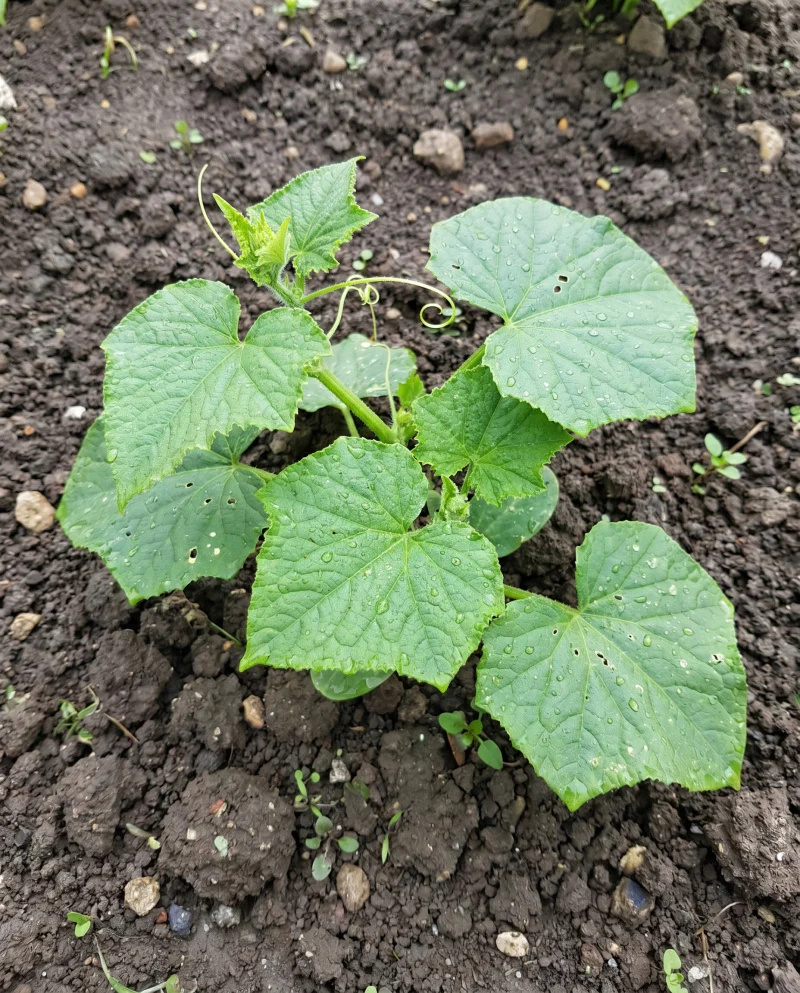
How to more effectively limit slugs after rain
The most reliable is a combination of multiple methods. Collect slugs in the evening or early morning when they are most active.
Remove boards, dense weeds, soaked remains, and other shelters in close vicinity of beds. Move watering to morning so the surface dries until evening.
With strong occurrence, you can use permitted baits with iron phosphate according to the label. They are more durable than ash and do not lose effect after short wetting as quickly.
Copper barriers work only with correct use
On raised beds and containers, a wide copper tape can help. The surface must remain clean and the slug must not be able to bypass it via leaf or support.
A narrow or dirty strip is usually less effective. Leaves touching the ground create a simple bridge for slugs.
Check barriers regularly after rain. They will not solve the problem by themselves if slugs are already inside the bed.
Against mold, drier foliage helps
Water cucumbers at the roots and best in the morning. Evening leaf wetting prolongs the time during which they remain wet.
Maintain spacing, tie shoots, and ventilate the greenhouse. Remove lower leaves touching soil only when the plant is dry.
After a long rainy period, check leaves daily. Treat suspicious spots in time and clean the tool between plants.
Mulch can help more than repeated ash
A layer of straw or other airy mulch limits splashing soil and maintains more even moisture. Cucumbers then suffer less from fluctuations between drought and waterlogging.
Mulch, however, must not lie directly at the stem and must not remain permanently soaked. Too wet thick layer creates a shelter for slugs.
After rain, spread it and check. If it is clumped or smells, remove part and let soil dry.
When working with ash, protect eyes and respiratory tract
Fine ash easily swirls and irritates eyes, skin, and respiratory tract. Sprinkle it during calm weather and use gloves.
Do not inhale dust and with larger amount use respiratory protection. Wash hands after work.
Store ash in a closed metal container only after complete cooling. Hidden glowing pieces can persist longer than it seems.
Most common mistakes with cheap fertilizing
- Mixing ash and soda without checking soil pH.
- Use of ash from coal or treated wood.
- Fertilizing with concentrated infusion into dry soil.
- Watering leaves and fruits with homemade fermented mixtures.
- Relying on untested cone infusion.
- Leaving overgrown fruits on the plant.
- Looking for fertilizer instead of solving irregular watering.
A mistake is also changing several things at once. After each intervention, give the plant time and monitor whether new growth improves.
Simple plan without unnecessary expenses
Enrich the bed with mature compost before planting. During the season, keep soil evenly moist and cover it with straw or dried grass.
Once every two to three weeks, use mild compost or diluted comfrey infusion. Always apply it only at the roots on moistened soil.
Harvest cucumbers young every day or every other day. Regular harvest and water often prolong the harvest more than a strong dose of fertilizer.
Crunchy cucumbers will not grow from a miraculous mixture
Natural fertilization of cucumbers should be simple, mild, and predictable. Mature compost, mulch, comfrey, or vermicompost will support growth without unnecessary salinization.
A mixture of ash, soda, and cone infusion is not a universally proven solution. When you maintain stable moisture and do not let fruits overgrow, you will get a crunchier harvest with less risk of bitterness.