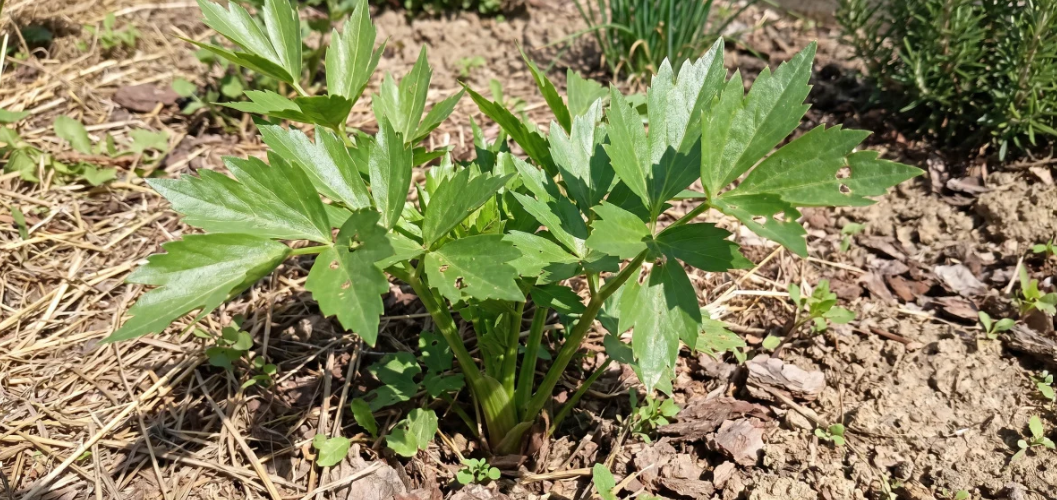
Lovage in the garden is one of those herbs that you plant well and it rewards you for years. If it gets nutritious soil, stable moisture, enough space, and regular leaf harvest, it becomes a strong perennial with a scent that can change the whole pot of broth.
Lovage is not a delicate annual herb that you throw away after the season. It can create a massive clump, tall stalks, and a strong aroma used in the kitchen in small doses.
That is why it pays to think about where to plant it. In a good place, it will grow for many years, but in heavy wet soil or complete shade, it will start to wither quickly.
Lovage in the garden needs a place for years
Lovage is a perennial herb that wakes up from roots every spring. Therefore, choose a suitable site as if it were to stay there long-term.
It does best in a sunny or slightly shaded place. It needs at least a few hours of light daily to form strong and aromatic leaves.
Complete shade under large trees does not suit it. The plant stretches there, weakens, and its leaves do not have such distinctive scent.
Protect it from strong wind
An adult lovage can grow tall and its hollow stalks can suffer in wind. Therefore, choose a calmer corner by a fence, bed, or herb part of the garden.
This does not mean it should stand in a stuffy corner without air. It needs a protected but still ventilated place so it dries quickly after rain.
If you grow it at the edge of the bed, you will have easy access to leaves. At the same time, it will not shade lower herbs and vegetables.
What soil does lovage need
Lovage likes fertile, humus-rich, and mildly moist soil. It grows best where soil holds water but does not remain waterlogged.
Neutral to slightly alkaline soil is ideal. In too acidic, poor, or heavy soil, the plant can yellow and weaken.
Before planting, dig the soil deeper, remove weeds, and work in mature compost. Lighten heavy clay soil with sand or fine gravel.
How to sow or plant lovage
Lovage can be grown from seeds or by dividing an older clump. Seeds are sown directly into soil at the end of summer, in autumn, or in suitable conditions also for pre-growing.
Sow approximately two to three centimeters deep. Leave plants a large space, approximately forty by sixty centimeters, because an adult clump quickly spreads.
Dividing an older clump is faster. It is done early in spring or in autumn when the plant is not in the greatest growth.
Growing in a pot has its rules
Lovage can also be grown in a container, but it needs a deep and sufficiently large flowerpot. A small pot dries quickly and gives little space to roots.
Put a drainage layer at the bottom and use nutritious permeable substrate with compost. The pot must have drainage holes so water does not stand at the roots.
In a pot, check moisture more often than in a bed. During hot days, the soil can dry much faster.
Watering decides about scent and leaf density
Lovage likes even moisture. When the soil dries long-term, the plant reduces growth, leaves are smaller, and aroma can be sharper but less pleasant.
Water so the soil is moist to a depth of several centimeters. It should not be muddy or flooded.
Young plants need more attention. After drying, they wilt faster, while an older rooted clump handles short drought better.
When and how to water
It is best to water in the morning or evening. In hot summer, lovage in a sunny place may need water every two to three days, in light soil even more often.
Pour water at the roots. Unnecessary wetting of leaves supports spots and slows drying in a denser clump.
If leaves wilt at midday sun, it does not have to be a disaster immediately. Check soil with a finger and water according to moisture, not only according to appearance during heat.
Mulch helps keep soil stable
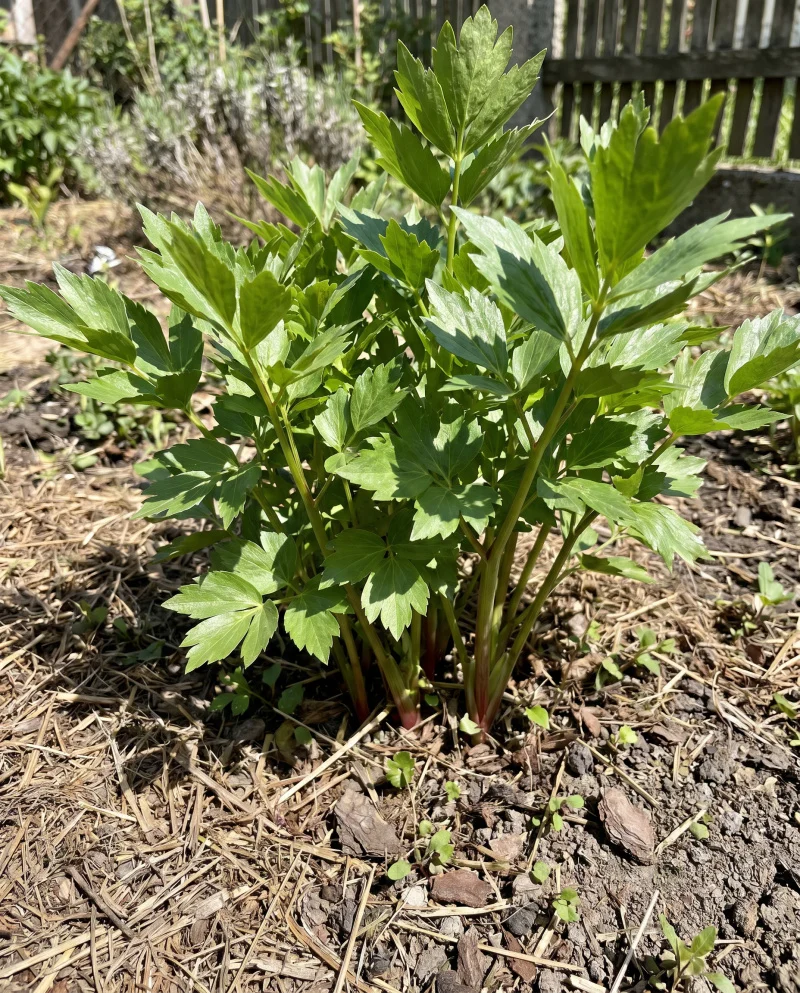
Around lovage, it pays to spread a thin layer of compost, straw, composted bark, or chopped dried grass. Mulch limits water evaporation and slows weed growth.
Do not press it directly at the plant neck. Leave a few centimeters free so excessive moisture does not hold at the base.
Mulch is useful especially during dry periods. It helps roots work in a more stable environment and the plant then forms more leaf mass.
Do not overdo fertilizing of lovage
Lovage reacts well to organic nutrition. In spring, give it mature compost or a smaller dose of granulated manure according to instructions.
From May to mid-summer, you can add diluted nettle infusion. It supplies nitrogen that supports green leaves, but do not overdo it.
Too much nitrogen can cause soft lush growth that pests and diseases attack more easily. With herbs, balance is better than fast growth at any cost.
Why remove flower stalks
If you grow lovage mainly for leaves, do not let it unnecessarily run to flower. Flowering takes energy from the plant and leaf mass is weaker.
When tall flower stalks appear, cut them off if you do not want to collect seeds. The plant then directs more strength to leaves and the clump.
If you want to support insects, you can let one part flower. With kitchen growing, however, it is better to control flowering.
How to harvest leaves for the kitchen
Harvest leaves continuously, ideally young and fresh. They have a strong taste, so use them carefully in broth, soups, and sauces.
Cut outer leaves or whole stalks, but do not cut the whole plant at once during the main season. Leave it enough leaves for renewal.
For drying, collect healthy leaves in dry weather. Dry them quickly in shade and store in a well-closed container.
Why lovage yellows
Yellowing of leaves most often relates to water and soil. The plant can suffer from drought, but also waterlogging and root rotting.
If the soil is heavy, compacted, and constantly wet, roots lack air. Leaves yellow, wilt, and the plant looks tired.
In dry sandy soil, the problem manifests similarly, but after deep watering, the plant often recovers. Therefore, always first check soil moisture.
Diseases and pests appear especially with weakening
A healthy lovage is usually not very problematic. Heavy wet soil, dense planting, and weak air flow, however, can support fungal diseases.
Pay attention to spacing and regularly remove damaged leaves. If the clump thickens too much, you can divide or transplant it after the season.
With aphids or other small insects, timely control of young shoots helps. Use strong chemical interventions with a kitchen herb only as a last resort.
- Choose a sunny or slightly shaded place protected from wind.
- Prepare soil with compost and lighten heavy soil with sand.
- Keep soil mildly moist, but never waterlogged.
- In spring, add compost or mild dose of organic fertilizer.
- Remove flower stalks if you want more aromatic leaves.
- Harvest leaves continuously and do not cut the whole plant at once.
Take health effects with reason
Lovage contains essential oils, polyphenols, and other substances traditionally associated with supporting digestion and urinary tract. In the kitchen, however, it serves mainly as a distinctive aromatic herb.
With ordinary use in food, a small amount is enough. Strong teas, extracts, or medicinal use consult with a specialist, especially with kidney diseases.
Pregnant and breastfeeding women should be careful. That the plant grows in the garden does not yet mean it is suitable in large doses for everyone.
Most common mistakes when growing lovage
The first mistake is planting in heavy, wet soil. Lovage likes moisture, but not standing water at the roots.
The second mistake is complete shade. The plant survives, but is weaker, sparser, and less aromatic.
The third mistake is letting all flower stalks without control. If you want leaves for the kitchen, flowering takes the plant’s strength at the wrong time.
The green heart of broth lasts for years
Lovage in the garden needs mainly nutritious permeable soil, mild moisture, and enough space. When you plant it thoughtfully, you do not have to establish it again every year.
Regular leaf harvest, removal of flower stalks, and spring compost will keep the clump dense and aromatic. This way, you will have at hand an herb that adds depth to broth and gives the garden permanent green certainty.