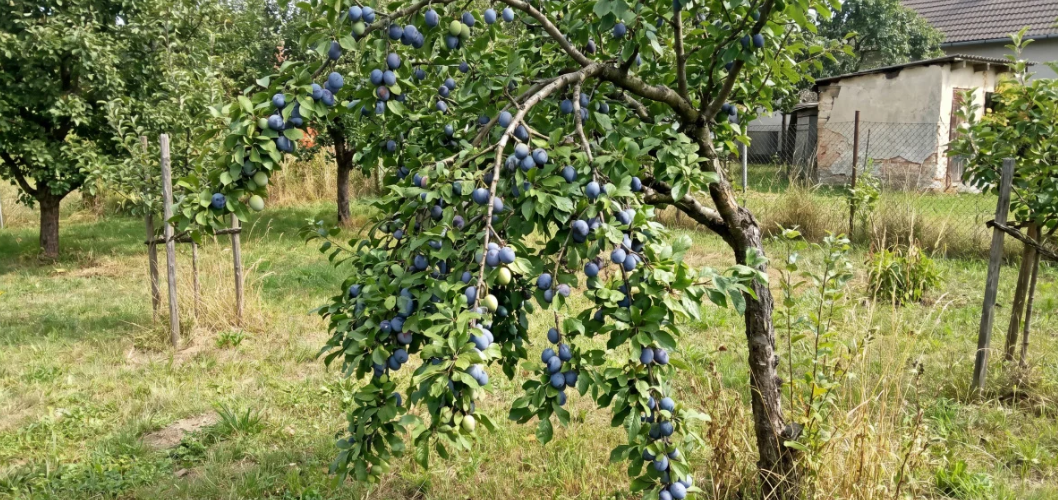
Ants on fruit trees often do not mean just ordinary insect movement on the trunk. They very often reveal aphids, sticky honeydew, and quiet cooperation that can weaken young leaves, shoots, and future harvest.
When ants constantly march on apple, plum, cherry, or sour cherry trees, it pays to pay attention. The worker ants themselves usually do not damage leaves as much as aphids, but they can protect pests from natural enemies.
Therefore, chemical spray does not have to be the first solution. In many cases, a simple mechanical barrier that interrupts the ants’ path to the crown helps.
Ants on fruit trees signal aphids
Ants seek especially sweet honeydew on trees. Aphids, which suck plant sap from young leaves and soft shoot ends, excrete it.
Aphids need to obtain nutrients from sap, so they pass a lot of liquid through their body. Excess sugars then end up on leaves as a sticky layer.
For ants, honeydew is a quick energy source. When they find it, they start regularly walking the same route and return to aphids again and again.
Why the connection between ants and aphids is so unpleasant
In nature, it is not a coincidence. Ants often protect aphids because they provide them with sweet reward.
Workers can drive away ladybugs, lacewing larvae, hoverflies, and other beneficial insects. These species would otherwise naturally reduce the aphid colony.
Some ants even touch aphids with their antennae and thereby stimulate them to excrete honeydew. The grower then sees only marching ants, but the real problem sits on the underside of leaves.
How aphids damage fruit trees
The first symptoms appear on young and soft parts of the tree. Leaves curl, wrinkle, clump, and shoot tops stop growing normally.
A young tree reacts much more sensitively than an old strong individual. It has a smaller leaf area, weaker root system, and fewer reserves for regeneration.
If aphids suck longer, the tree spends energy on repairing damage. Less strength then remains for crown growth, flower bud formation, and shoot ripening.
Sticky honeydew creates another problem
Honeydew settles on leaves, shoots, and sometimes on fruits. At first glance, it looks like a shiny sticky coating.
Over time, dark fungal coatings reminiscent of soot can develop on it. They usually do not penetrate deep into tissues, but shade the leaf area.
The leaf then uses light worse and the tree photosynthesizes more poorly. In practice, this means less energy for growth, fruits, and overall resistance.
Why there is no need to destroy all ants in the garden
Ants are not only pests in the garden. Many species decompose organic remains, hunt small insects, and mix the upper soil layer.
The problem arises when they start protecting aphids, mealybugs, or other honeydew-producing insects. Then their useful role comes into conflict with the tree’s health.
A reasonable solution is therefore not to destroy every anthill. It is much better to prevent workers from reaching the specific crown infested with aphids.
The simplest barrier against ants from pillow filling
One of the surprisingly effective solutions is fluffy polyester filling from a pillow, old jacket, or plush toy. It must be clean, dry, and loosely fluffed.
Ants move well on bark because they find firm support points. Their legs have small claws and gripping structures that help them climb on rough surface.
Fluffy fibers take away this advantage from them. They bend, move, catch on legs, and the ant loses sure contact with the substrate.
How to properly attach the protective barrier
Place the barrier approximately 40 to 60 centimeters above the ground. This height is practical for control and at the same time low enough so ants do not gain access to the crown.
Wrap the filling around the trunk as a loose fluffy ring. Tie it gently in the middle with string, raffia, or soft garden wire.
The upper and lower part should remain fluffed and open. If you press the material into a hard belt, ants can walk over it more easily.
Before attaching the belt, clean the area around the trunk
Even a good barrier fails when ants find a side path. A grass stem, leaned stake, neighbor bush shoot, or branch touching the fence is enough.
Before attaching the belt, mow grass at the trunk and remove weeds. Check also supports, ties, and branches that can create a bridge to the crown.
With older trees, check cracked bark. If there is a large gap under the barrier, ants can use it and bypass the belt from below.
What to do when aphids are already on leaves
The barrier stops new influx of ants, but does not remove aphids already sitting in the crown. Therefore, after attaching it, check young leaves and shoot ends.
You can rinse smaller colonies with a stronger stream of water. It works best in the morning so leaves dry quickly during the day.
Remove strongly curled and overcrowded shoot ends if there are not many of them. Take them away from the compost so pests do not return to the tree.
Check the barrier regularly after rain
Polyester filling works best when it remains light and fluffy. After heavy rain, it can clump, sink, and turn into a denser belt.
Then carefully fluff it or replace it with dry one. If it is full of dirt, pollen, or leaf remains, it loses part of its effect.
Control once every few days during the greatest aphid occurrence is completely enough. With young trees, simultaneously watch that the tie does not press into the bark.
Adhesive belts and horticultural glue as another option
Ready adhesive belts intended for tree trunks can also help against ants. They are practical, even, and usually better resist outdoor conditions than ordinary tape.
With older trees, they must adhere without gaps. Ants can use even a small tunnel under the belt, especially in cracked bark.
Horticultural or entomological glue never apply directly on young tree bark. First use protective paper or foil belt and put glue on it.
Why ordinary construction tape is not always enough
Wide tape can serve as a short-term emergency solution. It helps especially when ants actively climb the trunk and you have nothing else at hand.
It has, however, its risks. On fine bark, it can leave damage when removing and with a growing trunk, too tight wrapping can press.
After rain, dust, or fallen pollen, the sticky surface quickly clogs. From the tape then becomes an ordinary bridge that ants cross without much effort.
The safest procedure for young fruit trees
With young apple, plum, and cherry trees, always start with the gentlest mechanical protection. Fluffy textile barrier is gentle because it does not stick to the bark.
Adjust the tie so it holds the material in place but does not choke the trunk. The tree thickens during the season and strong wire could cause injury.
If you need stronger protection, use a ready adhesive belt intended for fruit trees. Avoid technical glues that are not intended for contact with live bark.
- Place the barrier 40 to 60 centimeters above the ground.
- Leave the material fluffy, not pressed into a hard belt.
- Before attaching, remove grass, weeds, and side paths to the crown.
- After rain, check the filling, fluff it or replace it.
- Rinse aphids from young leaves with water stream or remove heavily affected shoots.
- Apply glues only on a protective belt, not directly on bark.
Most common mistakes when protecting trees from ants
The first mistake is solving only ants and not looking at leaves. If aphids remain in the crown, the tree will be weakened even after interrupting the ant route.
The second mistake is too tight a belt around the trunk. Young bark can be damaged and the tree gets unnecessary stress.
The third mistake are side bridges. Ants quickly find a path through grass, support, fence, or neighbor branch if the grower does not remove them.
Protection without chemistry works when you do it in time
Take ants on fruit trees as a signal that you need to check aphids, honeydew, and young shoots. A mechanical barrier helps separate workers from their sweet food source.
When you simultaneously rinse the first aphid colonies and let ladybugs, lacewings, and hoverflies speak, the tree has a much greater chance to recover without hard interventions. The best protection is often the one that simply blocks the pests’ path.