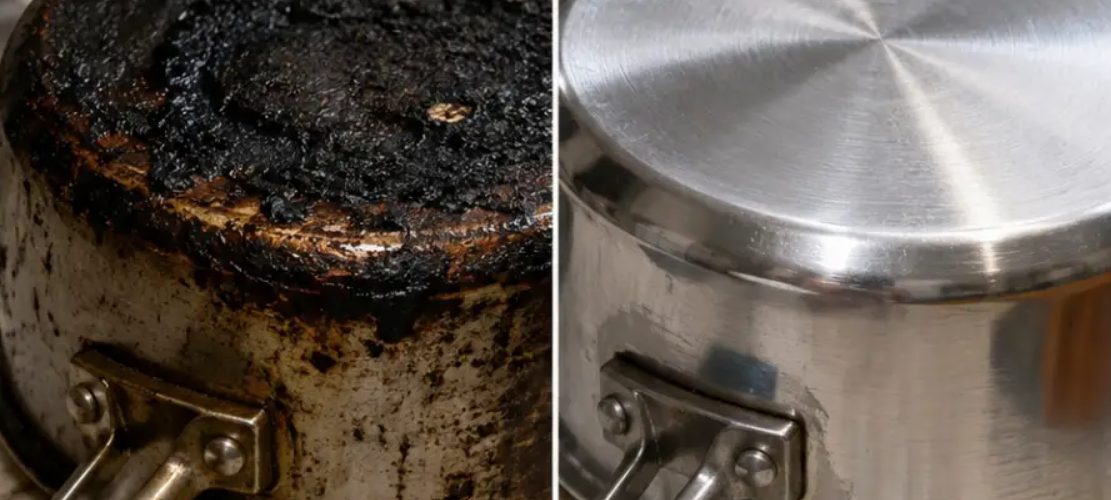
When grease builds up and carbonizes on the bottom of a stainless steel pot, gentle tricks often fall short.
For this type of dirt, it is best to use a specific stainless steel cleaner containing oxalic acid, capable of removing stubborn stains without resorting to knives or aggressive scraping.
Materials
- Stainless steel pot cleaner with oxalic acid
- Warm water
- Dish detergent
- Soft non-abrasive sponge
- Clean cloth
- Cleaning gloves
Procedure
- Check that the pot is stainless steel and that the area to be cleaned has no paint, enamel, non-stick coating, or delicate finishes.
- Let the pot cool completely. Wash the exterior with warm water and detergent to remove surface grease and any loose residues.
- Rinse and leave the base damp. The cleaner should not be applied to a completely dry surface.
- Place a small amount of the product on the black part. Add just a few drops of water to form a fine, easy-to-spread paste.
- Spread the paste with a damp sponge, covering especially the areas where the burned grease is most stuck.
- Let it act only for the time indicated on the packaging. For products like Bar Keepers Friend, the usual recommendation is not to exceed approximately 1 minute and avoid letting the paste dry on the metal.
- Gently rub with the sponge. There is no need to apply excessive pressure: work in sections and make even movements.
- Rinse immediately with plenty of water to completely remove the product and detached dirt.
- Wash the pot again with hot water and detergent. Rinse very well to ensure no cleaner residues remain.
- Dry with a clean cloth and check the surface. If black parts still remain, repeat the process with another short application.
- Continue with several short passes until you remove as much carbonized grease as possible. It is safer to repeat than to leave the product on for too long.
Tips and advice
- This procedure is designed mainly for stainless steel pots without exterior coating.
- Always read the instructions of the chosen product, as application time may vary depending on its formula.
- Test first on a small, inconspicuous area, especially if you are not sure of the pot’s material.
- Do not apply the cleaner to a hot pot. The metal must be completely cold before starting.
- Do not let the paste dry. Too prolonged exposure can cause discolorations on the steel.
- Use a soft sponge or fiber identified as suitable for stainless steel. Very hard fibers can leave permanent scratches.
- Avoid knives, metal spatulas, sandpaper, and steel wool. Although they remove some black, they can also damage the finish.
- Do not mix the product with bleach, ammonia, vinegar, or other cleaners. Acidic cleaners should be used alone to avoid dangerous reactions.
- Use gloves and work in a ventilated environment.
- If the black layer is thick and old, several applications will probably be needed. The change usually occurs progressively.
- An extremely overheated pot may retain some dark marks or color changes even after removing the carbonized grease.
- If the exterior is aluminum, copper, enamel, or has paint, consult the manufacturer’s instructions first before applying any cleaner.
- Drying the pot immediately after rinsing helps avoid water marks and improves the final shine.
- To prevent new stains, clean the bottom after each use and avoid letting the flame protrude from the sides.
This method allows working on really stuck dirt with a product designed for stainless steel.
Applied correctly and in short passes, it offers a much more reliable result than homemade mixtures used for superficial burns.