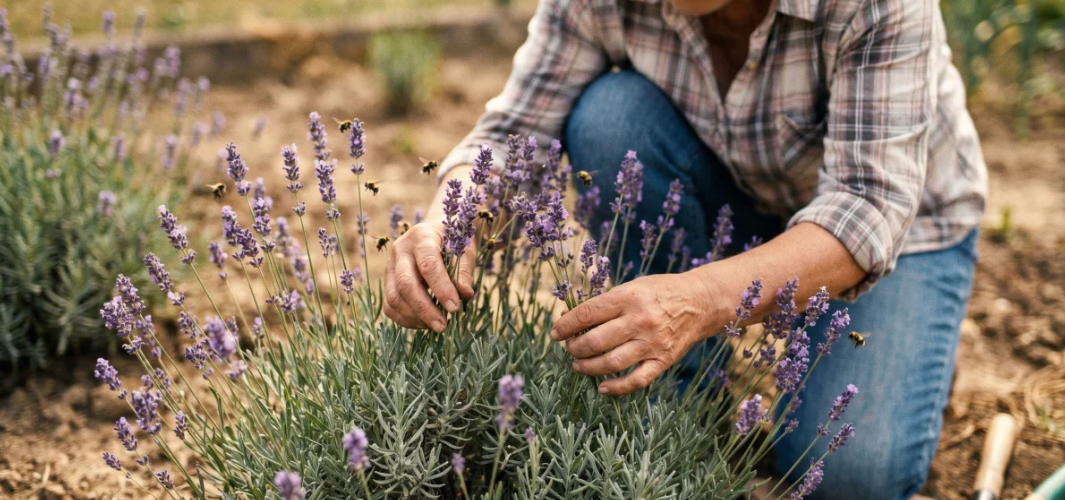
Eggshells for lavender can help improve the soil and support richer flowering if used in moderation and only where the plant has suitable conditions. Lavender does not tolerate overfertilization or wet roots, so it is best supported by sun, permeable soil, correct pruning, and a gentle dose of calcium.
Lavender is one of the plants that often suffer more from excessive care than from neglect. Growers water it, fertilize it, and transplant it, but instead of flowers it creates sparse shoots or woodiness.
If you want compact bushes covered with purple spikes, you must approach the conditions from which lavender originates. It needs plenty of sun, a drier site, more alkaline soil, and very reasonable nutrition.
Why eggshells for lavender make sense
Eggshells for lavender are used mainly as a gentle source of calcium. Calcium helps adjust the soil towards a less acidic environment, which lavender usually likes.
Shells also contain small amounts of other elements, but they should not be taken as strong fertilizer. Their effect is slow and shows best with regular but moderate use.
They have the greatest importance where the soil is slightly acidic or poor in calcium. If the soil is already calcareous, additional shells may not be necessary.
Lavender does not want rich and wet soil
The most common mistake when growing lavender is too nutritious, heavy, and wet soil. The plant may grow, but shoots are soft and flowering is weak.
Lavender needs soil that quickly drains excess water. If roots stand in moisture, the plant weakens, yellows, and may start dying from the center.
With heavy soil, sand, fine gravel, or planting on a slightly raised spot helps. Good water drainage is more important than additional fertilizer.
First check soil pH
If lavender is withering, not flowering, or its leaves are yellowing, first verify soil pH. In too acidic environment, it may absorb nutrients worse.
A simple gardening test will show you if it makes sense to add calcium. If the soil is very acidic, shells may be weak and you will need a more targeted adjustment.
If the pH is suitable, look for the problem elsewhere. Often it is too little sun, waterlogging, an old bush without pruning, or excess nitrogen.
How to prepare eggshells
First rinse shells well and let them dry. Egg white residues can smell and attract unwanted insects.
Then crush them as finely as possible. The smaller the pieces, the faster they will decompose in the soil.
The best is powder or very finely crushed form. Large pieces of shells lie in the soil for a long time and the plant gets little from them quickly.
Dry shells around the bush
The simplest way is to sprinkle a small amount of crushed shells around the lavender. Do not place them directly at the woody base of the bush.
Gently work them into the top layer of soil and water. A thin dose is enough, which you can repeat approximately once a month during the active season.
If you grow lavender in a pot, use an even smaller amount. In a container, every mistake shows faster than in a bed.
Infusion from shells for watering
The second option is to prepare a gentle infusion. Pour water over crushed shells and let them stand for several days.
Then strain the liquid and use it for root watering. Do not pour it on flowers or leaves during hot sun.
Use the infusion occasionally, not with every watering. Lavender prefers a drier regime and frequent watering can be a bigger problem than lack of nutrition.
Use compost only carefully
Compost improves soil structure and supplies nutrients, but with lavender you need to work with it sparingly. Too much compost can promote leaf growth at the expense of flowers.
It is best to work in a small amount of mature compost when planting or use it as a very thin surface dose in spring. Fresh or half-raw compost does not benefit lavender.
If the soil already has enough humus and the plant grows nicely, do not add more compost. With lavender, it often holds that less nutrition brings more flowers.
Fish meal as stronger nutrition
Fish meal contains phosphorus, nitrogen, potassium, calcium, and other elements. With lavender, however, use it very carefully because it is more nutritious than shells.
It is suitable rather in spring when the plant starts vegetating, and possibly in a small dose in mid-summer. Always work it into the soil according to recommended dosing.
If lavender is lush, green, and flowers little, do not add fish meal. The problem may be precisely in excess nutrition.
Nitrogen is a frequent enemy with lavender
Fertilizers rich in nitrogen promote leaf and shoot growth. With lavender, this often means fewer flowers and softer tissues.
Soft overfertilized shoots tolerate winter, rain, and diseases worse. The bush can fall apart and woodify faster.
Avoid lawn fertilizers, strong universal mixtures, and fresh manure. Lavender does not need them.
Fresh manure does not belong with lavender
Fresh manure is too strong for lavender and often holds a lot of moisture. It can burn roots, promote lush leaf growth, and worsen flowering.
If you want to improve the soil, rather use permeable mineral material and a small amount of mature compost. Lavender does not belong among plants that need to be intensively fed.
With older bushes, pruning is often more important than fertilizer. Without pruning, the plant woodifies and flowers move only to the ends of shoots.
Sun decides the number of flowers
Lavender needs at least six hours of direct sun daily. In partial shade it survives, but flowering is weaker and the bush stretches.
The best site is warm, open, and airy. Near a wall or stone surface, the soil heats up faster, which suits lavender.
If you have lavender in a shady place, no shells or fertilizers will force it to flower like in the sun. Then transplanting helps.
Pruning is the secret of a dense bush
For lavender not to become bare and fall apart, it needs regular pruning. After flowering, shorten the flowered stalks and part of the soft shoots.
In spring, you can gently adjust the bush and remove damaged parts. Do not cut deep into old wood without green shoots, because lavender may not regrow well from it.
Regular pruning promotes density, more young shoots, and better flowering in the next season. Fertilizer without pruning is often not enough.
Lavender in a pot has other risks
In a container, the biggest problem is overwatering. The flowerpot must have drainage holes and a drainage layer at the bottom.
The substrate should be permeable, not heavy and constantly wet. Adding sand or perlite helps roots breathe.
Use shells in a pot only in a small dose. If a crust forms on the surface or the plant yellows, first check water and drainage.
Most common mistakes when growing lavender
- Planting lavender in heavy wet soil without drainage.
- Using a lot of nitrogen fertilizer and the plant forms mainly leaves.
- Sprinkling shells without knowing soil pH.
- Watering too often, especially in a pot.
- Not pruning the bush after flowering and letting it woodify.
- Growing lavender in shade and expecting rich flowering.
Simple plan for a sea of purple flowers
First check the site. Lavender must have sun, air, and permeable soil, otherwise it will flower weakly even with the best fertilization.
In spring, add a very small amount of mature compost or finely crushed eggshells. If growing in a pot, reduce the dose even more.
After flowering, prune the bush to maintain shape and density. During the season, water only when the soil is dry, especially with plants in containers.
Lush lavender needs moderation rather than excess
Eggshells for lavender can be a useful old trick if the soil needs gentle calcium supplementation. The greatest effect, however, comes only together with sun, permeable soil, and regular pruning.
Lavender does not belong among plants that need frequent fertilizing. When you give it drier roots, little nitrogen, and suitable pH, it will reward you with denser growth and plenty of purple flowers.