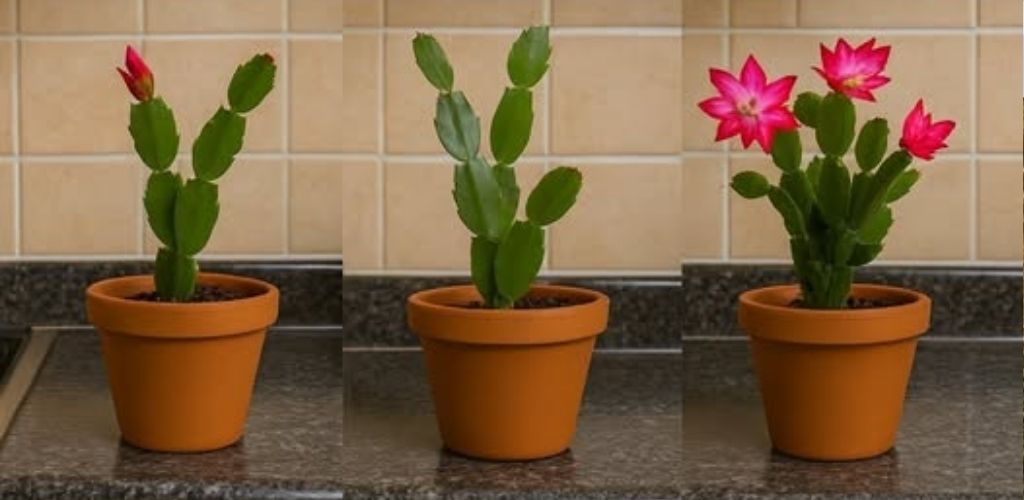
As early as October, you should begin preparing the Christmas cactus for flowering by feeding it. We’re not interested in nitrogen fertilizers, as nitrogen is responsible for the growth of the plant’s green mass.
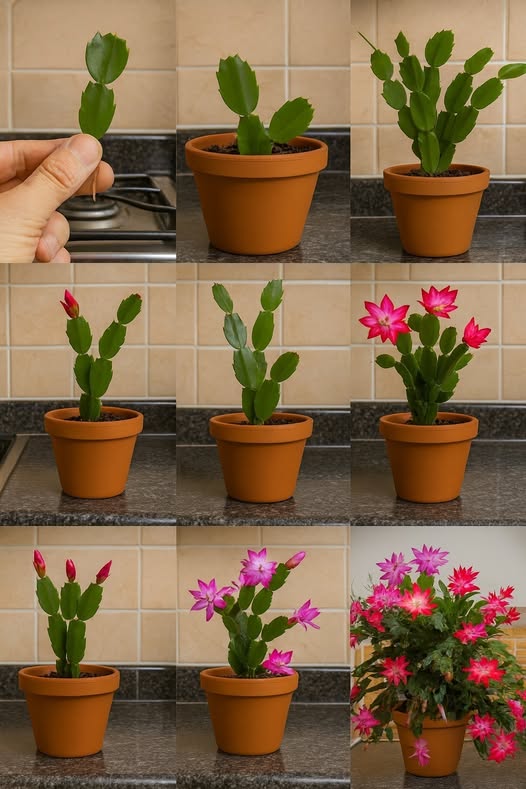
Potassium and phosphorus are added to houseplants during the period of active budding. Valuable organic fertilizers will also be very helpful.
I’ll tell you about 5 options, in my opinion, for feeding the Decembrist in the fall to ensure abundant flowering in winter.
1. Liquid complex mineral fertilizers for decorative flowering indoor plants from the store
The simplest option for those who don’t want to waste time and effort preparing traditional remedies for fertilizing Decembrist cacti. It couldn’t be simpler: buy a bottle, dilute according to the instructions, and water!
Tip: Use a concentration 1.5–2 times lower than indicated on the label. Manufacturers often inflate the amounts to make you use more product and have to buy a new one.
For the plant and for us, a smaller amount will be quite sufficient to achieve the desired effect.
The main component of the composition is the NPK complex. Nitrogen (N) is present in small amounts, while potassium (K) and phosphorus (P) predominate. Just what we need! Sometimes the nutrient cocktail is supplemented with other elements that plants like.
2. Apple dressing
Christmas cacti love apple infusion! I add chopped apple to 2 liters of water and let it steep for 2 days. Then I just water the cacti with the water.
It now contains iron, phosphorus, potassium and other chemical elements useful for indoor plants!
Interesting fact: The Decembrist is an epiphytic plant native to South America. It clings to tree trunks.
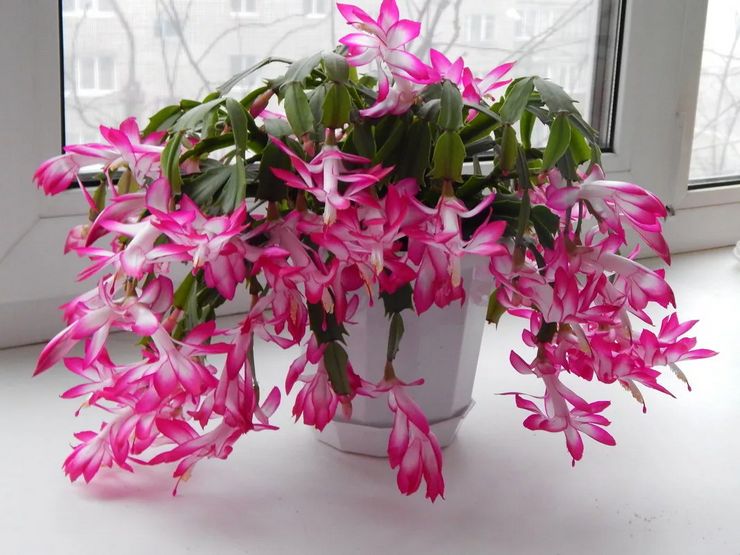
3. Boric acid is a universal flowering stimulator for indoor plants.
I’ve seen firsthand that boric acid is a great addition to both the home and the garden! The trick to using this solution is to spray it on the plant from a spray bottle, rather than watering it at the roots.
By the way, the beautiful Schlumbergera loves being sprayed! Preparing a solution is very simple: 1 g per 1 liter of water. Foliar feeding is best done in the morning or evening to avoid sunburn from the spray.
Another important detail : it is better to use boric acid when the first buds appear and repeat every 2 weeks until the Schlumbergera finishes flowering.
4. Wood ash infusion is a storehouse of minerals without chemicals
For some reason, it’s generally believed that ash should be used in the garden. But it has a wonderful effect not only on outdoor plants but also on indoor ones, so I recommend using it in indoor gardening.
Tip: Apply all root dressings only to damp soil. Be sure to water the Schlumbergera before feeding!
For reference: the exact composition of wood ash depends on the type of wood burned, its age, and many other factors.
But the main components remain the same: calcium is a unique growth stimulant; potassium and phosphorus are essential for all plant life processes, including flowering; silicon and magnesium are also beneficial!
Moreover, these substances are in a form that is easily absorbed by the plant. Therefore, wood ash is one of the best fertilizers for flowering Christmas cactus!
Making an infusion (this method of using wood ash for houseplant feeding works faster than others) is simple. Stir 2 tablespoons into 1 liter of water and let sit for 3 hours.
By the way: You can repeat fertilizing your Christmas cactus every two weeks and combine different methods to promote flowering. There’s plenty of room for experimentation!
5. Banana peel infusion – an exotic delicacy for the Decembrist
For a gardener, banana peel is interesting because it contains large amounts of potassium (78 mg/g) and manganese (76 mg/g) – two chemical elements.
They are supplemented with valuable potassium, iron, sodium, and phosphorus. Banana peels also decompose very quickly, releasing nutritious organic matter, which the Christmas cactus responds very favorably to!
I make “banana fertilizer” like this: I take the fresh peel of a ripe banana and soak it in water. There are no strict proportions.
But about 1-2 peels per 1 liter of settled water. I let it steep for 24 hours and use the water to water the zygocactus at the roots.
The Christmas cactus can bloom without additional nutrients. For example, if you recently repotted the plant, there’s still plenty of nutrients in the soil.
In other cases, I recommend using special fertilizers (and there are some to suit every taste, from reliable chemicals to traditional organics) to ensure long and lush flowering.