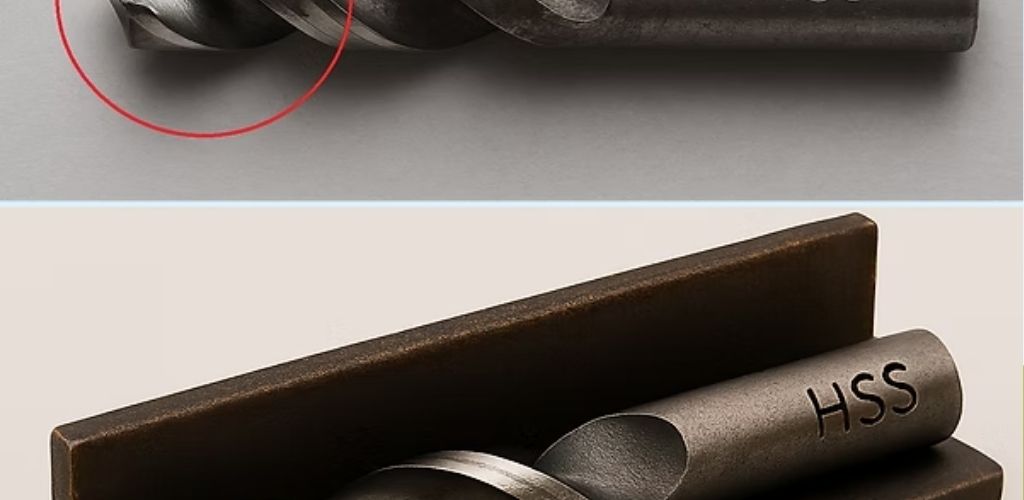
Properly sharpening a drill bit not only restores its edge but also determines how well it cuts, how long it lasts, and on which materials it is most efficient. Many users believe that “as long as it cuts, that’s enough,” but in reality, the cutting edge angle is key.
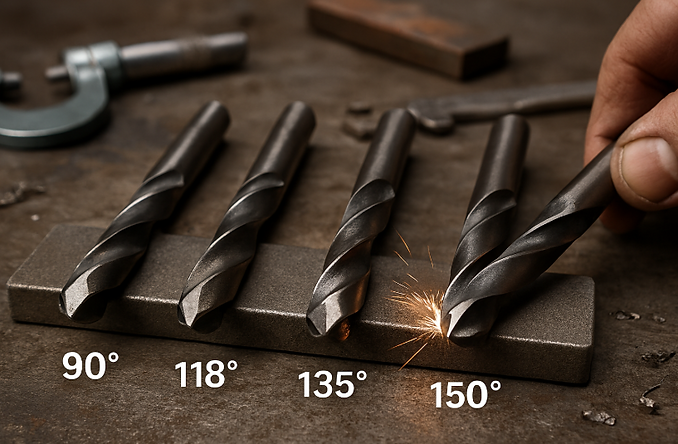
⚙️ Standard sharpening angle
- Most HSS (high-speed steel) drill bits for general use in metal and wood are sharpened to an angle of 118°.
- This angle is versatile: it cuts well, doesn’t overheat too much, and is suitable for DIY or workshop work without extreme demands.
📏 Most acute angle (90° – 100°)
- Advantages: Cuts faster, penetrates easily into soft materials such as aluminum, copper, plastics or wood.
- Disadvantages: The edge wears down faster and breaks easily if too much pressure is applied.
- Recommended use: Drilling soft materials or when drilling speed is needed.
🛡️ Intermediate angle (118° – 130°)
- This range is the most commonly used.
- 118° → standard for mild steel, wood and plastics.
- 125°–130° → ideal for stainless steel and hard materials, as the edge is more robust and resists wear.
- Advantage: Less risk of the drill bit “slipping” or becoming dull quickly.
- Recommended use: Workshops that work with carbon steel, stainless steel, or parts that require precision.
🪨 Obtuse angle (135° – 140° or more)
- Advantages: More robust, prevents the drill bit from deviating, requires less pressure when starting the hole.
- Disadvantages: It penetrates more slowly.
- Recommended use: Drilling hard metals, cast iron, thick pieces or when a precise start is needed without making a pilot point.
📊 Which angle suits you best?
- 🔧 You do general DIY (wood, soft metal, plastics): 118° is enough.
- 🏗️ If you work with stainless steel or hard metals: 125°–135° for more resistance.
- 🚀 You need speed on soft materials (plastics, aluminum): 90°–100°, but be aware that it dulls faster.
- 🎯 Precision in steel, cast iron or thick pieces: 135°–140° with split point.
👉 In summary:
- 118° is the “all-terrain”.
- 135° is the “pro” for stainless steel and hard materials.
- 90°–100° only if you are looking for speed in soft woods and are willing to sharpen more often.