According to widely cited global data, millions of tons of plastic are produced every year, and a significant portion of this is single-use packaging. The worrying aspect is not only the quantity, but also the time it takes to decompose: a bottle can remain in the environment for hundreds of years.
In Latin American countries, including Peru, formal recycling is still limited in many areas. Many bottles end up in landfills or, worse, in rivers and streams.
In contrast, reusing is not a DIY fad. It’s a concrete way to extend the useful life of an object before it becomes waste.
And this is where seemingly “simple” tricks take on another dimension.
1️⃣ The bottle converted into a sturdy funnel
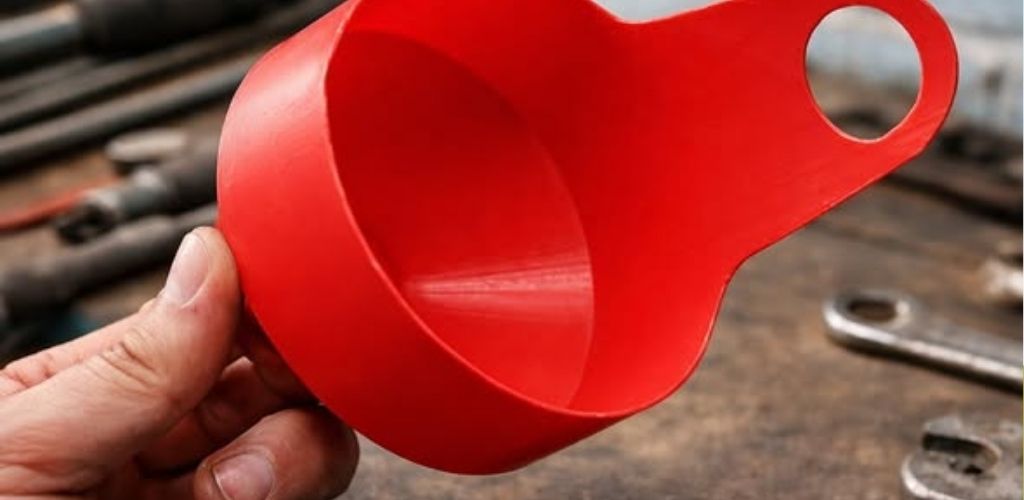
This is one of the most classic tricks: cutting the top off a bottle to turn it into a funnel.
It may seem basic, but let’s analyze it with a practical eye:
- It is more durable than many cheap funnels.
- It has a larger diameter, ideal for dense liquids such as used oil.
- It can be made in seconds with a knife or cutter.
When is it really useful?
In a mechanic’s workshop, for example, to transfer oil or coolant. In the kitchen, to fill large jars. In gardening, to pour liquid fertilizer without waste.
Practical added value
Lightly sanding the cut edge or gently heating it to round it will prevent accidental cuts. You can also mark the bottle with measurements using a permanent marker, turning it into a makeshift measuring cup.
It’s not just a funnel. It’s a customizable tool.
2️⃣ Self-sufficient planters: more than just decoration
The classic horizontal or vertical cut to create flower pots is one of the most popular uses.
But here’s something interesting: it’s not just about aesthetics. It’s about efficiency.
By drilling a hole in the base and adding a simple wick system with fabric or cord, you can create a capillary watering planter. This keeps the soil moist for longer.
Real comparison
- A commercially available self-watering planter can cost several times more than a recycled bottle.
- The bottle allows you to experiment without fear: if it fails, you didn’t lose any money.
Everyday example
Imagine a small balcony in Lima, where space is limited. Placing several bottles vertically allows you to create a mini herb garden: mint, cilantro, parsley. You don’t need large structures.
The interesting thing is that this type of reuse turns a disposable object into something productive.
3️⃣ Protector for tools and sharp objects
This trick isn’t often mentioned, but it’s especially useful: using the bottle body as a protective sheath for blades, small machetes, or sharp tools.
You just need to cut a section of the cylinder and adjust it.
Why is it relevant?
In home or agricultural workshops, many injuries occur due to improperly stored tools. An improvised sheath can prevent accidents.
Important recommendation
Secure the cover with strong tape or a small plastic screw if necessary. And always round off the edges to prevent the protector from becoming a hazard.
Here the bottle ceases to be a decorative craft and becomes a safety element.
4️⃣ Controlled dispenser for irrigation or washing
Piercing a bottle cap creates a gentle irrigation system. It’s simple, but surprisingly effective.
Difference compared to a traditional watering can
- Finer flow control.
- Ideal for small plants or seedlings.
- It allows you to reuse small bottles for small spaces.
It can even serve as an improvised shower in emergency or camping situations.
Here’s an interesting lesson: the bottle’s original design is already intended to withstand pressure and handling. Taking advantage of that is basic home engineering.
5️⃣ Modular organizer for screws and small parts
Cutting the bottle in half and using the base as a container is one of the smartest uses in workshops.
Can:
- Store screws.
- Separate washers.
- Sort nails by size.
If you keep the lid on the cut-out top, you can fit both parts together like a small lidded container.
Comparison with commercial plastic boxes
Storage boxes are generally more aesthetically pleasing, yes. But they’re also more expensive and fragile. A thick bottle (like a soda bottle) is sturdy and can withstand impacts.
What nobody says: not everything should be reused
Here comes the critical analysis.
Not all bottles are suitable for every use. Some important recommendations:
- Do not reuse bottles that contained strong chemicals to store water or food.
- Avoid exposing bottles to the sun for long periods if they will be in contact with drinking water.
- Always wash with hot water and detergent before reusing.
Reusing does not mean doing it without criteria.
Beyond the trick: an exploitative mindset
There is something almost philosophical about this.
Modern society has trained us to discard. Buy, use, throw away. But when you reuse a bottle, you change the cycle. You go from passive consumer to active problem solver.
It’s a small act of practical rebellion.
In a world where everything seems designed to be replaced, reusing is a way to regain control.
Short story: the bottle that saved a repair
A mechanic needed to transfer fuel on the side of the road. He had no funnel, no suitable container. Only an empty water bottle.
He cut it, improvised a funnel, and prevented the fuel from spilling onto the hot engine.
Small detail. Big difference.
Sometimes, these “homemade tricks” aren’t viral decorating trends. They’re real solutions for real situations.
How to take these tricks to the next level
If you want this to be more than just a curiosity:
- Separate bottles by thickness.
- Keep some clean ones in your workshop or warehouse.
- Label the reused items according to their new use.
- Experience improvements: precise drilling, cleaner cuts, and safe finishes.
With practice, the result stops looking improvised.
Reuse vs recycle: they are not the same
Recycling means the material will be industrially transformed. Reusing means extending its life without industrial transformation.
From an energy perspective, reusing is usually more efficient because it avoids transportation, processing, and additional energy consumption.
It’s the difference between “disposing responsibly” and “making the most of it.”
Final reflection: the object wasn’t trash, it was potential.
The next time you finish a bottle, don’t look at it as waste. Look at it as raw material.
Perhaps today you’ll just use it as a funnel. Tomorrow it could be part of an irrigation system. The day after tomorrow, an organizer in your workshop.
Practical creativity doesn’t require large investments. It requires attention.
And perhaps the real lesson of the Tips Secret video is not how to cut a bottle… but how to stop seeing the world as something disposable.
Now I ask you:
Will the next bottle you hold in your hand be trash… or a tool?