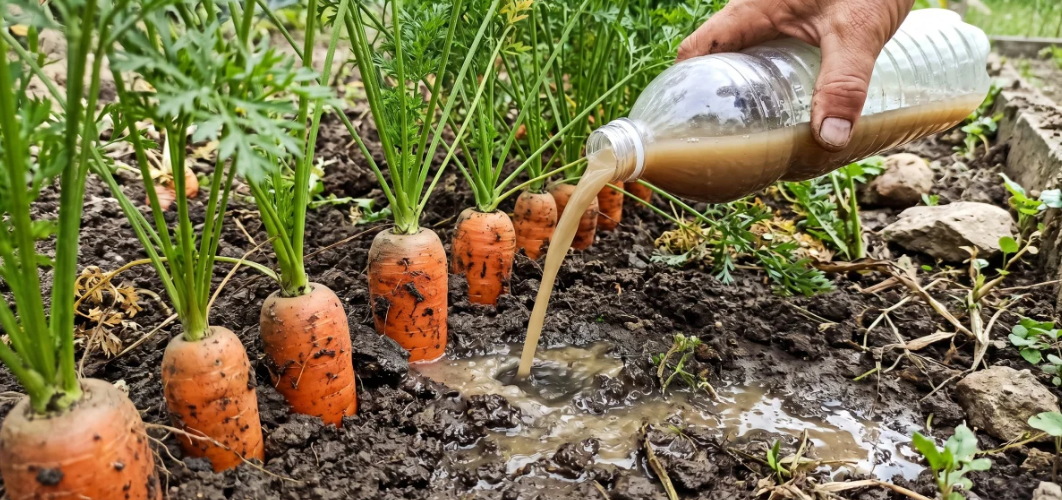
July fertilization of carrots can significantly influence the size, firmness, and taste of the roots, but not every mixture is suitable for every bed. A few spoons of wrongly chosen substances can bring soil salinization, damaged roots, or excess boron instead of a miracle.
In mid-summer, carrots are usually intensively enlarging their roots. The foliage still needs to stay healthy because the leaves produce sugars that the plant stores in the underground part.
The best result therefore does not come from a strong one-time fertilization. Even moisture, loose soil, appropriate nutrient supply, and timely weed removal are what matter.
July carrot fertilization makes sense only with a real deficiency
Carrots in July do not automatically need another dose of fertilizer. If the bed received compost or appropriate basic fertilization before sowing, the soil may already have enough nutrients.
Additional fertilization is meaningful especially in poor, sandy, or heavily depleted soil. A soil test gives the most accurate answer, because you cannot reliably determine every deficiency from the appearance of the foliage.
If the plants grow evenly, the leaves are healthy, and the roots are enlarging, a strong mineral intervention may be unnecessary. More nutrients do not automatically mean a larger harvest.
Why you no longer need to overdo nitrogen
Nitrogen supports leaf growth. It is needed in the first half of vegetation, but its later excess can lead to lush foliage at the expense of roots.
Overfertilized carrots are more prone to softening, store worse, and may form branched or hairy roots. The problem is worsened by fresh manure and strong infusions applied directly during growth.
In July, therefore, do not use concentrated liquid manure or strong weed infusions without knowing their composition. If you need to fertilize, choose a milder preparation with a lower proportion of nitrogen.
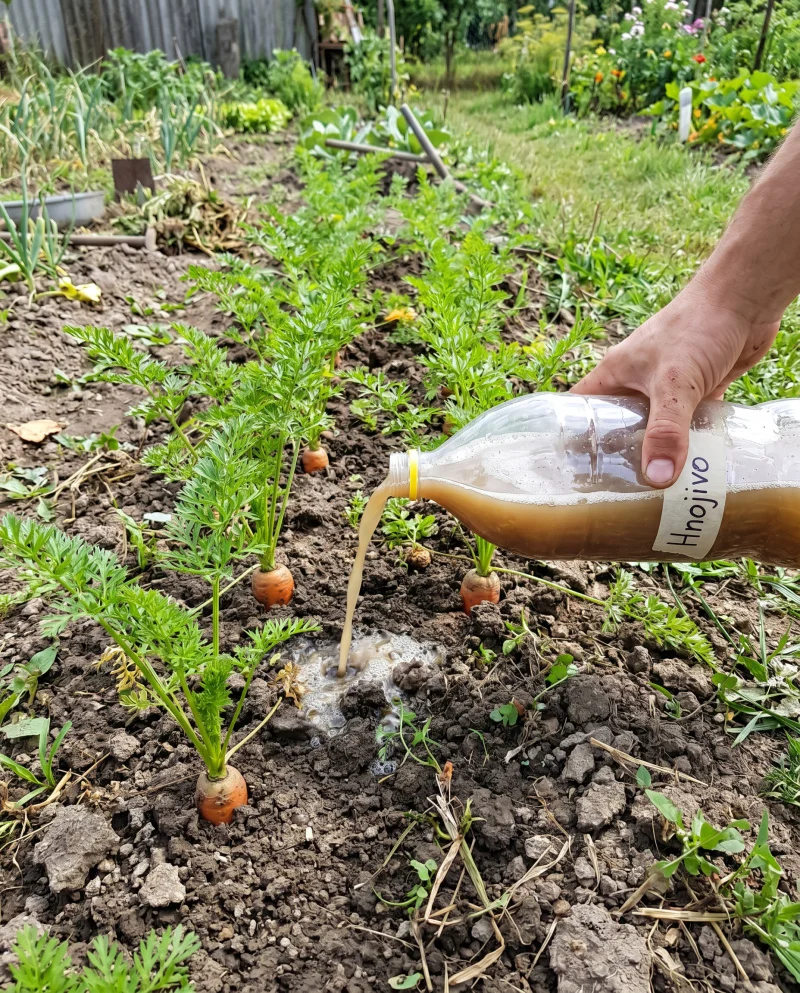
Potassium supports water management and root quality
Potassium helps the plant regulate water, activates enzymes, and participates in sugar transport. With its deficiency, plants tolerate drought worse and older leaves get damaged edges.
This does not mean that every carrot needs potassium monophosphate in July. If the soil is already well supplied, another dose can increase salt concentration without visible benefit.
The safest is to use fertilizer intended for root vegetables and follow the manufacturer’s dosage. Do not measure granules or powder randomly with a heaped spoon.
Potassium monophosphate is not a universal boost
Potassium monophosphate supplies potassium and phosphorus. Phosphorus is important especially during root system formation, but in many garden soils it is already present in sufficient quantity.
Repeated addition of phosphorus without need can disrupt the availability of some micronutrients. Therefore it is not suitable to mix it automatically with other nutrient sources and apply every ten days.
If you use it, follow the label of the specific product. Concentration and recommended dosage may differ, so one tablespoon cannot be considered a safe universal measure.
Wood ash changes the soil more than it seems
Pure wood ash contains mainly potassium, calcium, and other minerals. At the same time, however, it acts alkaline and can quickly increase soil pH.
Carrots prefer slightly acidic to neutral soil. If the bed is already alkaline, ten spoons of ash in solution can worsen the availability of iron, manganese, and other elements.
Also do not mix ash thoughtlessly with mineral fertilizers. In one strong mixture, salt concentration can increase and individual components may not remain optimally available to the plant.
What ash is actually suitable
Only ash from clean untreated wood can be used. Ash from varnished boards, chipboard, coal, briquettes, or burned waste does not belong in the bed.
Apply even clean ash sparingly. It is better to work a small amount evenly into the soil according to its pH than to create a concentrated solution directly at the roots.
If the soil has already been limed or has high pH, skip the ash. In such a bed it can do more harm than good.
Boron is needed in trace amounts
Boron participates in cell wall formation and the growth of young tissues. The plant needs very little of it and the difference between deficiency and excess is narrow.
That is exactly why home dosing of boric acid is risky. Two grams can lead to toxicity with incorrect distribution, repeated application, or already supplied soil.
Excess boron can cause yellowing, browning of leaf edges, and growth damage. It is not easily removed from the soil with a one-time intervention.
Do not add boron without a test or clear recommendation
The mere desire for sweeter carrots is not a reason to use boric acid. Sweetness is influenced by variety, sun, ripening, temperature, and even watering.
If a soil test or expert recommendation confirms deficiency, use boron fertilizer according to the exact label. Do not exceed the dose and do not repeat application sooner than the manufacturer allows.
Do not sprinkle boron by guesswork and do not use a kitchen spoon. With micronutrients, small differences decide that ordinary home measurement may not capture.
Succinic acid is not an essential nutrient
Succinic acid appears in gardening advice as a stimulant. However, it is not a basic fertilizer and does not replace nitrogen, phosphorus, potassium, or proper soil conditions.
Adding it to a mixture with ash, boron, and potassium monophosphate creates an unnecessarily complicated solution. When a problem occurs, you cannot determine which component caused the damage.
For an ordinary bed, it is more reasonable to work with a simple and precisely dosed fertilizer. Fewer components mean less risk of mistakes and unwanted reactions.
The cheapest July intervention is even watering
Carrots need stable moisture during root enlargement. Long drought followed by heavy watering promotes cracking and uneven growth.
Water slowly so that the water penetrates deeper into the soil. Frequent surface sprinkling supports shallow roots and rapid drying of the top layer.
The best time is morning. Evening watering is possible during heatwaves, but leaves and soil surface should not remain unnecessarily wet all night.
Always moisten the soil before fertilizing
Never pour mineral solution to the roots in completely dry soil. Concentrated salts can damage fine rootlets and the plant will then start to wilt.
First lightly water the bed with clean water. Apply fertilizer only to moist soil and distribute it evenly along the row.
Do not pour the solution directly on the foliage or in one spot. Follow the dose for the area or row length indicated on the product packaging.
Mulch helps more than another strong dose
A thin layer of dried grass, straw, or fine compost reduces evaporation and keeps the soil more evenly moist. Roots then do not experience sharp fluctuations.
Mulch also limits weed growth, which takes water and nutrients from carrots. However, do not place the material in a thick wet layer right next to the foliage.
After heavy rain, check if the soil has washed away from the root tops. Gently hill up exposed shoulders so they do not turn green.
Loosening must be shallow and careful
Carrots need airy soil, but deep hoeing can damage roots. Disturbing the main root promotes branching and unattractive shape.
Pull weeds carefully and work only in the surface layer between rows. It is best to intervene while the weeds are small and do not have strong roots.
After loosening, check that carrot tops have not remained exposed. Gently push soil toward them without strong compaction.
Branched carrots cannot be fixed by fertilization afterward
Forked or branched shape often forms already at the beginning of growth. It is caused by stony soil, fresh manure, root damage, or transplanting.
July fertilizer will not straighten the shape of an already formed root. It can only support further growth if the plant really lacks nutrients.
For straight harvest, prepare deep, loose soil without stones and undecomposed residues before sowing. Sow carrots directly at the final place.
Cracking is mainly a water problem
Cracks often appear after heavy rain or strong watering when the soil previously dried out for a long time. The root quickly takes up water and inner tissues increase in volume.
Fertilization will not solve this problem. Regular deeper watering, mulch, and gradual adjustment of water amount to the weather help.
Process cracked roots as soon as possible if they are otherwise healthy. For long storage, select undamaged carrots without wounds and signs of rot.
Sweetness grows with cooler weather too
The taste of carrots is influenced by variety and harvest time. With cooler night temperatures, the plant can store more sugars, so later harvest is pleasantly sweet.
Very early harvest provides tender but smaller roots. Leaving them too long in dry and hot soil can on the contrary lead to harder structure.
Pull one carrot for checking and assess size and taste. Then determine the suitable time for main harvest according to variety and sowing date.
Simple and safer July procedure
First check soil moisture, foliage health, and previous fertilization. If the plants are growing well, continue with even watering and weeding without another strong dose.
In obviously poor soil, use fertilizer for root vegetables with lower nitrogen content. Measure the dose precisely according to the manufacturer and apply it to pre-moistened soil.
Do not add ash or boron automatically. They make sense only when the soil needs the given component and its pH allows safe application.