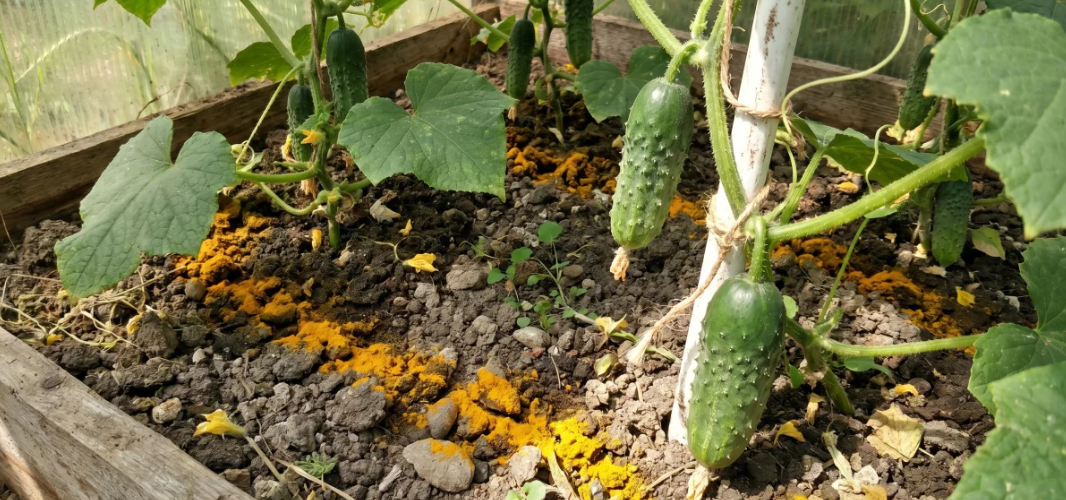
Dry fertilization of cucumbers can be a simple way to provide plants with more stable nutrition directly at the roots during summer. When diatomite is combined with granulated manure, the bed gains support for moisture, soil life, and longer fruiting.
Cucumbers grow quickly and consume nutrients almost non-stop during the main season. One day you see new flowers, a few days later young fruits, and the plant has to nourish everything at once.
If the soil weakens after the first wave of harvest, cucumbers show it quickly. Leaves pale, fruits curl, flowers drop, and the bed suddenly does not look as fresh as at the beginning of summer.
Why dry fertilization of cucumbers works right at the roots
Dry fertilization of cucumbers has the advantage that nutrients remain in the root zone and are released gradually. The plant does not get a one-time shock, but milder support over several days.
Cucumbers have a shallower root system. They therefore like it when the top layer of soil is nutritious, slightly moist, and protected from rapid drying.
Powdered and granulated components work best when worked in after watering or before rain. Moisture activates them and helps get the active substances closer to the roots.
Diatomite is an inconspicuous powder with a big role
Diatomite originated from fossilized shells of tiny diatoms. In the garden, it is used as a natural mineral material that can improve soil properties.
It contains mainly silicon and smaller amounts of other mineral elements. Silicon is often associated with firmer tissues and better stress resistance in vegetables.
Its ability to work with moisture is also important. The fine powder helps retain part of the water and nutrients in the soil, so they are not washed away so quickly after watering.
Why cucumbers appreciate silicon
Silicon is not a classic main fertilizer like nitrogen, phosphorus, or potassium. Nevertheless, it can help plants cope with heat, drought, and fluctuating weather.
For cucumbers, this is important especially in July and August. Plants then suffer from high temperatures, rapid water evaporation, and often pressure from powdery mildew or other leaf problems.
Stronger tissues and better water management can contribute to the plant not giving up after the first big harvest. However, this does not mean that diatomite replaces watering or full fertilization.
Granulated manure provides organic nutrition
The second component is granulated manure. It is practical, easy to store, does not smell as strongly as fresh manure, and releases nutrients gradually.
Upon contact with moisture, the granules swell and begin to decompose. They add organic matter, nitrogen, potassium, phosphorus, and other substances to the soil depending on the type of manure.
It helps cucumbers especially when the soil loses strength after long fruiting. The organic component also supports microorganisms that are important for healthy roots.
How to prepare the dry mixture for cucumbers
For an ordinary bed, you can use approximately one to two kilograms of fine-grained diatomite. Adjust the exact amount to the bed size, planting density, and soil condition.
Add about one kilogram of granulated manure to it. You can mix the components in a bucket or sprinkle them gradually so they get evenly among the plants.
If you grow cucumbers in a smaller bed or container, reduce the dose significantly. In pots, nutrients concentrate faster and overfertilization shows sooner.
When to sprinkle the mixture at the roots
The best time is after watering, when the soil is moist but not waterlogged. The dry powder will not dust unnecessarily and the granules will start to activate gradually.
Sprinkle the mixture around the plants in a circle, not directly on the stem. Leave a few centimeters of free space between the fertilizer and the plant neck.
After sprinkling, you can very gently rake the surface or cover it with a thin layer of mulch. This way the mixture connects better with the soil and the wind will not blow it away.
How often to repeat dry fertilization
During the main season, three to four applications are enough. Leave approximately ten to fourteen days between them, depending on the weather and plant condition.
If cucumbers look healthy, have dark green leaves, and fruit evenly, do not increase doses. Too much organic nutrition can promote leaves at the expense of fruits.
For weak plants, do not start with a strong dose. First adjust watering, remove damaged leaves, and only then add mild nutrition to the roots.
Watering decides whether the mixture is used
Dry fertilizer does not work fully without water. Granulated manure needs moisture to decompose, and diatomite helps only when it is part of the moist soil zone.
Water cucumbers at the roots, preferably in the morning or evening. The water should not be icy, because a sharp temperature difference can stress plants during heatwaves.
Keep the soil evenly moist. Alternating drought and heavy watering leads to deformed fruits, weaker growth, and poorer nutrient uptake.
Mulch keeps the powder and moisture in place
After dry fertilization, it pays to use a thin layer of mulch. Straw, dried grass, or fine plant material protects the soil from overheating.
Mulch also reduces water evaporation. Thanks to this, nutrients from granulated manure are released more smoothly and roots do not suffer sharp fluctuations.
Do not place mulch right on the stems. Cucumbers at the neck do not tolerate constant wetness and can rot more easily with poor air circulation.
What to watch out for with diatomite
Diatomite is a fine powder, so do not sprinkle it in the wind. When working, it is reasonable to avoid inhaling dust and keep it away from eyes.
Use only a product intended for the garden or growing purposes. Materials intended for filtration or technical use may not be suitable in soil with vegetables.
After application, work it in or water it. This reduces dustiness and at the same time helps it get where the plants need it most.
Overfertilization of cucumbers can be recognized
If cucumbers form a lot of leaves but few flowers after feeding, the dose may be too strong. The plant then spends energy on green mass and fruiting slows down.
Another warning is dark, brittle leaves, burned edges, or sudden wilting after fertilization. In that case, flush the bed with clean water and skip the next dose.
The same rule applies to natural fertilizers as to mineral ones. More does not mean better, especially with plants that have shallow roots.
Combine the powder with regular harvest
If you want a long harvest, pick cucumbers often. Overgrown fruits take a lot of strength from the plant and slow down the formation of new flowers.
It is best to go through the bed every day or every other day. Young fruits are tastier and the plant gets a clear signal that it should continue fruiting.
When harvesting, do not tear off shoots with force. Cut or gently twist off cucumbers so you do not injure the plant and open entry for diseases.
The dry mixture is not a cure for a sick bed
If leaves are covered with powdery mildew, stems are rotting, or roots are no longer working, dry fertilization of cucumbers alone is not enough. First solve the cause of the problem.
Remove heavily damaged leaves, improve air flow, and check soil moisture. Only then does nutrition have a chance to help the plant regain strength.
A healthy bed reacts much better to support than plants in the last stage of disease. That is why it pays to fertilize preventively, not only when cucumbers are collapsing.