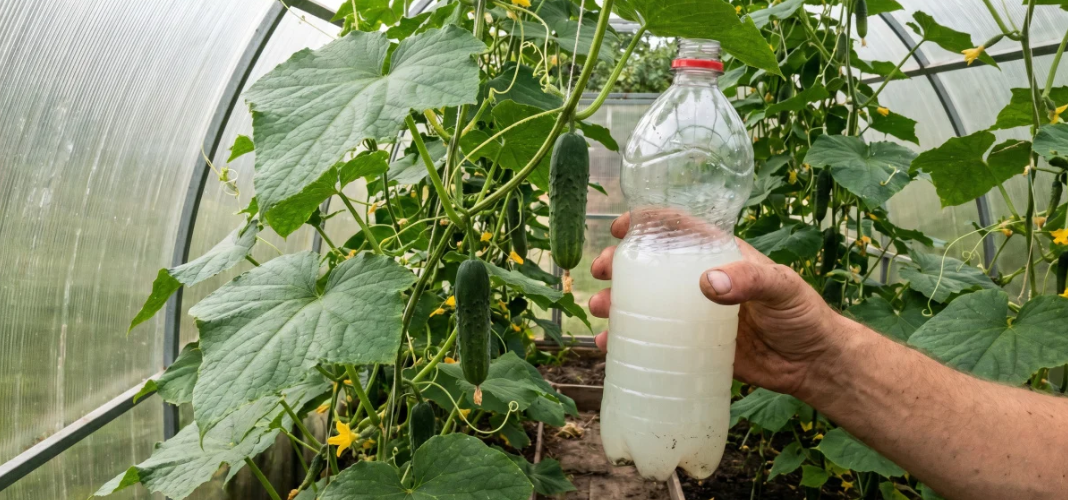
Fertilization of cucumbers with whey can be exactly the simple step that helps plants overcome summer exhaustion. When the right dose of calcium and nitrogen is added to it, cucumbers gain quick support through leaves and gentle protection against weakening.
Cucumbers work at full capacity in summer. Every day they form new leaves, flowers, and fruits, so they take a large amount of nutrients from the soil.
After the first big wave of harvest, it often happens that plants suddenly slow down. Leaves pale, young cucumbers yellow, and the whole bed looks tired, even though you water it regularly.
Why cucumbers weaken quickly in summer
Cucumber has a shallower root system and fast growth. This means it consumes nutrients quickly and easily gets into stress during heatwaves.
The combination of drought, heat, and continuous harvest exhausts it the most. The plant must simultaneously support older fruits, feed young fruits, and create new flowers.
If nutrition is missing in the soil, the plant starts to save. First it drops weaker flowers, then stops the growth of young fruits, and finally the color of leaves also worsens.
Fertilization of cucumbers with whey makes the most sense early
Do not use fertilization of cucumbers with whey only when plants are almost destroyed. It works best at the first signs of fatigue or preventively during main fruiting.
Whey contains residues of minerals, organic substances, and lactic bacteria. In diluted form, it can provide plants with gentle support without too harsh intervention.
After drying, it can create a thin film on leaves. Some growers use this as natural help in the period when the pressure of molds and leaf diseases increases.
Why exactly milk whey
Milk whey arises during the production of cottage cheese or cheese. Many people pour it out, but in the garden it can serve as cheap supplementary nutrition.
It contains especially potassium, phosphorus, calcium, magnesium, and smaller amounts of trace elements. These substances help plants with fruit formation, flowering, and overall resistance.
Its slightly acidic reaction is also important. Therefore, always dilute it with water and do not use it too often so as not to burden the soil or leaves unnecessarily.
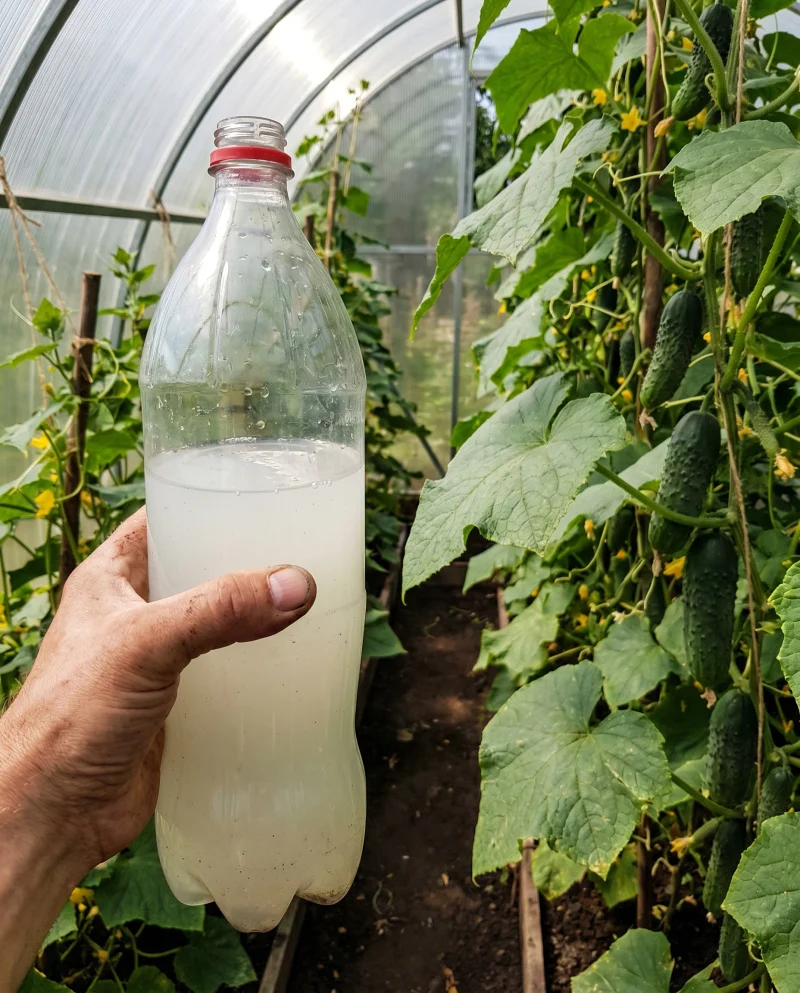
Calcium nitrate supplements what cucumbers often lack
The second component is calcium nitrate, also known as calcium nitrate. It combines quickly available nitrogen and calcium, which cucumbers need very much during growth.
Nitrogen supports the formation of green mass and helps the plant renew growth. Calcium strengthens cell walls, improves tissue condition, and helps fruits better handle stress.
With calcium deficiency, young fruits can be weaker, deformed, or more sensitive to damage. Leaves also lose firmness and the plant handles weather fluctuations worse.
Recipe for two-component spray for cucumbers
For ten liters of settled water, use one liter of milk whey and two teaspoons of calcium nitrate. The water should not be icy, especially if plants suffer from heat.
First dissolve calcium nitrate in a smaller amount of water. Then add whey, pour in the rest of the water, and mix everything thoroughly.
Use the finished solution immediately. Long storage is not recommended, because whey changes quickly and can start to smell unpleasant in the container.
How to apply the spray correctly
Do the spray early in the morning or evening. Leaves are then not overheated and the mixture does not evaporate as quickly as at noon.
Spray with a fine mist on the upper and lower side of leaves. The lower side is often neglected, although the plant can absorb nutrients there very well.
You can also moisten the soil around the plant with the mixture. However, do not overwater the bed so it remains wet for a long time, because cucumbers do not tolerate standing moisture at the roots.
How often to use whey on cucumbers
During intensive growth, you can repeat the spray once every ten to fourteen days. For healthy plants, one to two applications during summer are often enough.
If cucumbers are in good condition, do not overdo it. Too much nutrition can promote lush leaf growth at the expense of fruits or unnecessarily burden the plant.
After rain, check if water washed away the mixture. If heavy storms came and plants pale again, plan the next spray only after the weather stabilizes.
When not to use this recipe
Do not use the spray on plants that are wilted from drought. First water them carefully at the roots and let them recover.
Avoid application in strong sun, during hot wind, and before rain. In these conditions, the effect may be weak or leaves may react with spots.
If plants are heavily attacked by mold, whey with calcium will no longer be enough. Remove diseased leaves, improve stand ventilation, and choose more targeted protection.
Why this pair helps with yellowing
Yellowing of leaves can have more causes. Often it is due to nitrogen deficiency, depleted soil, waterlogging, drought, or damaged roots.
Calcium nitrate supplies quickly available nitrogen that supports green leaf color. Whey adds gentle nutrition and organic substances that can support the plant during load.
However, if leaves yellow due to disease or root rot, fertilization alone will not solve the problem. Always monitor soil moisture, spots on leaves, and stem condition too.
Don’t forget regular harvest
No fertilizer will help fully if you leave overgrown cucumbers on the plant. Large fruits take a lot of energy from the plant and slow down the creation of new ones.
Harvest every day or every other day. Young fruits have better taste and the plant gets a signal that it should continue setting new ones.
When harvesting, do not pull shoots with force. Gently twist off or cut the cucumber so you do not injure the stem and open entry for diseases.
Watering decides whether nutrition takes effect
Cucumbers need even moisture. When soil dries out and then you suddenly overwater it, the plant experiences stress and fruits can curl or become bitter.
Water at the roots, not on leaves. Wet leaves at night increase the risk of molds, especially in dense stands and greenhouses.
Settled water is the best. Cold water straight from the well can cause shock on a hot day and the plant then absorbs nutrients worse.
Mulch keeps roots in better condition
Mulch from dried grass, straw, or fine plant material helps maintain soil moisture. It also reduces overheating of roots during heatwaves.
A layer of mulch also prevents soil splashing on leaves. This helps limit the spread of some diseases after rain or careless watering.
Do not place mulch directly at the plant neck. Leave a small free circle so the stem is not constantly wet and does not start to rot.
Bonus for tomatoes and peppers
You can use a similar mixture for tomatoes and peppers too, especially if they lack calcium or weaken after heatwaves. However, keep dosing mild and always monitor leaf reaction.
For tomatoes, calcium helps mainly in the prevention of problems with fruit ends. For peppers, it supports firmer tissues and better condition of young fruits.
The same rule applies to all crops. Spray outside of sun, do not use a stronger solution, and wash fruits with clean water before consumption.