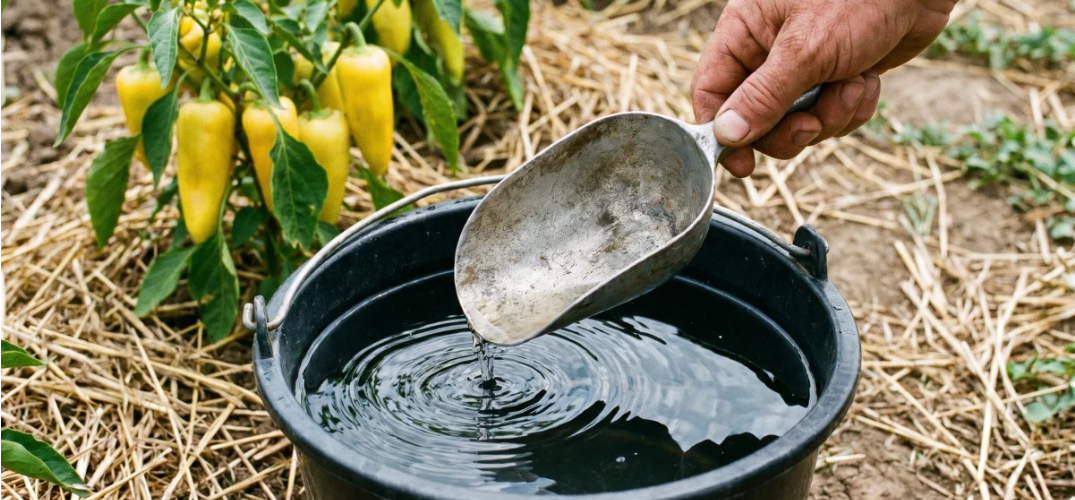
Pepper nutrition in July decides whether the plants will form firm, sweet, and well-developed fruits, or stay with lush leaf growth. At this stage, peppers no longer need constantly more nitrogen, but balanced support for roots, flowers, fruits, and regular watering.
If you give the plant the wrong thing at the wrong time, it may look healthy, but the harvest will be weaker. July fertilization must therefore be mild, precise, and adapted to whether the pepper is flowering, setting fruits, or already ripening.
Why July is decisive for peppers
In July, peppers usually grow the fastest, flower, and at the same time nourish the first fruits. The plant therefore needs water, energy, and minerals in a stable ratio.
It is precisely in this period that it often shows whether the soil was well prepared. Weak soil, irregular watering, or overfertilization with nitrogen will manifest as dropping flowers, weak growth, or deformed fruits.
Peppers are more sensitive than tomatoes. They tolerate cold soil, overwatering, long drought, and sharp temperature fluctuations worse.
What peppers need during leaf growth
At the beginning of the season, peppers need appropriate nitrogen. It supports the formation of leaves, stems, and basic green mass.
However, if you continue with nitrogen even during flowering in too high doses, the plant forms lush leaves at the expense of fruits. Shoots are soft and flowers can drop.
In July, therefore, do not completely omit nitrogen, but reduce the dose. The plant still needs it, but it should no longer be the main nutrient.
During flowering, phosphorus and balance decide
Phosphorus supports roots, energy processes, and flower formation. With weak roots, peppers absorb water and nutrients worse, even if there may be enough in the soil.
During flowering, therefore, switch from universal fertilizer to nutrition suitable for fruit vegetables. It should contain less nitrogen and more phosphorus with potassium.
If you use mineral fertilizer, a type with a ratio similar to 5-10-10 or other fertilizer intended for flowering and fruiting is suitable. Always follow the dose on the package.
Potassium makes the difference in fruit size and quality
Potassium helps the plant manage water and supports fruit formation. It is important for firmness, ripening, and overall pepper condition.
With its deficiency, older leaves can yellow from the edges and fruits develop more slowly. The plant handles heat and drought worse.
Add potassium mildly and regularly. One strong dose after long hunger may not help and can damage roots.
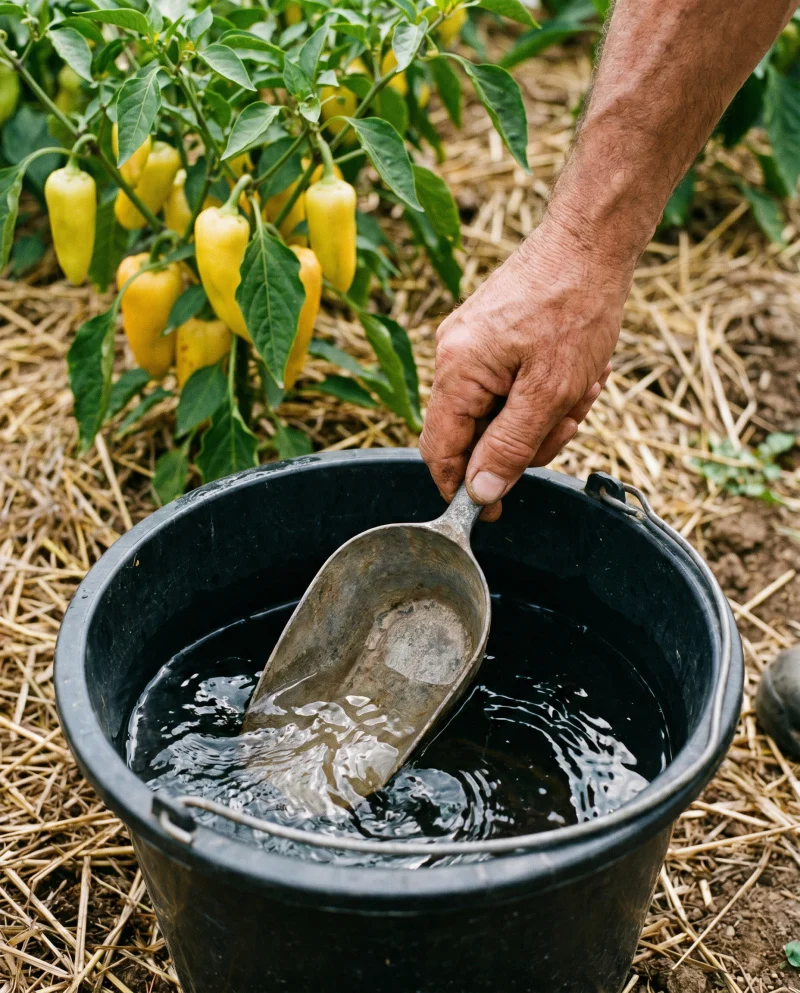
Calcium protects tissues, but needs water
Calcium supports the strength of cell walls and healthy fruit growth. With weak uptake, blossom end rot can appear.
This disorder often does not arise because there is no calcium in the soil. The problem is usually that the plant cannot transport it to the fruit due to drought, watering fluctuations, or damaged roots.
Therefore, just sprinkling calcium will not help. First set even soil moisture, mulch, and healthy roots.
Magnesium, sulfur, and trace elements
Magnesium is part of chlorophyll and is directly related to photosynthesis. With its deficiency, leaves can yellow between veins, especially on older leaves.
Sulfur participates in the formation of proteins and enzymes. Trace elements such as iron, zinc, boron, and manganese are also needed.
You will supplement them most safely with quality fertilizer for fruit vegetables or compost. Random mixing of multiple preparations can cause imbalance.
What soil pH suits peppers
Peppers best absorb nutrients in slightly acidic to neutral soil. Suitable pH is approximately between 6.0 and 6.8.
If the soil is too acidic or too alkaline, some nutrients become less available. The plant then shows deficiencies even in soil that is not really poor.
Make precise pH adjustments according to a soil test. Do not add lime or sulfur blindly in the middle of the season.
Compost is the basis, not a quick fix
Mature compost improves soil structure, water retention, and the life of microorganisms. Peppers in such soil handle heat and short-term stress better.
In July, you can add a thin layer of compost around the plant. Gently work it into the surface and water it.
Do not place compost directly at the stem. Leave a few centimeters of free space so the plant does not steam up.
Organic fertilizers for peppers
Suitable organic options include compost, mature stable manure worked in before the season, comfrey infusion, or organic fertilizer for fruit vegetables.
Comfrey infusion is interesting especially for its potassium content. It is suitable in the period when peppers are already forming fruits.
Use nettle infusion carefully and rather at the beginning of growth. In July, excess nitrogen can promote leaves instead of fruits.
Recipe for comfrey infusion
For 1 kilogram of chopped comfrey leaves, use 10 liters of water. Leave the container in a shady place and mix the mixture every two days.
Fermentation takes approximately 14 to 21 days. When the mixture stops foaming significantly, strain the infusion.
Dilute the concentrate in a ratio of 1:10. Water peppers once every 10 to 14 days on pre-moistened soil.
Use mineral fertilizers precisely
Synthetic fertilizers act quickly and have known composition. This is an advantage if the plant really lacks a specific nutrient.
At the same time, however, they require precise dosing. Higher concentration can burn roots or worsen water uptake during heatwaves.
If growing in containers, use weaker doses and check drainage more often. Substrate in a pot salts up faster than soil in a bed.
Root watering is the surest
The best results with peppers come from nutrition at the roots. The plant absorbs it gradually and evenly if the soil is appropriately moist.
Do not pour the solution onto completely dry soil. First water with clean water and only then apply weaker nutrition.
This reduces the risk of root damage. The plant also utilizes the nutrients it receives better.
When to use foliar nutrition
Foliar nutrition can help with quick supplementation of some micronutrients, especially magnesium or trace elements. Use only preparations intended for foliar application.
Spray early in the morning or evening, never on overheated leaves. The solution must be weak and evenly distributed.
Foliar does not replace root nutrition. It is short-term help when you need a quicker intervention.
Watering decides the use of nutrients
Peppers need evenly moist soil, but do not tolerate waterlogging. Roots must have water and air.
In drought, the plant drops flowers and small fruits. In waterlogging, leaves yellow and roots begin to suffer.
Water at the roots, not on leaves. Water on leaves can support the spread of diseases, especially in humid and warm weather.
Mulch helps against stress and blossom end rot
Mulch from straw, dried grass, compost, or leaves reduces water evaporation. The soil overheats less and roots work more stably.
Even moisture also helps with calcium uptake. This reduces the risk of blossom end rot.
Do not apply mulch directly at the stem. Leave an airy circle around it so the base of the plant does not steam up.
Signs of nutrient deficiency
- Pale older leaves may indicate nitrogen deficiency.
- Yellowing between veins often relates to magnesium or iron.
- Browning of edges of older leaves may indicate a potassium problem.
- Flower drop is also related to temperature, drought, or weak pollination.
- Blossom end rot often relates to calcium uptake and watering.
Symptoms can overlap. Before fertilizing, always check soil moisture, temperature, roots, and the last nutrition doses too.
Signs of pepper overfertilization
Overfertilized peppers can have very dark green leaves, soft lush growth, and few flowers. The plant looks strong, but the harvest lags.
At higher salt concentration, leaves can brown on edges and the plant wilts despite moist soil. Roots have trouble absorbing water.
In such a case, stop fertilizing immediately. For container growing, careful flushing with clean water helps if the pot has good drainage.
Blossom end rot
Blossom end rot appears as a brown to black spot on the bottom of the fruit. The spot can be dry, sunken, or later soften.
It most often relates to uneven calcium supply to the fruit. The trigger is usually watering fluctuation, heat, damaged roots, or too much nitrogen.
Remove damaged fruits. Adjust watering, add mulch, and do further calcium interventions only according to real need.
Diseases that threaten peppers in summer
Peppers can be attacked by fungal, bacterial, and viral diseases. In warm and humid weather, spot diseases and rots spread quickly.
Bacterial spot creates dark spots on leaves and fruits. Viral diseases can manifest as mosaic, leaf deformation, and weak growth.
If you suspect virus, do not compost the diseased plant. Remove it and disinfect tools so you do not spread the problem further.
Mold and spot diseases will not be stopped by fertilization alone
Fertilization can strengthen the plant, but will not cure an already running disease. Remove affected leaves gradually and choose appropriate protection according to the extent of the problem.
Airier stand, root watering, and not over-thickening plants help. Leaves should not remain wet overnight.
If you use a protective preparation, choose one intended for peppers and the specific disease. Observe the waiting period before harvest.
July fertilization plan for peppers
- Beginning of July: check growth, soil moisture, and first flowers.
- During flowering: switch to lower nitrogen and higher phosphorus with potassium.
- At first fruits: supplement especially potassium in mild doses.
- Every 10 to 14 days: use weak root watering according to plant condition.
- During heatwaves: fertilize more carefully and never into dry soil.
- With blossom end rot: address especially water, mulch, and calcium uptake.
What not to do with peppers in July
- Do not use the same nitrogen fertilizer as at the beginning of the season constantly.
- Do not fertilize plants during extreme heat into dry soil.
- Do not combine multiple home and mineral preparations at once.
- Do not water leaves in the evening if the night will be humid.
- Do not add lime or sulfur without knowing soil pH.
- Do not expect fertilizer to cure viral or bacterial diseases.
Big peppers start with balance
Pepper nutrition in July should support flowers, firm fruits, and healthy roots, not only lush leaf growth. The most important is mild nitrogen, enough potassium, appropriate phosphorus, and stable calcium intake through even watering.
If you combine the right fertilizer with mulch, water at the roots, and regular disease control, peppers have a much better chance of bringing big, sweet, and healthy fruits until the end of the season.