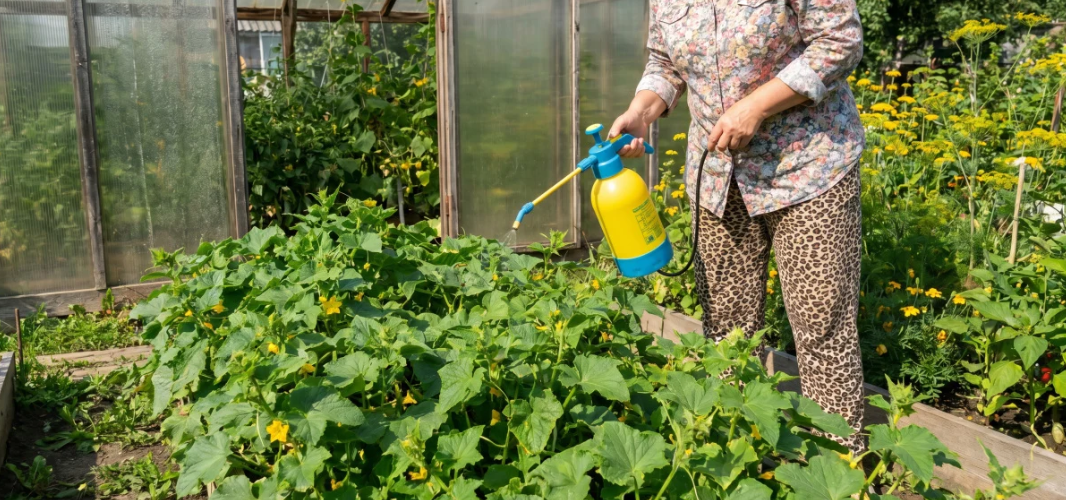
Trichoderma in the garden can be a big help when plants lag behind despite fertilization and the problem is hidden at the roots. This beneficial soil fungus can support the natural balance in the soil, limit the pressure of some pathogens, and improve conditions for cucumbers, tomatoes, and peppers.
However, it is not a magic powder that replaces water, sun, compost, and proper care. It brings the best results preventively, in living soil, and when applied according to the instructions of the specific product.
Why harvest lags despite fertilization
When tomatoes grow weakly, cucumbers yellow, and peppers stagnate, the gardener often adds more fertilizer. Sometimes, however, the plant has nutrients in the soil, but cannot absorb them well.
The cause can be damaged roots, waterlogging, soil salinization, cold, drought, or soil pathogens. If roots do not work, another dose of nutrition will not solve the problem.
It is precisely in such situations that it makes sense to consider biological soil support. Trichoderma does not act as a classic fertilizer, but can help create a healthier environment around the roots.
What is Trichoderma
Trichoderma is a genus of beneficial microscopic fungi that naturally live in soil, compost, and decomposing organic matter. Some selected strains are used in biological preparations for gardens and agriculture.
It is most often used for its ability to colonize the root zone and compete with harmful fungi. However, not every species or strain works the same.
That is why it is important to use a registered or proven product intended for plants, not a random product without clear composition and instructions.
How Trichoderma works in soil
The beneficial fungus competes with pathogens for space and nutrients. When it settles in the root zone, it can make it difficult for harmful fungi to spread.
Some strains can directly act on other fungi and disrupt their filaments. Others create substances that support root growth or activate the plant’s defense reactions.
The result can be a stronger root system, better water uptake, and slower development of selected soil diseases. However, the effect depends on soil conditions and the specific product.
What it can help against
Trichoderma is used especially with the pressure of soil fungi that damage roots and stem bases. Growers often associate it with problems such as wilting, plant collapse, or root rots.
It can be useful when growing cucumbers, tomatoes, peppers, eggplants, zucchini, and other vegetables sensitive to soil stresses. It also makes sense in greenhouses and polytunnels where crops are repeated in the same place.
However, it is not a universal cure for all diseases. It will not solve viruses, bacterial infections, advanced leaf mold, or physiological disorders by itself.
Trichoderma is not a classic fertilizer
Fertilizer supplies nutrients to the plant. Trichoderma helps rather through soil life, competition with pathogens, and root support.
If the soil is poor in organic matter, dry, and dead, the effect will be weaker. Beneficial microorganisms need moisture, air, and at least some food.
It works best together with compost, mulch, and reasonable watering. Do not expect it to replace potassium during fruiting or nitrogen with weak growth of young plants.
When use makes the most sense
It is best to apply Trichoderma preventively before planting or shortly after it. Then it has a chance to occupy the root zone before harmful fungi multiply.
A good time is also at transplanting seedlings. The solution can get directly to the roots and support them in the most sensitive phase.
With already heavily diseased plants, the effect may be limited. If roots are rotten and the stem is damaged, biological support may no longer save the plant.
How to use Trichoderma at the roots
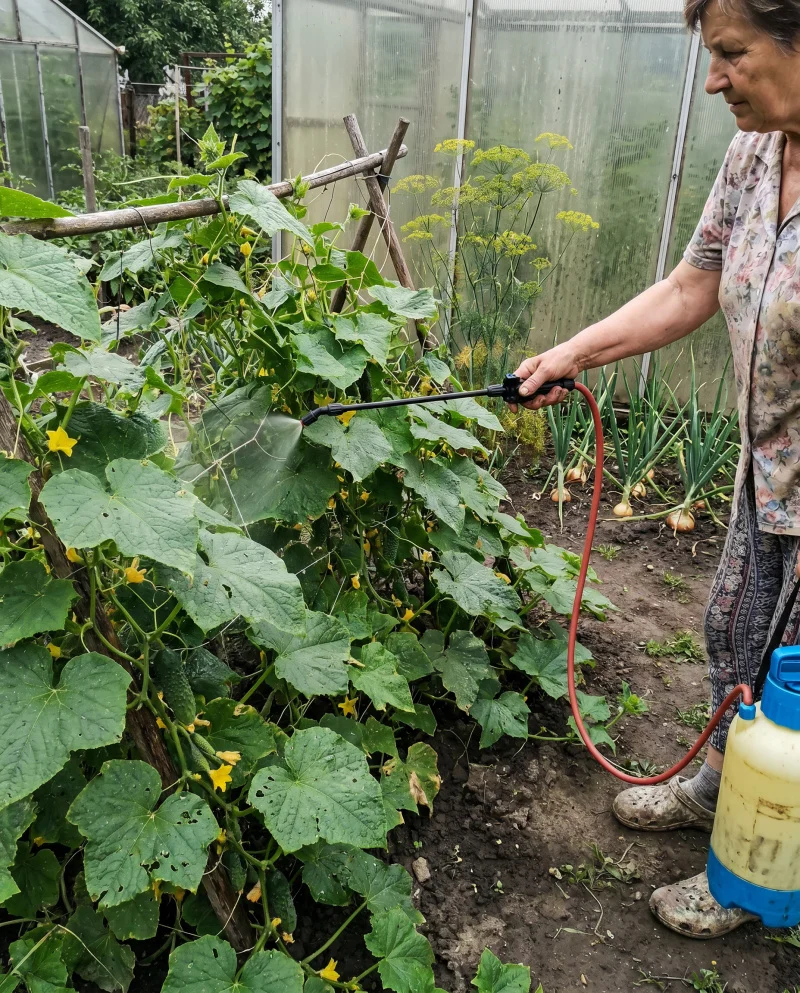
The most common way is root watering. Mix the preparation in water according to the label and apply it directly to the root zone.
The soil should be slightly moist before application. In completely dry soil, microorganisms get in worse and can quickly lose viability.
After application, keep the soil evenly moist, not waterlogged. Without water, beneficial fungi do not spread, but in waterlogged soil roots suffer from lack of oxygen.
Application at seedling planting
At planting, you can use watering into the planting hole or soaking the root ball in solution. Always follow the dose indicated on the package.
Cover roots with quality soil with compost and water the plant with clean water. Do not use strong fertilizer directly at the roots at the same time so you do not burn them.
Trichoderma needs time. A visible difference may appear only after several weeks, especially in plant vitality and root growth.
Leaf spray has different meaning
Some Trichoderma preparations can also be used on leaves according to the label. However, with foliar application, do not expect the same behavior as in the soil.
On leaves, the fungus often does not have such stable conditions for long-term colonization. Sun, drought, and rain significantly shorten its effect.
Therefore, take leaf spray as supplementary biological protection, not as a replacement for proper mold prevention, ventilation, pruning, and root protection.
When to spray leaves
Do the spray early in the morning or evening when the sun is not burning and leaves are not overheated. Avoid rain shortly after application.
Prepare the solution exactly according to the instructions and use it fresh. Do not leave live preparations standing for long hours in the sun or in hot water.
Gently cover leaves on both sides, but do not let the solution run off. Too wet stand can support other diseases with poor ventilation.
Trichoderma with cucumbers
Cucumbers have sensitive roots and react quickly to cold, waterlogging, and soil pathogens. Trichoderma pays off most with them at planting and during intensive growth.
In a greenhouse or polytunnel, it helps especially where cucumbers are grown repeatedly. The soil gets tired more easily there and disease pressure is higher.
However, it will not replace ventilation, regular harvest, and root watering. If leaves are regularly wetted and the stand is dense, diseases can spread even despite biological support.
Trichoderma with tomatoes
With tomatoes, it has the greatest importance in the root zone. It can help plants better handle soil stress and support stronger roots.
However, do not expect it to stop late blight on leaves by itself. This disease spreads especially during humid weather and requires broader prevention.
Tomatoes still need enough sun, airy stand, root watering, and appropriate nutrition during fruiting.
Trichoderma with peppers
Peppers grow more slowly and react to root damage with stagnation. Beneficial fungi can help especially after transplanting and when growing in a greenhouse.
The best results come from combination with warm soil, compost, and stable moisture. In cold, waterlogged soil, peppers suffer regardless of the product used.
If peppers do not flower or drop flowers, the cause may also be temperature, drought, or overfertilization with nitrogen. Trichoderma will not remove these mistakes by itself.
What not to combine with Trichoderma
Since it is a living organism, it is not suitable to apply it together with fungicides that destroy fungi. Such a combination can significantly weaken the beneficial fungus.
Observe the interval between chemical protection and biological preparation according to the manufacturer’s recommendation. If the label does not state an interval, choose rather several days to weeks depending on the type of intervention.
Do not mix it with hot water, strongly chlorinated water, or concentrated fertilizers either. Everything can reduce the viability of the preparation.
How to prepare water for application
Rainwater or settled water at room temperature is the best. If you use tap water, let it stand for several hours.
Do not use hot water. Higher temperature can damage living microorganisms even before application.
Mix the solution just before use. Do not store leftovers for the next day unless the manufacturer explicitly recommends it.
How often to apply Trichoderma
The interval depends on the specific preparation, form, and manufacturer’s recommendation. It is commonly used at planting and then repeatedly during the period of increased disease pressure.
More frequent use does not automatically mean a better result. If the soil does not have suitable conditions, further doses will not help as much as improving moisture, mulch, and organic matter.
When growing in containers and greenhouses, monitor dosing especially carefully. Closed space and smaller substrate volume react to interventions faster.
Why not every preparation works the same
The effect depends on the strain, concentration of live units, freshness, and storage method. An old or poorly stored preparation may have weaker viability.
Check the expiration date and storage conditions. Some products require coolness or protection from direct sun.
Choose a preparation intended for gardening use and a specific method of application. Soil powder and liquid leaf product may not be used the same way.
Most common mistakes when using
- Application into completely dry or waterlogged soil.
- Mixing with fungicide or aggressive disinfection.
- Use of hot, strongly chlorinated, or concentrated fertilized water.
- Expecting immediate effect on an already destroyed plant.
- Storage of opened preparation in heat and moisture.
- Repeating doses without improving soil conditions.
How to support the effect of Trichoderma
Regularly add mature compost to the soil. Beneficial microorganisms need organic matter from which they draw energy.
Mulch with straw material, leaves, or compost so the soil does not dry out and overheat. A more stable environment helps roots and soil fungi.
Do not overwater. Waterlogging squeezes air out of the soil and roots then weaken, even though you used a quality biological preparation.
When Trichoderma will not help
It will not help with viral diseases, serious frost damage, fertilizer burn, or lack of light. These problems are not directly related to soil fungi.
Expect weak effect also in very sterile, dry, or chemically heavily treated soil. Living organisms do not have a suitable environment there.
If the plant is dying from the base, smells, and roots are rotten, it is usually too late. It is better to remove such a plant and heal the soil before the next planting.
Simple plan of use in the vegetable garden
- Before planting, work compost into the soil and adjust soil structure.
- At planting, use Trichoderma as root watering according to the label.
- After planting, keep the soil evenly moist and mulched.
- During summer, repeat the application only according to instructions and plant condition.
- For leaf diseases, do not forget ventilation, pruning, and stand hygiene.
- Do not use fungicides and biological preparations at the same time without manufacturer’s recommendation.
Trichoderma is a soil helper, not a replacement for care
Trichoderma in the garden can significantly help especially where vegetable roots suffer from soil pathogens and soil fatigue reduces plant vitality. It makes the most sense at planting, in greenhouses, and in soil rich in organic matter.
It will not guarantee a gigantic harvest by itself. When you combine it with compost, proper watering, mulching, airy stand, and appropriate nutrition, it becomes a strong part of the natural protection of cucumbers, tomatoes, and peppers.