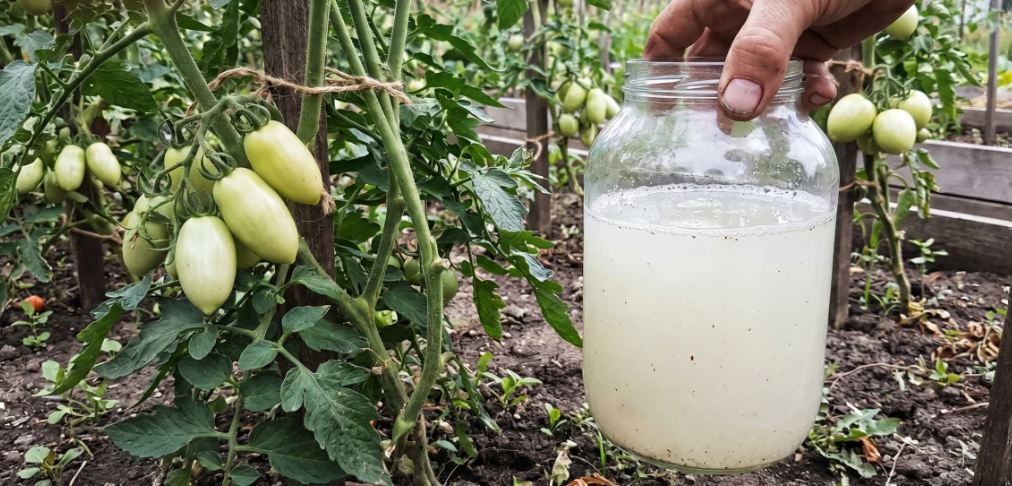
Milk solution for tomatoes can act as a gentle nutrition supplement and, with correct use, support microbial life in the soil. The promise that you will automatically get 20 kilograms of fruits from each plant, however, does not depend on milk, but mainly on the variety, soil, water, light, pruning, and overall condition of the plant.
Milk contains calcium, proteins, sugars, and smaller amounts of other minerals. After strong dilution, it can benefit plants, but concentrated milk in the soil turns sour, smells, and can promote unwanted microorganisms.
Is 20 kilograms of tomatoes from one plant realistic?
Very high-yielding tall varieties can bring an exceptionally rich harvest under ideal conditions. Such a result, however, is not a common standard for every plant or every garden.
Yield is influenced by variety genetics, season length, number of retained shoots, health status, soil quality, and regularity of watering. Milk solution is only a small part of the entire care.
If the plant suffers from mold, drought, lack of light, or damaged roots, milk will not secure a record harvest. First, remove the real cause of the problem.
What milk really provides to plants
Milk contains mainly water, milk sugar, proteins, fat, and mineral substances. From the plant’s point of view, calcium and a small amount of potassium or phosphorus may be interesting.
However, nutrients are not in milk in a ratio that would make it a complete fertilizer. Tomatoes during fruiting need especially appropriate potassium, stable water supply, and balanced soil.
Part of the organic substances from milk is used by soil microorganisms. With excess, however, bacteria that cause sour smell can multiply and worsen the airiness of the substrate.
Why milk is not a full-value fertilizer
One dose of milk will not supply tomatoes with all necessary nutrients. It lacks enough nitrogen for growth and enough potassium for a long period of fruit formation.
Therefore, use milk solution only alongside compost or balanced fertilizer for fruit vegetables. It must not replace basic nutrition for the whole season.
If leaves are pale, growth has stopped, or leaf edges are browning, first determine the real deficiency. Further milk may not help and can complicate the situation.
Safe ratio of milk watering
The ratio of one liter of milk to one liter of water is unnecessarily strong for regular watering. A lot of organic substances remain in the soil that can start to ferment.
A safer recipe is 500 milliliters of milk to 9.5 liters of water. With well-rooted plants, you can use at most one liter of milk to nine liters of water.
- 500 milliliters to 1 liter of milk
- 9 to 9.5 liters of settled or rainwater
- thorough mixing just before use
- application only at the roots on moist soil
Always start with a weaker version. If plants react well and the soil does not smell, you can repeat the solution after a few weeks.
How much solution to pour to one plant
For one adult tomato in a bed, approximately 250 to 500 milliliters of diluted solution is sufficient. A larger plant in permeable soil can get more, but not a whole bucket at once.
For pepper, use approximately 200 to 300 milliliters. Cucumbers, zucchini, and pumpkins can get a similar dose according to root space size.
In containers, reduce the dose by at least half. In a small volume of substrate, organic substances and salts accumulate much faster.
How often to repeat milk watering
Use milk solution at most once every three to four weeks. More frequent application does not automatically bring a higher harvest.
Between individual doses, water only with clean water and use ordinary nutrition according to the plant’s needs. Monitor the smell of the soil, leaf color, and overall growth.
If the substrate starts to smell sour or a slimy coating forms on the surface, immediately stop the milk watering.
Should milk be at room temperature?
Very cold liquid can cause short-term temperature shock in hot soil. However, there is no need to warm milk for a long time.
It is enough to mix it with room-temperature water. Use the resulting solution immediately and do not leave it standing in the sun.
Do not pour old, sour, or smelly milk on plants. Decomposition may have already significantly changed its properties.
Does milk help against blossom end rot?
A dry dark spot on the bottom of tomato or pepper arises with insufficient calcium supply to the fruit. The soil may contain calcium in sufficient quantity.
The most common problem is irregular watering, damaged roots, high salinization, or rapid growth. The plant then cannot smoothly transport calcium to new fruits.
Milk contains calcium, but watering will not solve blossom end rot immediately. Much more important is even soil moisture and a healthy root system.
What to do with blossom end rot
Remove damaged fruits so the plant does not spend energy on their further growth. Keep the soil evenly moist and cover it with mulch.
Do not water once with a large amount and then leave the bed completely dry. Better is regular deep watering adjusted to the weather.
If the problem repeats, check pH and nutrient content in the soil. Targeted calcium fertilizer makes sense only when deficiency is really confirmed.
Milk spray against powdery mildew
Milk spray is most often used against powdery mildew on cucumbers, zucchini, and pumpkins. On the leaf surface, it can create conditions that slow down the development of white coating.
It has the best effect preventively or at the first small spots. Heavily affected leaves will no longer be healthy and must be gradually removed.
Milk spray is not a reliable solution against late blight on tomatoes. For this disease, proceed according to diagnosis and use suitable protection.
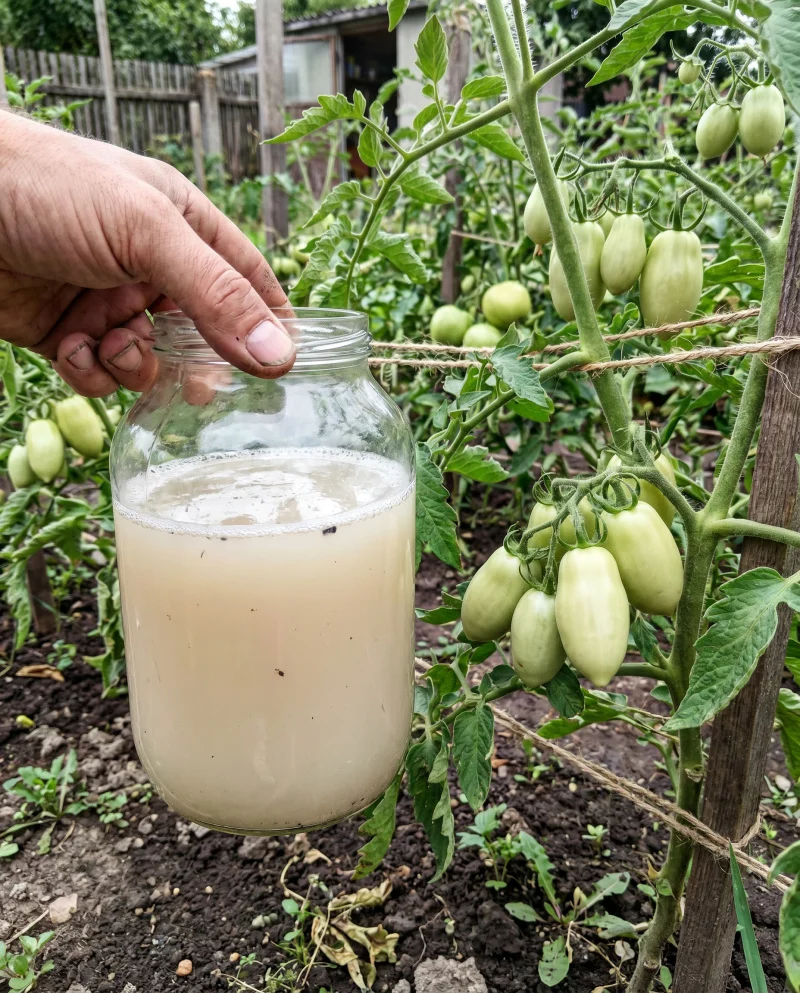
Safe recipe for milk spray
For ordinary spray, mix one part milk with nine parts water. For one liter of solution, therefore, use 100 milliliters of milk and 900 milliliters of water.
With stronger plants, a ratio of 1:5 can be used, but first test it on one leaf. A ratio of 500 milliliters of milk to one liter of water is unnecessarily concentrated.
- 100 milliliters of milk
- 900 milliliters of water
- clean sprayer
- test on one leaf for 24 hours
How to apply milk spray correctly
Spray early in the morning or evening on dry and non-wilting plants. Gently moisten leaves on the upper and lower side.
The solution should not run off leaves. A thick milk film can clog stomata, glue dirt, and after some time smell unpleasant.
After application, there should be several hours without rain. Do not spray during midday heat or just before a cold humid night.
Do you need to wipe milk from leaves?
With correct dilution, there is no need to wipe every leaf. The solution should create only a very fine coating, not a visible white layer.
If you used too strong concentration and a sticky film remained on leaves, rinse the plant with clean water. Next time dilute the spray more.
Wiping a large number of leaves with a cloth can damage fine tissues and transfer diseases between plants.
How often to repeat the spray
Preventive milk spray can be used once every 7 to 10 days. After heavy rain, it will need to be renewed.
With first manifestations of powdery mildew, the application can be repeated after 5 to 7 days. If the coating spreads rapidly despite this, choose a more effective preparation.
Do not use spray endlessly. After two or three applications, evaluate the condition of leaves and the result.
On which plants can milk solution be used
A weak root watering can be tried on tomatoes, peppers, cucumbers, zucchini, and pumpkins. All plants must have healthy roots and permeable soil.
Spray has greater importance on cucumbers, zucchini, and pumpkins susceptible to powdery mildew. With tomatoes, do not consider it a universal protection against all molds.
On sensitive ornamental plants and plants with hairy leaves, always do a test. Some species can react with spots.
When not to use milk solution
Do not pour it into waterlogged, cold, or smelly soil. In such an environment, organic substances decompose without enough air.
Avoid freshly transplanted seedlings, plants with damaged roots, and very young seedlings. First let them root.
Do not use milk when molds, fungus gnats, or slime appear on the soil surface. First adjust watering and substrate hygiene.
Most common mistakes with milk watering
- Use of 1:1 ratio with regular watering.
- Application of milk every week or with every watering.
- Pouring solution onto completely dry or waterlogged soil.
- Use of sour and smelly milk.
- Combining with other strong organic fertilizers.
- Expecting that milk alone will solve blossom end rot.
Most common mistakes with milk spray
- Too concentrated solution creating a white film.
- Spray during hot and sunny noon.
- Application on wilted or heavily diseased leaves.
- Spraying shortly before rain.
- Use against a disease for which milk does not have sufficient effect.
- Skipping the test on one leaf.
What decides about rich harvest more than milk
Tomatoes need at least six to eight hours of direct sun. In shade, they will form fewer flowers and fruits will ripen more slowly.
Deep and regular watering is very important. Sharp moisture fluctuations support fruit cracking and blossom end rot.
During fruiting, use balanced nutrition with appropriate potassium content. Excess nitrogen will create lush leaves, but fewer flowers.
Mulch helps more than another dose of solution
A layer of straw, compost, or dried grass slows soil drying. Roots then absorb water and nutrients more evenly.
Mulch also reduces root overheating and soil splashing on leaves. This helps limit stress and some diseases.
Do not apply material directly at the stem. Leave a free and airy space around it.
Realistic plan of milk use
- Use root watering at most once every three to four weeks.
- For 10 liters of water, use 500 milliliters to 1 liter of milk.
- Pour approximately 250 to 500 milliliters of solution per plant.
- Prepare spray most often in a 1:9 ratio.
- Spray leaves preventively once every 7 to 10 days.
- Interrupt application with smell, spots, or worsening condition.
Milk is a supplement, not a secret of record harvest
Milk solution for tomatoes can, after strong dilution, support soil microorganisms and serve as a gentle supplement. Milk spray can have importance especially in the prevention of powdery mildew on cucumbers and zucchini.
It will not guarantee a harvest of 20 kilograms from one plant. The result is decided by variety, healthy soil, regular water, enough light, proper nutrition, and timely protection against diseases.