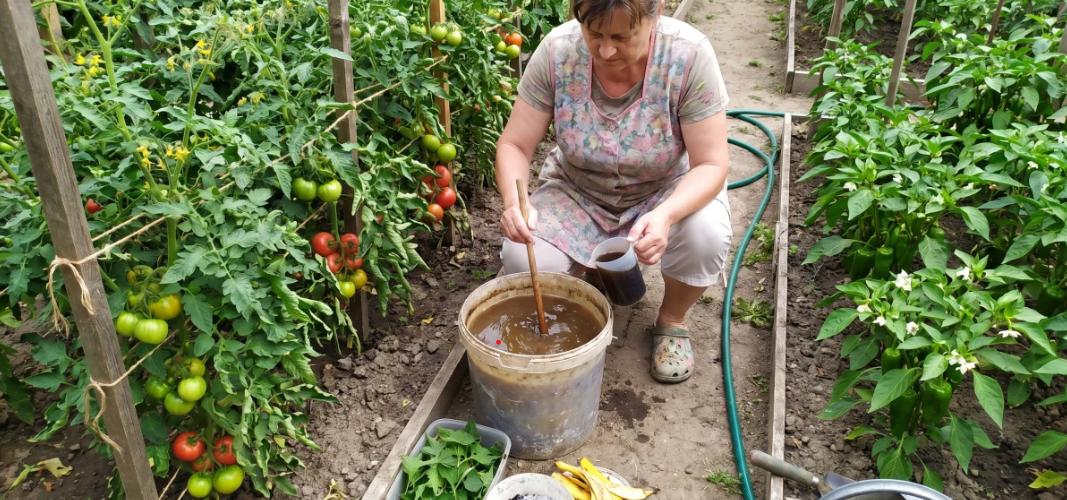
Homemade fertilizer for tomatoes and peppers does not have to have the same composition during the whole season. Young plants need support for roots and leaves, but after setting, too much nitrogen can turn against the harvest.
The best results come from nutrition adapted to what the plant is currently creating. Different nutrients are needed shortly after planting, different during flowering, and others when filling fruits.
Why tomatoes and peppers do not need the same fertilizer all the time
After planting in the bed, plants build a root system, new leaves, and firm shoots. In this phase, they use an appropriate amount of nitrogen, but they also need phosphorus and balanced soil nutrition.
After the start of flowering, priorities change. The plant must maintain flowers, create fruits, and transport water, sugars, and minerals into them.
If you continue with strong nitrogen fertilization at this moment, tomatoes and peppers can form a lot of leaves at the expense of harvest. Shoots remain soft and the stand thickens unnecessarily.
What they need after planting
The first days after transplanting are not suitable for strong fertilizing. Plants must cope with the change of environment and renew fine rootlets damaged during handling.
If you worked mature compost into the soil, wait with further fertilization approximately 10 to 14 days. In poor soil, you can start with a weak compost infusion after rooting.
Nutrition should be mild and balanced. The goal is not the fastest growth, but a firm plant with enough roots and healthy leaves.
Homemade fertilizers at the beginning of growth
At the beginning of the season, a weak nettle infusion, compost infusion, or diluted organic fertilizer makes sense. Use all of them with intervals and never pour them on completely dry soil.
Nettle supplies especially nitrogen and supports the formation of green mass. Therefore, it is suitable before flowering, not as the main fertilizer during the whole season.
Compost infusion has a milder and more balanced effect. It is suitable even for growers who do not want sharp fluctuations in nutrition.
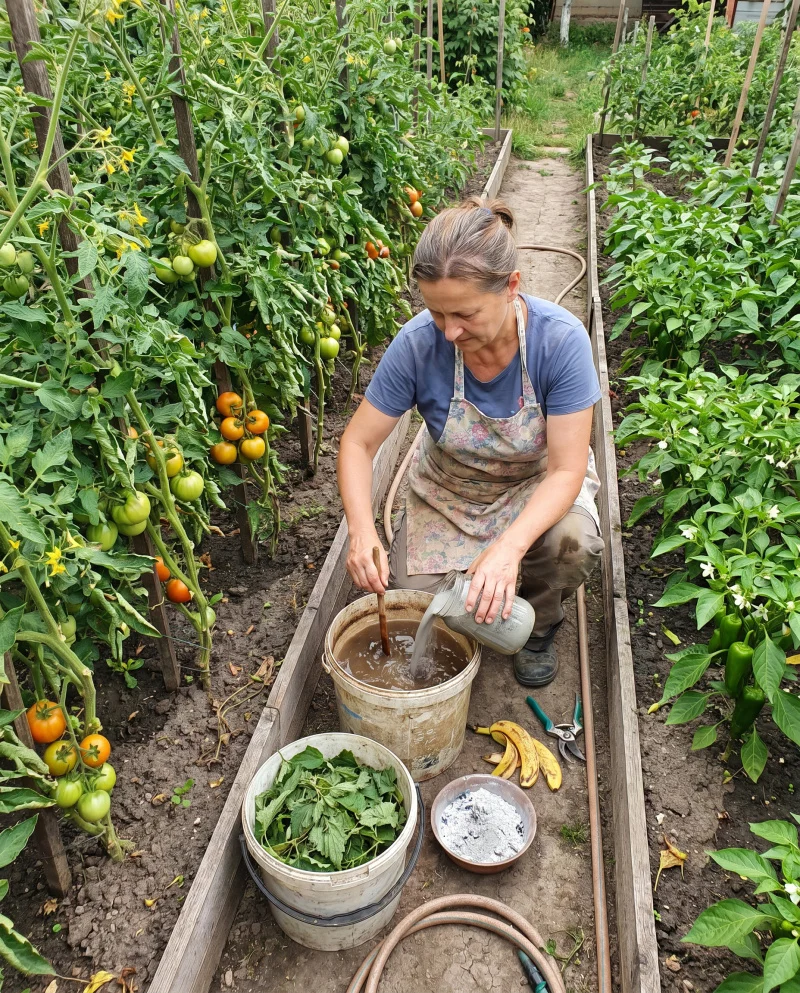
Recipe for nettle infusion
Fill a container with chopped nettle approximately to two thirds. For 1 kilogram of fresh plant mass, use approximately 10 liters of water.
Let the mixture ferment 10 to 14 days in a shady and warm place. Mix it every day or every other day.
When it stops foaming significantly, strain the concentrate. For watering, dilute it in a ratio of 1:10, that is one part of the infusion to ten parts of water.
Use it once every 10 to 14 days only until the beginning of flowering. With very dark green leaves or lush growth, stop applying it sooner.
Recipe for compost infusion
Put approximately one part of mature compost and five parts of water into a bucket. Mix the mixture and let it infuse for 24 to 48 hours.
Strain the infusion and use it without further dilution or dilute it for young plants in a ratio of 1:1 with water. Pour it at the roots, not on leaves.
Apply it once every 10 to 14 days. If the soil is already rich in compost, extend the interval freely.
What they need during flowering
After the appearance of first flowers, reduce the supply of nitrogen. The plant should continue to form healthy leaves, but must not direct most energy to new shoots.
In this phase, phosphorus, potassium, and stable watering are important. Phosphorus supports energy processes and roots, potassium water management and later fruit formation.
Homemade fertilizers, however, do not always contain exactly known amounts of nutrients. Therefore, combine them with observation of the plant and do not apply more preparations at once.
Compost during flowering
A thin layer of mature compost around the plant supplies nutrients slowly. At the same time, it improves soil structure and helps maintain even moisture.
Add approximately one to two handfuls of compost to each plant. Gently work it into the surface and water.
Do not place compost directly at the stem. Leave a few centimeters of free space so the plant neck does not steam up.
Nutrition during fruit formation and ripening
When the first small fruits appear, the importance of potassium increases. It helps with water and sugar transport and supports ripening.
Regular watering is equally important. Even enough calcium in the soil will not help if roots cannot evenly take up the nutrient due to alternation of drought and overwatering.
In this phase, comfrey fertilizer has the greatest importance among homemade preparations. It contains more potassium and less nitrogen than nettle.
Recipe for comfrey
For 1 kilogram of chopped leaves and young shoots, use 10 liters of water. Place the container in shade.
Let the mixture ferment approximately 14 to 21 days. Mix it every other day and strain after the end of foaming.
Dilute the concentrate in a ratio of 1:10. For very strong and well-rooted plants, a ratio of 1:5 can be used, but it is safer to start with a weaker solution.
Water tomatoes and peppers once every 10 to 14 days from the beginning of fruit formation. Always apply the solution to moist soil.
Appropriate calcium and regular water
Calcium is related to tissue firmness and its insufficient uptake can manifest as a dry dark spot at the end of the fruit. Often, however, it is not only poor soil, but irregular watering.
Therefore, first adjust watering and mulch the soil. If the problem repeats, a soil analysis or targeted calcium fertilizer makes sense.
Eggshells decompose slowly and will not solve acute fruit damage. You can compost them, but do not expect a quick effect.
When wood ash makes sense
Wood ash contains potassium and calcium, but at the same time increases soil pH. Use only ash from clean, unpainted, and chemically untreated wood.
For one adult plant, one tablespoon sprinkled finely on moist soil is enough. Then water the soil.
Do not repeat the application more often than once every four to six weeks. With neutral or alkaline soil, rather skip ash.
Do not combine ash with nettle infusion, urea, or other nitrogen fertilizers on the same day. Alkaline environment can promote nitrogen losses.
Yeast is a supplement, not complete fertilizer
Yeast can temporarily support microbial activity in the soil, but does not provide a balanced amount of all nutrients. It should not replace compost or potassium fertilizer.
Mix one cube of fresh yeast with a weight of approximately 42 grams in 10 liters of lukewarm water. Do not add a large amount of sugar because it can support unwanted fermentation in the soil.
Use the solution after 1 to 2 hours without further dilution. Apply it at most once every three to four weeks and only on healthy, rooted plants.
What not to combine at once
- Do not combine nettle infusion in the same term with another strong nitrogen fertilizer.
- Do not use wood ash together with nitrogen fertilizers or in acid-loving planting.
- Do not combine comfrey fertilizer at once with mineral fertilizer rich in potassium.
- Do not use yeast on the same day with multiple fermented infusions.
- Do not apply calcium and concentrated phosphorus at once without checking compatibility.
Leave at least 7 to 10 days between different types of nutrition. The plant will thus have time to react and you will more easily recognize what benefits or harms it.
Signs of overfertilization
The first warning is usually very dark green, thick leaves and rapid shoot growth. The plant looks robust, but has few flowers or drops them.
Soft, watery shoots break more easily and are more sensitive to diseases. At high salt content, leaves can brown on edges and the plant wilts despite moist soil.
With overfertilization, immediately interrupt nutrition. In permeable soil or a pot with good drainage, you can partially flush excess salts with clean water.
In heavy soil, do not overwater so you do not suffocate roots. Wait for new growth and renew further fertilization only after improving the condition.
How to distinguish hunger from overfertilization
With nitrogen deficiency, older leaves pale first and growth slows. With excess nitrogen, leaves are on the contrary dark and the plant forms a lot of soft shoots.
Potassium deficiency can manifest as yellowing and browning of edges of older leaves. The same symptoms, however, are caused by salinization, drought, or root damage.
Before adding further fertilizer, therefore, check soil moisture, drainage, and last nutrition doses. Blind fertilizing often worsens the problem.
Model fertilization plan for the whole season
- Planting day: mature compost in the soil, thorough watering, no strong liquid fertilizer.
- 10 to 14 days after planting: weak compost infusion or nettle infusion 1:10.
- Before flowering: according to growth one more weak dose of nettle, then limit nitrogen.
- Beginning of flowering: thin layer of compost and regular watering.
- First small fruits: comfrey infusion 1:10 once every 10 to 14 days.
- During ripening: continue with comfrey according to plant condition, monitor watering and calcium.
- Ash: only at suitable pH and at most once every four to six weeks.
- Yeast: optionally once every three to four weeks, not as a replacement for main nutrition.
Simple rule for every phase
Choose homemade fertilizer for tomatoes and peppers according to whether the plant is currently forming roots and leaves, flowers, or fruits. At the beginning, use mild nitrogen nutrition, after flowering switch to compost and comfrey.
The biggest mistake is to use all homemade recipes at once. Smaller doses, regular watering, and monitoring leaves will bring a safer result than frequent and strong fertilizing.