Liquid fertilizer from comfrey belongs among rare homemade preparations that supply plants especially with potassium instead of a large amount of nitrogen. That is why it is suitable in the period of flowering and fruit formation, when tomatoes, cucumbers, or peppers need different nutrition than at the beginning of the season.
Comfrey grows vigorously, quickly renews leaves, and during summer you can cut it several times. From collected mass, after fermentation, a dark concentrate with a strong smell arises that is always diluted with water before use.
Why liquid fertilizer from comfrey is so useful
Most homemade plant fertilizers contain a more pronounced share of nitrogen. It supports leaf and shoot growth, so it is suitable especially in spring and at the beginning of vegetation.
Comfrey has a different composition. Its leaves contain potassium, phosphorus, calcium, and a smaller amount of nitrogen, so they support flowering, setting fruits, and their gradual ripening.
Potassium helps the plant manage water and participates in the transport of sugars. With fruit vegetables, it supports firmness, taste, and even ripening of the harvest.
Phosphorus is related to energy processes, roots, and flower formation. Calcium is important for cell walls, but homemade fertilizer does not replace targeted solution of serious calcium deficiency.
Why it is called natural potassium fertilizer
Comfrey can draw minerals with roots even from deeper soil layers. These are stored in its massive leaves and after decomposition, part of them is released into water.
The designation potassium or potash fertilizer does not mean that the homemade infusion has exactly known composition. The nutrient content changes according to soil, leaf age, water amount, and length of fermentation.
Therefore, use the preparation as supplementary nutrition, not as precisely dosed professional fertilizer. With correct dilution, it is suitable especially for gardens that regularly supplement compost and organic matter.
Which comfrey is suitable for fertilizer production
You can use common comfrey and more massive cultivated forms, for example Russian comfrey. It creates a lot of leaf mass and after cutting usually quickly regrows.
Collect healthy leaves and soft shoots without molds, spots, and strong pest infestation. You will get the most mass before full blooming or during the beginning of flowering.
When collecting, use gloves. Leaves and stems are covered with rough hairs that can scratch or irritate more sensitive skin.
If you grow comfrey, do not cut the clump completely at the ground and do not destroy the growth heart. The remaining plant will create more leaves still in the same season.
What you need for homemade comfrey fertilizer
- 1 kilogram of fresh leaves and young shoots of comfrey
- 10 liters of rainwater or settled water
- plastic or other non-metal container
- gauze, thin fabric, or loose lid
- stick for mixing and sieve for straining
- gloves for collection and handling
A metal container is not ideal because the fermenting mixture can react with its surface. A bucket or barrel that you do not use for drinking water or food is practical.
The container must have free space for foam. Do not fill it to the brim because during the first days the mixture can work intensively.
How to make liquid fertilizer from comfrey
Chop fresh leaves and soft shoots into smaller pieces. Disrupted plant mass decomposes faster and immerses better under the water level.
Put approximately 1 kilogram of comfrey into the container and pour 10 liters of water over it. Leaves should remain submerged, so you can weigh them down with a clean stone or plastic grid.
Cover the container with gauze or a loose lid. The mixture needs air exchange, but protect it from insects, leaves, and heavy rain.
Place the barrel in a warm and shady place away from windows and seating areas. Fermentation creates a strong smell that is a natural part of the process.
Mix the content approximately every other day. During the first days, foam and bubbles appear, later the leaves decompose into a dark mushy mass.
How long comfrey must ferment
In warm summer weather, fertilizer is ready in approximately two to three weeks. In cooler conditions, fermentation can take longer.
The finished concentrate stops foaming significantly and most leaves decompose. The liquid is dark and the smell remains intense, although it may no longer be as stormy as at the beginning.
Strain the preparation through a sieve or strong fabric. Add the remaining plant mass to compost or place it under mulch to ornamental shrubs.
How to mitigate the unpleasant smell
You will not completely remove the smell without slowing fermentation. Therefore, place the container where it will not bother with normal movement in the garden.
A small handful of rock dust or zeolite sprinkled on the surface can help. These materials bind part of the odors, but do not change the need for correct dilution.
Do not close the container hermetically. Gases arise during fermentation and pressure in a tightly closed container can damage the lid or packaging.
How to dilute comfrey fertilizer
For ordinary watering, use a ratio of 1:10. One liter of concentrate is therefore mixed with ten liters of water.
For young plants, containers, or more sensitive species, choose a weaker solution, for example 1:15. Use a stronger 1:5 dilution only for well-rooted and demanding plants.
Do not pour undiluted concentrate directly at the roots. High concentration of dissolved substances can damage fine rootlets and disrupt water uptake.
Water plants with the prepared solution once every 7 to 14 days. Between individual doses, monitor growth, leaf color, and flower or fruit formation.
How to apply liquid fertilizer from comfrey
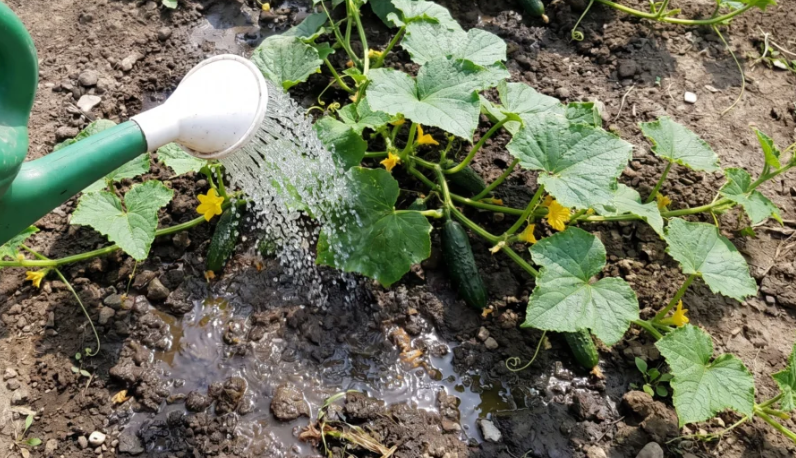
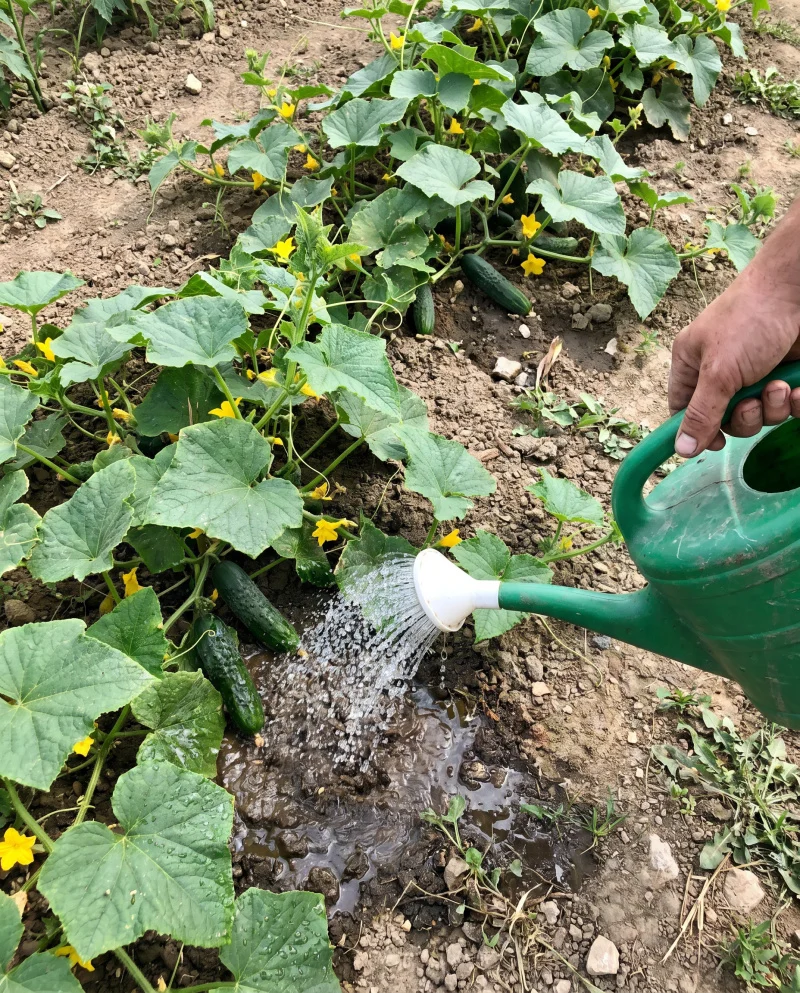
Pour the solution on moist soil at the roots. If the ground is completely dry, first water the plants with clean water and only then add diluted fertilizer.
Do not pour it on leaves, flowers, or fruits. Homemade fermented concentrate is not intended for foliar spray and can leave spots or damage fine tissues.
The best time is morning or evening. During midday heat, plants absorb water worse and evaporates faster from the soil.
Which vegetable species will appreciate it the most
Comfrey fertilizer is suitable for vegetables that form large or numerous fruits. It is most often used on tomatoes, peppers, eggplants, cucumbers, zucchini, and pumpkins.
Start using it after setting the first flowers or small fruits. In this phase, the plant does not need such strong support for leaf growth as at the beginning of the season.
With tomatoes, water the soil at an appropriate distance from the stem. The solution will not increase the harvest by itself if the plant suffers from drought, disease, or lack of light.
Comfrey fertilizer for small fruit
Diluted preparation can be used on strawberries, raspberries, blackberries, and currants. It is suitable during flowering and the beginning of fruit formation if the plants are healthy and the soil is not overfertilized.
With strawberries, do not pour the solution on fruits or into the plant heart. Apply it at the roots and between fertilizing, keep the bed evenly moist.
After harvest, already limit doses according to the condition of the stand. Too frequent fertilizing without knowing the soil can create imbalance between individual nutrients.
Which flowers and ornamental plants will use it
Potassium suits richly flowering plants, such as roses, dahlias, peonies, and many balcony flowers. You can use it also on hydrangeas, but it will not replace pH adjustment needed for changing flower color.
Apply the solution from bud formation to the main flowering phase. With plants in containers, use weaker dilution because in a small volume of substrate, salts accumulate faster.
If leaves start to brown on edges or the plant wilts despite moist soil, interrupt fertilizing. Flush the substrate with clean water and let excess liquid drain.
On which plants comfrey is not very suitable
Strong potassium fertilization is not needed for every crop. Leaf vegetables, such as lettuce or spinach, need a different nutrient ratio during main growth.
Be careful also with young seedlings and freshly transplanted plants. First give them time to root and only then start with mild nutrition.
With carrots, parsley, and other root vegetables, comfrey does not represent basic fertilizer. Excessive nutrition can promote unwanted foliage growth or worsen soil balance.
Comfrey and nettle fertilizer are not the same
Nettle fertilizer contains more nitrogen and best supports young plants that form leaves and shoots. It is therefore suitable especially in spring and in the first growth phase.
Liquid fertilizer from comfrey is used later. Thanks to a higher share of potassium, it is more suitable from flowering to fruit formation and ripening.
You can ferment both plants together, creating a more universal solution with nitrogen and potassium. Such a mixture, however, will not provide potassium nutrition as targeted as standalone comfrey.
- Nettle: more suitable for spring leaf and shoot growth.
- Comfrey: more suitable during flowering and fruiting.
- Mixture: usable as general nutrition at the beginning of summer.
How to store finished concentrate
Pour strained concentrate into labeled plastic canisters or sturdy bottles. Do not fill containers completely to the brim and check them regularly for the first days.
Store them in coolness, shade, and out of reach of children or pets. Do not use containers that someone could mistake for a drink.
Sediment or a thin film do not necessarily mean devaluation. If colored mold, unusual slimy changes, or damaged container appear, rather do not use the content.
It is best to consume the concentrate during the current season. Long storage changes its properties and without laboratory analysis, the nutrient content cannot be exactly assessed.
Common mistakes in production and use
- Container is tightly closed and arising gases have nowhere to escape.
- Leaves remain above the water level, dry out, or start to mold.
- Concentrate is used without dilution directly at the roots.
- Solution is poured on completely dry soil or on wilted plants.
- Comfrey is used too often together with other strong fertilizers.
- Fertilizer is applied to leaves, flowers, and ripening fruits.
Undiluted comfrey can be added to compost
Concentrate or remains after straining can be poured on drier compost. They add moisture and nutrients that microorganisms will use during material decomposition.
However, do not soak the compost. Add liquid in smaller doses and mix it with dry leaves, cardboard, or small twigs.
Simple fertilizer with precise use
Liquid fertilizer from comfrey is prepared from one kilogram of leaves and ten liters of water. After two to three weeks of fermentation, strain it and for ordinary watering dilute in a ratio of 1:10.
It will bring the greatest benefit to tomatoes, peppers, cucumbers, pumpkins, small fruit, and flowering ornamental plants. Use it in moderation, on moist soil, and especially in the period when plants form flowers and fruits.