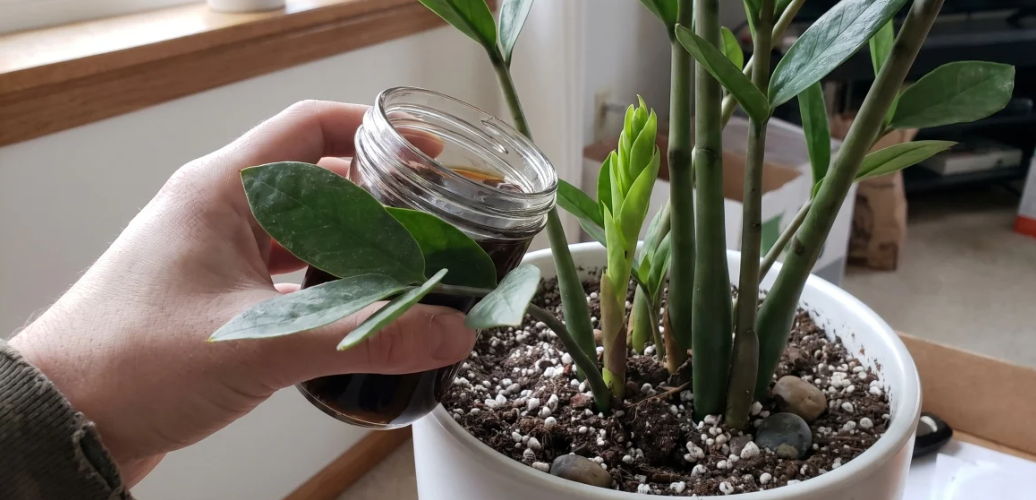
New ZZ plant leaves do not appear only because you water the plant more often or fertilize it. Growth is most often slowed by too large a pot, lack of light, and wet substrate in which the rhizomes gradually lose strength.
ZZ plant comes from East Africa and is adapted to periods of drought. It stores water in fleshy rhizomes and thick leaf stalks, so it does not need constantly moist soil.
The plant can look inactive for several weeks or months, especially during winter. If, however, it has enough light and healthy roots, it usually creates new shoots during the active growth period.
New ZZ plant leaves start with healthy roots
What looks like one leaf is in reality a whole compound shoot growing from the rhizome. The plant creates it only when it has enough reserves and suitable conditions.
If rhizomes are rotting or constantly wet, ZZ plant does not have energy for new growth. It first tries to survive and renew damaged roots.
Therefore, before fertilizing, check the substrate, water drainage, and pot size. Without a healthy root system, even strong fertilizer will not help.
First mistake: too large pot
Too large a pot retains a large amount of substrate that dries very slowly after watering. Roots thus remain in moisture longer than the plant needs.
ZZ plant gradually overgrows the entire pot with rhizomes, but does not create new leaves until “filling” every gap. The problem is especially slow drying of the soil.
The new pot should be only a few centimeters wider than the root ball. Between rhizomes and the wall, two to four centimeters of space is enough.
Small pot does not have to be an immediate problem
ZZ plant tolerates a slightly tighter pot better than an enormous flowerpot. However, firmly growing rhizomes can deform a plastic pot after years.
Repot when roots significantly grow out of drainage holes or the pot cracks. Another signal is very rapid drying of the substrate.
Do not repot the plant every year without reason. Unnecessary disturbance of roots can slow new growth for some time.
The pot must have drainage holes
A decorative pot without drainage is risky for ZZ plant. Water remains at the bottom and rhizomes can rot even when the surface looks dry.
The safest is a grower pot with several holes placed in a cover. After watering, let water drain and pour excess from the cover.
A layer of pebbles at the bottom does not replace drainage. If water has nowhere to go, it remains in the pot regardless of the material used.
Second mistake: little light
ZZ plant tolerates a shady place, but tolerance does not mean active growth. In a dark corner, it can survive long-term without a single new shoot.
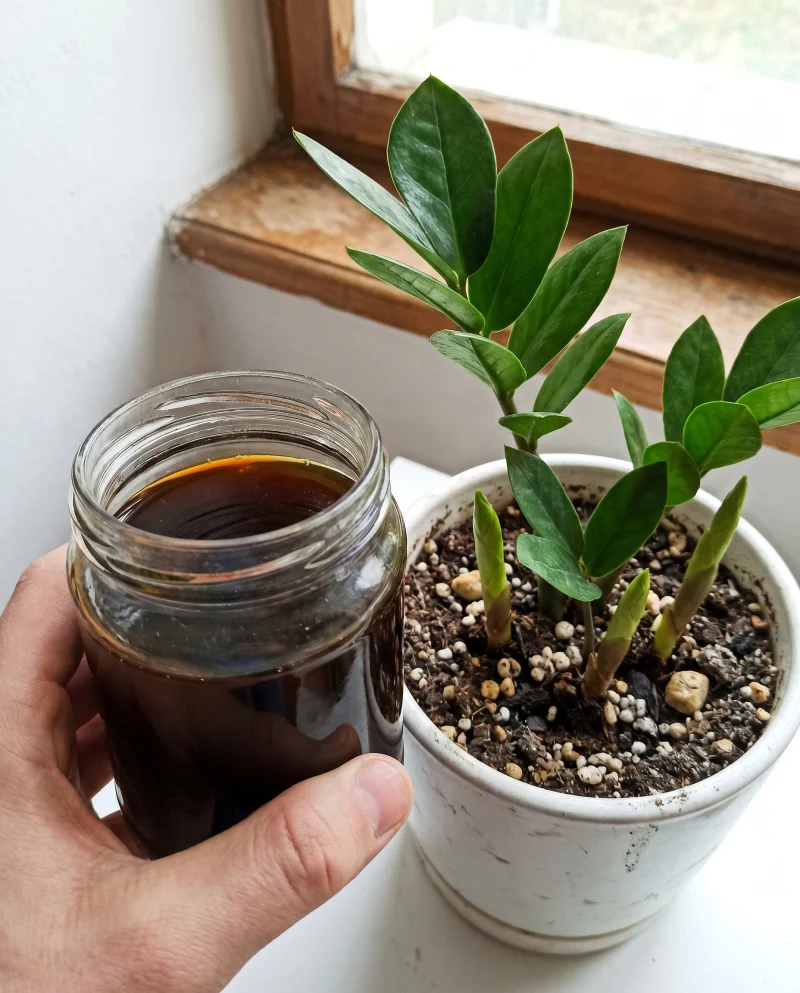
It likes bright diffused light best. A place by an eastern or western window, or further from a southern window, is suitable.
The less light it gets, the slower it consumes water. In shade, therefore, water even more carefully.
Accustom it to direct sun gradually
A plant from a dark interior can burn in strong sun. Pale or brown dry spots appear on leaves.
If you want to move it closer to the window, do it over several weeks. First give it gentle morning or evening sun.
Midday summer sun behind glass can be very intense. A light curtain helps at a southern window.
How to recognize that there is little light
New stalks can be long, thin, and lean toward the window. Individual leaflets are farther apart.
Growth slows significantly and the substrate remains wet unusually long. The plant does not have to yellow immediately.
Regularly turn the pot slightly so growth remains even. Do not turn it every day, the plant needs stable conditions.
Artificial light helps in a dark room
If the room does not have enough natural light, you can use a grow light. It should shine from above and be placed according to the manufacturer’s recommendation.
The plant benefits from a regular daily regime. During the dark period, it can get approximately ten to twelve hours of supplementary light.
An ordinary room bulb often does not provide suitable intensity. More important than light color is its real power and distance from leaves.
Third mistake: incorrect watering
The most common cause of ZZ plant problems is excess water. Rhizomes function as a reservoir, so the plant handles short drought better than wet soil.
Before the next watering, let the substrate dry significantly. It is not enough to check only the top centimeter.
Insert a wooden skewer or finger deeper into the soil. If the soil is still moist, postpone watering.
A fixed watering schedule does not work
The advice to water once a week or once every two weeks can be inaccurate. The speed of drying is influenced by light, temperature, pot size, and season.
In winter, the substrate can dry for several weeks. In summer in a bright place, the plant may need water sooner.
Water according to the state of the soil, not according to the calendar. This reduces the risk of rot and long-term waterlogging.
How to water ZZ plant correctly
When the substrate dries, water it thoroughly. Water should flow through the entire root ball and drain through holes at the bottom.
After a few minutes, pour excess water from the saucer or cover. The plant must not stand in it.
A small amount of water every few days moistens only part of the soil. Better is abundant and less frequent watering.
Yellow leaves often warn of overwatering
With overwatering, older shoots start to yellow and soften. The substrate can smell and rhizomes lose firmness.
Take the plant out of the pot and remove soft, dark, or smelly parts. Make cuts with a clean tool.
Healthy rhizomes are firm. After treatment, plant them in fresh permeable substrate and do not water for several days.
Wrinkled stalks can signal drought
Long-term lack of water manifests as softening and wrinkling of stalks. The substrate is completely dry and the pot is unusually light.
Water the plant gradually so very dry soil can accept water. If water immediately flows along the edges, repeat watering after a while.
One-time drying, ZZ plant usually handles. Repeated extreme drought, however, slows the formation of new leaves.
Fertilizing is not a replacement for light
ZZ plant is not an extremely “hungry” plant. With weak light and slow growth, it consumes few nutrients.
If you strongly fertilize it in such a state, salts can accumulate in the substrate and damage roots. The result is often browning of tips or stopping of growth.
Add fertilizer only when the plant is healthy and has enough light. First save diseased roots.
How often to fertilize ZZ plant
During spring and summer, a weak dose of balanced fertilizer approximately once every four to six weeks is enough. Use half of the recommended concentration.
In winter, limit or completely omit fertilizing if the plant does not grow. With supplementary light, it can grow even in winter, but still does not need high doses.
Never pour fertilizer into completely dry soil. First slightly moisten the substrate or fertilize with ordinary watering.
Permeable substrate protects rhizomes
Heavy universal soil can remain wet for a long time after watering. ZZ plant needs an airy mixture with fast drainage.
You can add perlite, pumice, or coarser mineral component to the substrate. The mixture must not turn into a dense sticky lump after squeezing.
Sand alone may not solve the problem. Fine sand can fill pores and make the substrate even denser.
Do not plant rhizomes too deep
The upper part of rhizomes can be just under the substrate surface. Deep planting prolongs drying and increases the risk of rot.
The plant must stand firmly in the pot, but do not press the soil with great force. Roots need air too.
After repotting, let damaged roots heal for several days. Adjust the first watering to their condition.
Heat supports growth, draft slows it
ZZ plant likes ordinary room temperature. It grows more actively in warmth if it has enough light at the same time.
Cold draft and a cold windowsill can slow roots. In winter, do not let leaves touch cold glass.
Do not place the plant right next to a radiator either. Hot dry air accelerates drying of leaves and substrate.
A new shoot needs time
After correcting conditions, a new leaf does not have to appear immediately. The plant may first renew roots and replenish reserves in rhizomes.
During spring and summer, the first new shoot can be expected within weeks to months. Speed depends on the size and health status of the plant.
Frequent moving, repotting, and testing of further preparations rather prolongs the process. ZZ plant needs stability.
Do not remove old leaves without reason
Healthy green shoots still produce energy. Their removal will not force the plant to create new leaves faster.
Cut only completely yellow, damaged, or rotten parts. Make the cut with a clean tool at the soil surface.
After cutting, do not water directly into the wound. Let the place dry naturally.
Regularly clean leaves from dust
A layer of dust reduces the amount of light falling on leaves. Therefore, gently wipe ZZ plant with a damp soft cloth.
Do not use oil, milk, or polishing preparations without checking. They can clog the leaf surface and capture more dust.
Clean leaves also make it easier to control spider mites, mealybugs, and other pests.
Check the three mistakes in the correct order
First find out if the substrate is not wet and roots are not rotting. Then assess the pot size and drainage quality.
When roots are healthy, move the plant to a brighter place. Add fertilizer only after the appearance of active growth.
With this order, you will prevent burdening the weakened plant even more with repotting, fertilizing, and excessive watering at once.
- Choose a pot only a few centimeters wider than the root ball.
- Place the plant in bright diffused light.
- Before watering, let the substrate dry significantly.
- After watering, always pour excess water from the cover.
- Fertilize mildly only during active growth of a healthy plant.
New leaves come when the plant stops fighting for survival
You will support new ZZ plant leaves especially with healthy rhizomes, a suitably sized pot, and enough diffused light. Overwatering, a huge pot, and a dark corner will slow the plant much more than occasionally skipped fertilizer.
After removing mistakes, give ZZ plant time and stable conditions. When it has drier roots, light, and mild nutrition, a new shoot will appear naturally without miraculous preparations.