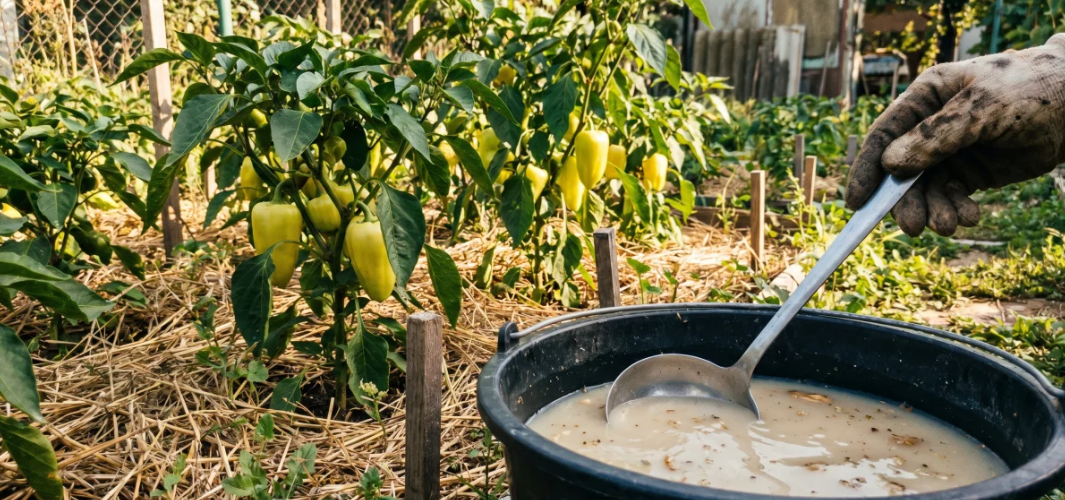
Fertilizing peppers in July decides whether the plants will form large, firm, and sweet fruits, or will exhaust themselves before the end of the season. In this period, peppers no longer need mainly leaf growth, but balanced support for flowering, fruit setting, calcium, potassium, phosphorus, and regular watering.
Peppers are in the most important phase of the season in July. The plant already has the basic stand formed, is flowering, setting the first fruits, and at the same time needs strength for further flowering.
If you feed it the same as after planting now, you can easily lead it in the wrong direction. Too much nitrogen will create beautiful leaves, but the fruits will remain smaller or there will be fewer of them.
Why fertilizing peppers in July is so important
Fertilizing peppers in July must respect the growth phase. The plant no longer needs to rapidly increase green mass, but needs to nourish flowers, small fruits, and ripening peppers.
In this period, the consumption of potassium and phosphorus increases. These nutrients support fruit quality, tissue firmness, better ripening, and resistance to stress.
At the same time, do not forget calcium and magnesium. Without them, yellow leaves, weak plants, or blossom end rot can appear.
Dose nitrogen in July carefully
Nitrogen is important for leaf and stem growth, but in July peppers need less of it than at the beginning of growing. If you give too much, the plant may focus on leaves instead of fruits.
A typical sign of excess nitrogen is robust, dark green plants with lots of leaves, but weaker flowering. The grower has the feeling that the pepper looks healthy, but the harvest lags.
Add nitrogen only when the plant is paling, growth is weak, and leaves are light. Even then, rather use a gentle dose than a strong fertilizer at once.
Potassium is the nutrient for fruits
Potassium is key for peppers in July. It helps the plant manage water, supports fruit firmness, and improves ripening.
If potassium is missing, the plant tolerates heatwaves worse and fruits can remain smaller. Sometimes drying of leaf edges or overall fatigue of the stand is added.
A fertilizer for fruit vegetables with a higher potassium content is suitable. With organic growing, wood ash can also help, but only in a small dose and not on alkaline soil.
Phosphorus supports roots and flowering
Phosphorus is often associated especially with roots, but it also has importance in flowering and fruit formation. Peppers need it for energy processes that occur during fruit setting.
With phosphorus deficiency, the plant grows more slowly, flowering may be weaker, and fruits develop unevenly. The problem often worsens in cold or too wet soil.
If peppers flower, but the plant looks slowed, a fertilizer with a nutrient ratio where phosphorus and potassium are higher than nitrogen can help.
Calcium protects fruits from blossom end rot
Brown or dark spots on the ends of fruits often relate to a disturbance in calcium uptake. This does not always mean that calcium is completely missing in the soil.
Very often the plant cannot absorb it due to irregular watering. If the soil first dries and then you suddenly overwater it, the pepper gets stress and calcium uptake is disrupted.
Even moisture, mulch, and if needed calcium nutrition help. Use foliar calcium preparations according to instructions and never during sharp sun.
Magnesium is revealed by leaves
Magnesium is part of chlorophyll, so it is directly related to green leaf color and photosynthesis. If it is missing, the plant cannot fully use light.
A symptom can be yellowing between veins, while veins remain green. It usually first appears on older leaves.
In such a case, bitter salt, i.e. magnesium sulfate, used as a weak watering or foliar spray can help. Do not overdo the dose so you do not disrupt the nutrient balance.
What fertilizer to choose in July
At the beginning of the season, a balanced fertilizer with a similar ratio of nitrogen, phosphorus, and potassium is often used. In July, however, it is better to switch to nutrition intended for flowering and fruits.
Look for fertilizer that has less nitrogen and more potassium with phosphorus. With bought fertilizers, monitor the NPK label and recommended dosing.
With organic nutrition, compost, mature manure, comfrey infusion, or mild fertilizer for fruit vegetables help. Fresh manure does not belong at the roots of peppers in July.
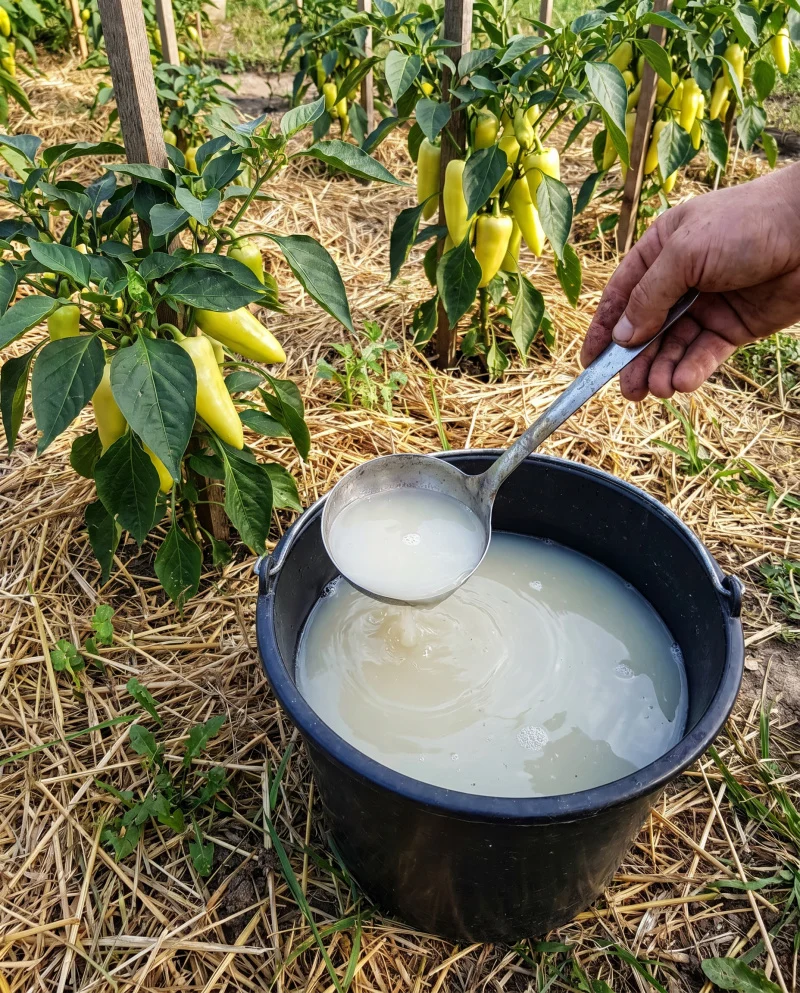
Compost is the basis, not a quick rescue
Compost improves soil structure, supports soil life, and supplies plants with a wider spectrum of nutrients. With peppers, it is best when it is well matured.
In July, you can use it as a thin layer around the plants. Gently work it into the soil surface and water.
Do not heap compost directly at the stem. Leave a small free space at the plant neck so moisture does not hold there and rot does not arise.
Use ash carefully
Wood ash contains potassium and calcium, so it can be useful with peppers. It is suitable especially where the soil is not too alkaline.
Use only ash from clean, untreated wood. Ash from coal, briquettes, or painted wood does not belong in the garden.
A thin layer scattered around the plant and subsequent watering is enough. Too much ash can increase soil pH and worsen the uptake of some nutrients.
Watering decides whether fertilizer will work
No fertilizer will work well if the pepper does not have stable water. Roots need appropriate moisture to be able to absorb nutrients.
Water at the roots, best in the morning or evening. The water should be settled and not icy.
Keep the soil evenly moist, but not waterlogged. Peppers do not tolerate standing water at the roots, so the bed must be permeable.
Mulch helps in hot July
In July, the soil dries and overheats quickly. Mulch from straw, hay, or dried grass helps retain moisture and protects roots from temperature fluctuations.
Mulch also limits weeds, which take water and nutrients from peppers. The layer should not be too thick so excess moisture does not hold under it.
Leave a free circle at the stem. Peppers need a drier plant neck, otherwise they can start to rot.
Foliar nutrition helps with rapid deficiency
If the plant shows a clear deficiency of micronutrients, foliar nutrition can help. Nutrients get to the plant faster through the leaf than through the roots.
Do the spray only early in the morning or evening. Never spray during heat or direct sun.
Use weak dilution according to instructions. A strong solution can burn the leaves and harm the plant more than help.
Most common diseases also relate to care
Peppers can suffer from spots, fungal diseases, viruses, and blossom end rot. Not everything is solved by fertilization, but good nutrition increases plant resistance.
The most help comes from an airy stand, root watering, clean leaves, and regular control. Remove diseased leaves in time and do not leave them lying under the plants.
If you suspect a virus, for example mosaic coloring and leaf deformations, isolate the plant and disinfect tools. Viral diseases are not cured by homemade fertilizer.
What to watch on leaves and fruits
Light green leaves and weak growth may indicate nitrogen deficiency or a root problem. Yellowing between veins often reminds of magnesium deficiency.
Brown fruit ends warn of a calcium problem or irregular watering. Small fruits and flower drop can be caused by heat, drought, or weak pollination.
With every symptom, first check soil and water. Only then add fertilizer so you do not solve the wrong problem.
Most common mistakes when fertilizing peppers in July
- Using too much nitrogen and the plant goes to leaves instead of fruits.
- Fertilizing dry soil and roots get stress.
- Forgetting calcium and regular watering, so fruits get brown ends.
- Sprinkling too much ash regardless of soil pH.
- Spraying foliar nutrition during sun and damaging leaves.
Simple plan for July
Once every two weeks, fertilize peppers with a weaker dose of fertilizer for fruit vegetables with a higher content of potassium and phosphorus. Always fertilize moist soil.
Between fertilizing, monitor leaves, flowers, and fruits. If the plants grow healthily, do not add more preparations just out of fear.
Maintain even watering, mulch, and regularly remove damaged leaves. This way you create conditions in which peppers can really use the nutrition.
Large pepper harvest needs balance
Fertilizing peppers in July is not about the strongest dose, but about the correct ratio of nutrients. Plants need less nitrogen, more potassium and phosphorus, enough calcium, magnesium, and stable water.
If you combine nutrition with mulch, regular watering, and timely leaf control, peppers will have the strength to form large, healthy, and tasty fruits. It is precisely in July that it is decided whether the harvest will be only average or really rich.