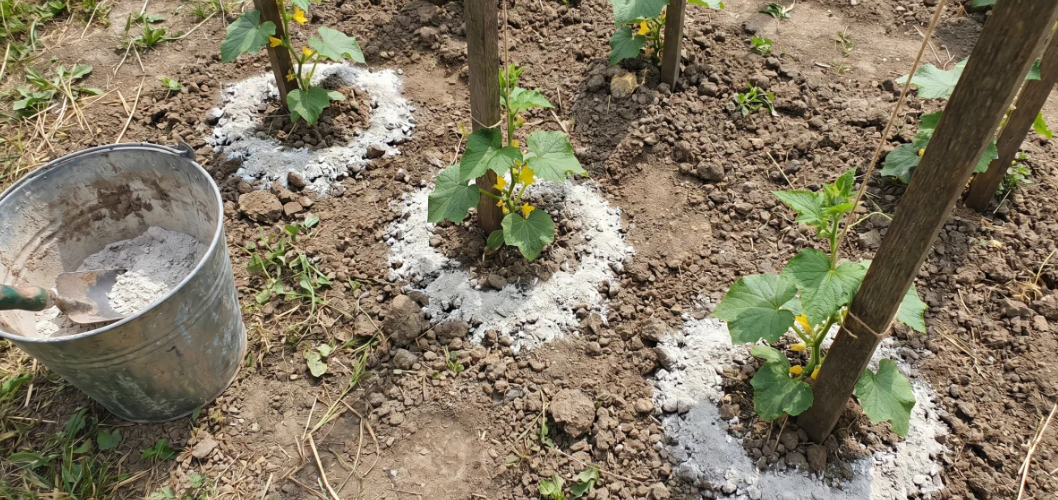
Soil dusting after rain can greatly help plants when the bed is waterlogged, heavy and without air. A mixture of finely ground diatomaceous earth and clean wood ash can improve the soil surface, supply minerals and reduce conditions that after long rains favor molds and rot.
Heavy rain is not always a blessing for the garden. If it rains for several days in a row, the soil clumps, air is squeezed out of it and plant roots start to work worse.
In such an environment fungal diseases, root rot and plant weakening spread quickly. That is why after heavy rains it pays to help not only the leaves, but especially the soil around the roots.
Why soil dusting after rain is useful
Soil dusting after rain makes sense mainly when the bed surface is muddy, clumped or forms a hard crust. Such soil breathes worse and roots have less oxygen.
The plant can then yellow, wilt or stop growing, even though it has too much water. The problem is not thirst, but that the roots are literally suffocated in a wet environment.
A dry mineral dusting helps lighten and partially dry the soil surface. At the same time it can limit places where moisture holds directly at the stems.
What happens in waterlogged soil
When the soil is long-term saturated with water, there is little air left between particles. Roots need oxygen just like the aboveground part needs light.
Without air roots weaken and the plant absorbs nutrients worse. Subsequently pale leaves, slowed growth and higher susceptibility to diseases appear.
Waterlogging also supports pathogenic microflora. Rotting processes start especially where moisture holds at the stem, under dense mulch or in clumped heavy soil.
First component: finely ground diatomaceous earth
Diatomaceous earth, also known as diatomite, is a natural mineral material. In the garden it is used mainly to improve physical properties of soil and as a dry dusting on the surface.
Finely ground diatomaceous earth helps lighten the soil and creates a drier layer on the surface. This is advantageous after rains because the wet surface clumps less quickly into a hard crust.
Its role is not to miraculously cure sick plants. It works best as a helper that improves conditions in the soil and reduces long-term holding of moisture on the surface.
Second component: clean wood ash
Wood ash contains mainly potassium, calcium and other mineral substances. After rains nutrients from it gradually release and get into the top soil layer.
Potassium helps plants better manage water and supports their overall resistance. Calcium affects tissue firmness and soil structure.
Use only ash from clean, untreated wood. Ash from coal, briquettes, painted wood, chipboard or waste does not belong in a vegetable garden.
How to prepare the mixture after rains
The basic ratio is simple: mix equal amounts of finely ground diatomaceous earth and clean wood ash. For example three kilograms of diatomaceous earth and three kilograms of ash.
Mix the mixture thoroughly in a dry container. If the ash is lumpy, first sift it so it can be evenly scattered around the plants.
Prepare only the amount you can store dry. If the mixture gets wet, it will sprinkle worse and its effect on the soil surface will be weaker.
How to apply the mixture around plants
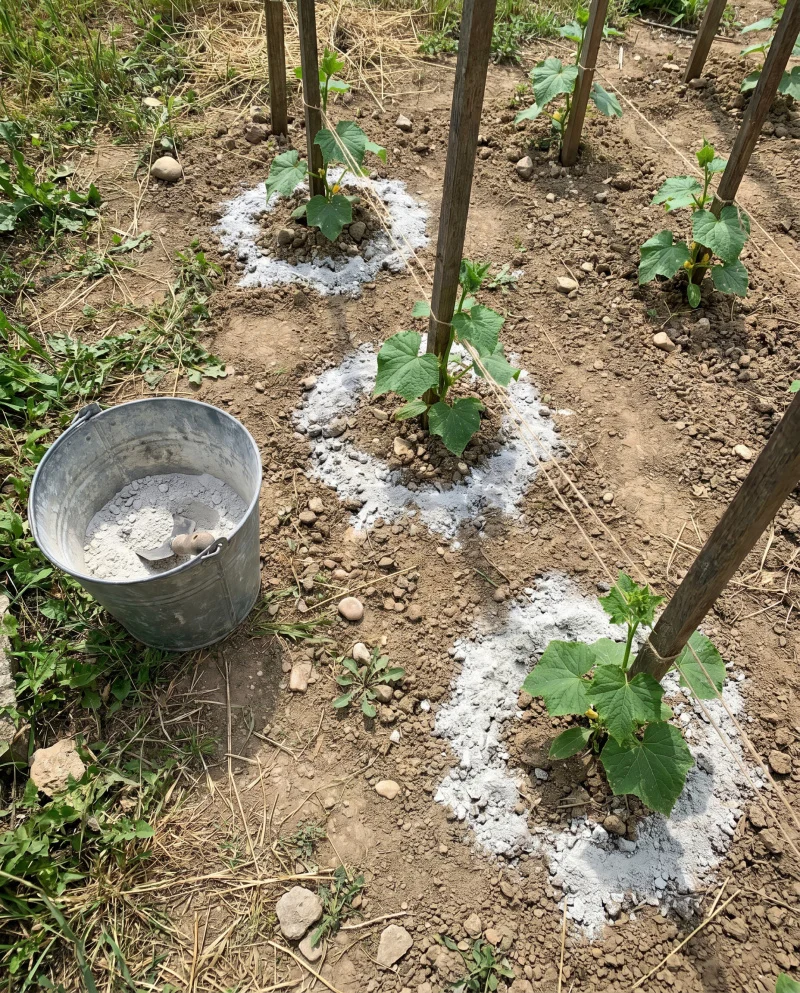
Sprinkle the mixture in a thin layer around the plants, not directly on leaves. Focus most on the soil surface in the root zone and places where a crust forms.
Do not pour large piles at the stem. With tomatoes, peppers, cucumbers, zucchini or cabbage leave a little free space directly at the stem so the place is not irritated or unnecessarily covered.
After application you can very gently loosen the soil surface. It is enough to go shallow so you do not damage roots that are often close to the surface after rains.
When is the best time for dusting
The best time is after heavy rain when the water has already soaked in but the soil is still very moist. Then the mixture helps the surface dry faster.
If the soil is muddy and sticks to shoes, first wait. Walking on a wet bed would compact it even more and damage roots.
It is ideal to work when the surface can be gently disturbed with a hoe or fingers. The mixture then gets into contact with the soil but does not turn into mud.
Where the mixture helps most
It has the greatest importance with plants sensitive to waterlogging, such as tomatoes, peppers, cucumbers, zucchini, pumpkins, strawberries or young seedlings. These crops suffer quickly from diseases in long moisture.
It also helps in beds with heavier clay soil. It clumps after rain, dries slowly and forms a hard crust on the surface.
On light sandy soil use the mixture more carefully. Such soil usually does not hold water for long and the problem may be rather lack of nutrients than waterlogging.
When to rather limit ash
Wood ash increases soil alkalinity. If you use it often or in large doses, it can worsen the uptake of some nutrients, especially on soils with higher pH.
If you grow plants that like acidic soil, do not use ash around them or only very carefully. This includes for example blueberries, rhododendrons or azaleas.
With vegetables a thin layer and reasonable repetition is enough. The goal is not to cover the bed with ash, but to help the soil after rain and add mild mineral support.
Diatomaceous earth is not a cure for everything
Diatomaceous earth can help improve the soil surface and reduce wet conditions, but it will not cure already started root rot. If the plant wilts, softens at the stem or the soil smells, you need to act more thoroughly.
In such a case remove diseased parts, improve water drainage and check whether the plant does not stand in a wet place. Sometimes transplanting or a raised bed helps.
Take the dusting as prevention and support after rains. The best results come in combination with loosening, ventilating the stand and correct watering after weather improvement.
Do not forget soil loosening
After heavy rains a hard crust often forms. It prevents air access to the roots and slows soil drying.
When the surface dries a bit, loosen it shallowly. Do not use deep digging between plants so you do not damage fine roots.
After loosening you can use the prepared mixture. The soil remains airier and the surface will not clump as quickly with the next rain.
What to do with mulch after rains
Mulch is excellent during drought, but during long rains it can hold too much moisture. Especially a thick layer of fresh grass can turn into a wet blanket.
If slugs, mold or a musty smell appear under the mulch, temporarily rake the layer away from the stems. The soil then gets more air.
After drying you can return the mulch or replace it with a more airy material. Always leave a small free circle at the stems.
Most common mistakes after heavy rains
- Walking on waterlogged beds and compacting the soil even more.
- Sprinkling ash in a large layer regardless of soil pH.
- Leaving wet mulch pressed directly at plant stems.
- Continuing to water according to habit even though the soil is still full of water.
- Ignoring the first signs of rot, yellowing and molds at the lower leaves.
Simple procedure after downpour
First wait until the water soaks in and the bed surface is no longer complete mud. Then remove diseased leaves, rake wet mulch away from stems and loosen the soil shallowly.
Then sprinkle a thin layer of the diatomaceous earth and wood ash mixture around the plants. Focus on places where the soil clumps, holds moisture and plants are already starting to yellow.
In the following days monitor the weather. If it is going to rain again, do not use additional liquid fertilizers and give plants mainly air at the roots.
Dry mixture helps when used in moderation
Soil dusting after rain with diatomaceous earth and wood ash can be very useful if you use it in a thin layer and in the right place. It helps the soil surface dry, supplies minerals and reduces conditions that suit molds.
The greatest effect, however, comes together with other steps: loosening, raking away wet mulch, limiting watering and regular plant control. After rains it is not enough to nourish the leaves, you need to save mainly the roots.