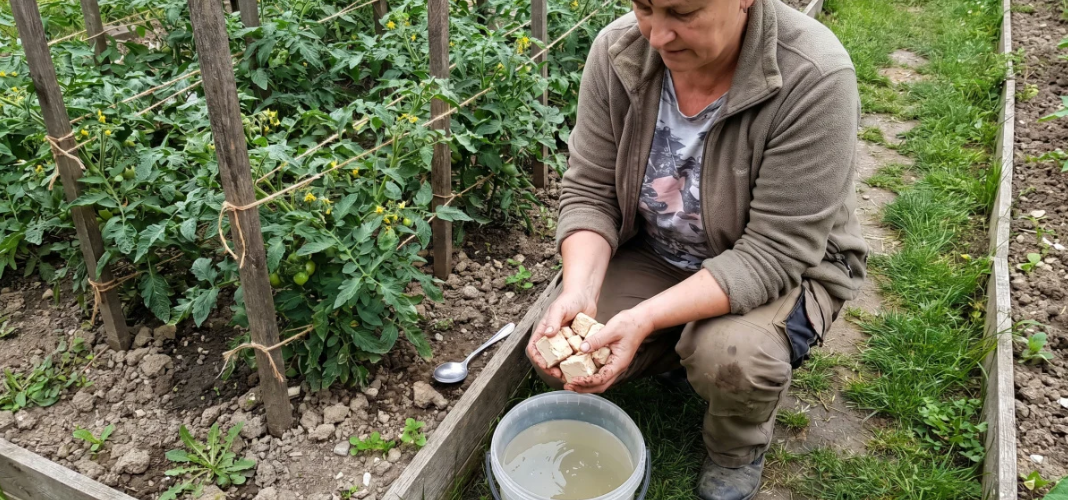
Yeast as fertilizer for tomatoes belongs among the most known homemade tricks, but it does not work as a miraculous nutrition for everything. It can help tomatoes after seedlings take hold and with weaker growth, but with incorrect dilution or too early use it can unnecessarily weaken sensitive roots.
Many gardeners reach for yeast immediately after planting because they want to give plants a fast start. This is where a common problem arises.
A freshly transplanted tomato first needs peace, water and time to root. A strong watering, even homemade, can do more harm than good in this phase.
Why yeast is used with tomatoes
Yeast contains live microorganisms and substances that can support soil life activity. In warm and mildly moist soil it helps start processes that are beneficial for roots.
It is not, however, a complete fertilizer in the true sense of the word. Yeast does not give tomatoes enough potassium, calcium or phosphorus for the whole season.
It works best as a supplementary support. It helps the soil work more lively, but does not replace compost, balanced fertilizer or correct watering.
Yeast as fertilizer for tomatoes after seedlings take hold
Yeast as fertilizer for tomatoes makes sense only when the plants have taken hold after planting. You recognize it by the fact that they start creating new leaves and the top of the plant looks fresh.
In normal weather this is approximately ten to fourteen days after transplanting. If it was cold, windy or the plants stood after planting, wait even longer.
Fertilizing is supposed to support a plant that is already working. It should not force a weak or stressed tomato to grow at all costs.
Simple recipe for yeast solution
In ten liters of lukewarm water crumble ten grams of dry yeast or approximately one hundred grams of fresh yeast. Add one to two tablespoons of sugar, which helps fermentation.
Leave the mixture to stand in a warm place for several hours to one day. Do not close the container tightly because gas forms during fermentation.
Before use mix the solution. If you prepared a stronger concentrate, dilute it further with clean water so it is not too strong for the roots.
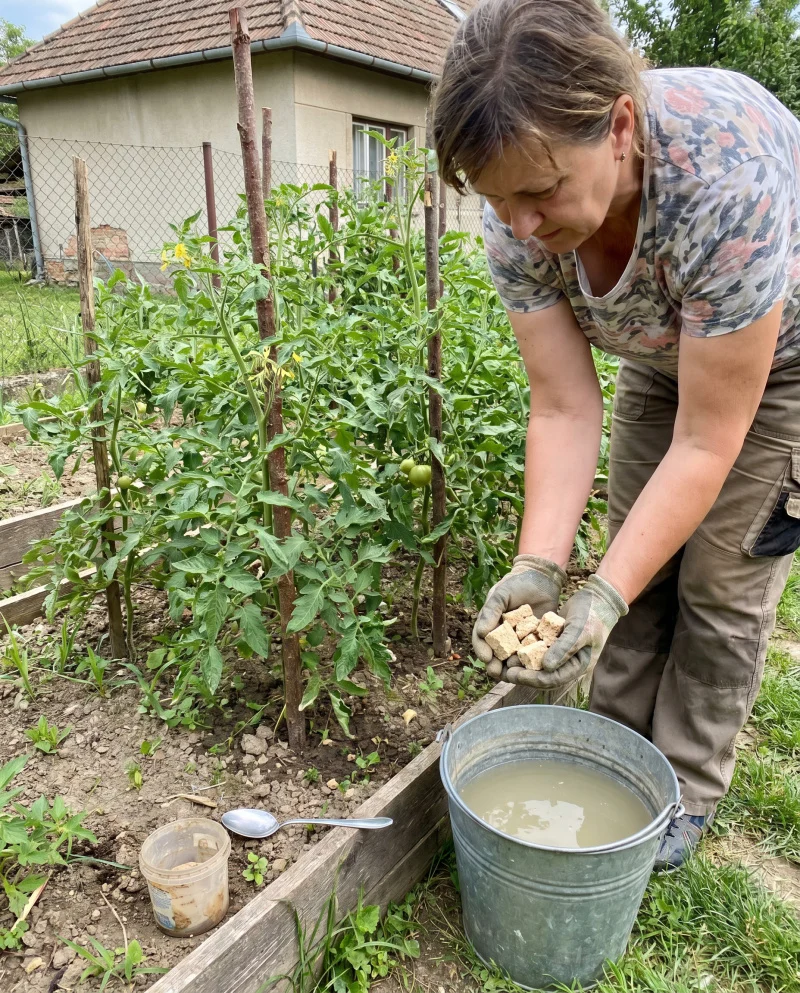
How to dilute yeast watering correctly
It is safer to use a weaker solution than a strong one. With younger tomatoes you can dilute one liter of prepared concentrate in nine liters of water.
Do not pour a whole bucket to one plant. An adult plant is enough approximately half a liter to one liter of diluted solution according to the size and state of the soil.
With tomatoes in pots reduce the dose. In a smaller substrate volume nutrients and by-products of fermentation accumulate faster than in a bed.
Water only at the roots
Yeast solution belongs at the roots, not on leaves. Tomato leaves do not need to be unnecessarily wet, especially in a greenhouse or during humid weather.
Wet leaves and dense stand create conditions for molds. Therefore water tomatoes always at the soil and try to keep the aboveground part dry.
The best time is morning or evening. During hot noon plants accept nutrition worse and water evaporates quickly from the soil.
Soil must not be dry
One of the most common mistakes is fertilizing into dry soil. Roots then get a concentrated solution at once and the plant can react with stress.
If the soil is dry, first water the tomatoes with clean water. Only when the moisture soaks in, use the diluted yeast solution.
This rule holds for all liquid fertilizers. Nutrition should come to soil that is able to spread it evenly to the roots.
When yeast helps tomatoes most
Yeast is suitable for plants that have already taken hold but grow slowly. It can also help after a cooler period when the soil warms and roots start working again.
Good results come especially in soil with organic matter. If you have compost or well prepared soil in the bed, microorganisms have something to work with.
In completely exhausted soil yeast alone is not enough. There you need to supplement also real nutrients, especially compost, potassium, phosphorus and calcium according to the growth phase.
When rather not to use yeast
Do not use yeast immediately after planting when the plant has not yet renewed roots. Freshly transplanted tomatoes first need to root.
Skip it also with plants that wilt despite moist soil. Such a symptom can mean damaged roots, waterlogging or disease, not lack of yeast.
Do not use it during cold days when the soil is cold. Microorganisms then work slowly and the plant does not use the watering as you expect.
Yeast is not a replacement for potassium
When tomatoes start to flower and form fruits, the plant needs mainly potassium, phosphorus and calcium. Yeast does not supply these nutrients in the needed amount.
If you relied only on yeast fertilizer, tomatoes can later lag in fruiting. Leaves may look fresh, but fruits need different nutrition.
Therefore take the yeast-soda watering as a supplement. Compost, nutrition for fruit vegetables and dry leaves without unnecessary watering from above remain the basis.
Peppers react sensitively to overfertilization
Peppers like warmth, regular moisture and balanced nutrition. If you give them too strong homemade fertilizer, they can stop growing or start dropping flowers.
With peppers use a weaker dose and monitor the leaves. Healthy peppers have firm green leaves, create new buds and do not suffer from wilting despite moist soil.
If the plant flowers, but fruits do not form, the problem does not have to be in nutrition. Check temperature, pollination, watering and whether the plant suffers from stress from cold or heat.
Cucumbers need mainly water and stability
Cucumbers grow quickly and react to mistakes even faster. Yeast watering can support soil life, but will not compensate for irregular water.
If cucumbers once dry and then you suddenly overwater them, fruits can become bitter, crooked or yellow. Therefore even moisture is more important than any homemade recipe.
With cucumbers always pour the solution at the roots and avoid leaves. Molds spread quickly in a humid stand, especially in a greenhouse or during rainy weather.
What this watering cannot do
This mixture will not solve heavy waterlogged soil, damaged roots, strong pest infestation or advanced mold. In such cases you need to remove the cause of the problem.
If the plant wilts despite moist soil, do not fertilize it. First check roots, diseases and water drainage.
If leaves yellow between veins or fruits grow poorly, magnesium, potassium or calcium may be missing. Yeast with baking soda reliably does not replace these deficiencies.
Most common mistakes when using
- Using a concentrated mixture without dilution in ten liters of water.
- Fertilizing freshly transplanted plants that have not rooted yet.
- Pouring the solution on dry soil without previous watering.
- Repeating the watering too often and disrupting balance in the soil.
- Using it as a replacement for potassium, calcium and compost during fruiting.
When to rather skip the watering
Skip it during extreme heatwaves when plants wilt even in moist soil. Then they need shade, water and rest, not another intervention.
Do not use it when the soil is waterlogged. Roots in wet soil suffer from lack of air and additional liquid does not help them.
If the plants look very lush and have few flowers, do not look for another growth stimulus. Rather limit nitrogen and support light, ventilation and nutrition for fruits.
Simple support when you know moderation
Homemade fertilizer from yeast and baking soda can be a useful support for tomatoes, peppers and cucumbers if you use it diluted, on moist soil and at the right time. It works best with healthy rooted plants as a supplement to ordinary nutrition.
The biggest difference is made by the combination of reasonable watering, compost, potassium during fruiting and airy stand. When you do not overestimate or overdo this homemade mixture, it can help plants precisely when they need gentle encouragement.