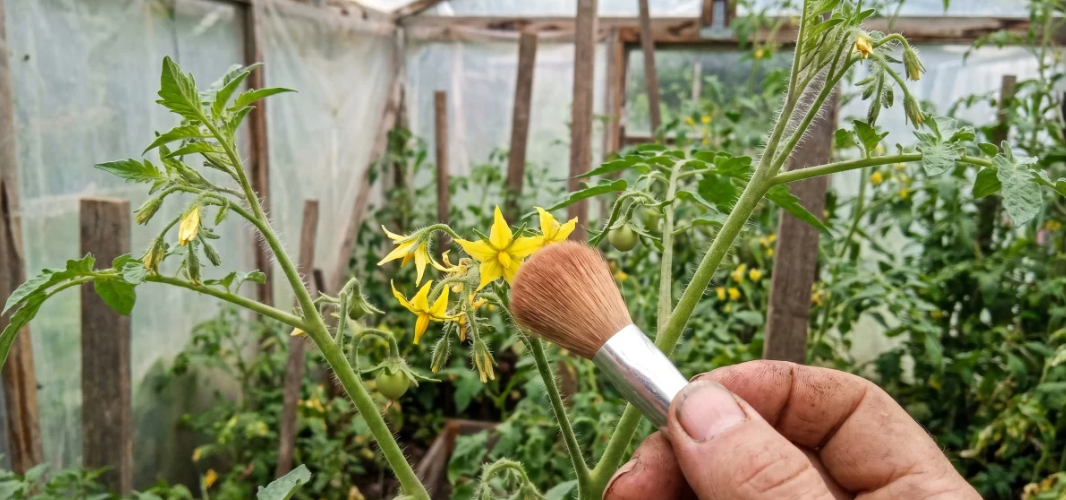
Many gardeners do not know this. If you want to triple the tomato harvest, this is what you must do during the flowering period.
Tomato pollination is an inconspicuous step that can decide whether firm fruits grow from the many yellow flowers or only disappointment. Tomatoes belong among self-pollinating plants, but in a greenhouse, foil tunnel or on a balcony they often lack movement that gets the pollen exactly where it should be.
Many growers look for the mistake in watering, fertilizer or variety. The plant can look healthy, have dark green leaves, strong stem and many flowers.
The problem shows only later. Flowers start to yellow, dry or fall off and where a fruit should grow, nothing remains.
Why tomatoes flower but do not fruit
Tomato flower contains both male and female parts, so it can pollinate itself. This does not mean, however, that it always happens without help.
Pollen must be released from the anthers and get to the stigma. In the garden wind, bumblebees, bees and natural plant movement help.
In a closed greenhouse the air is often almost motionless. On a balcony the plant can be protected by a wall, glass or railing, so flowers get less insects.
Tomato pollination during flowering
Tomato pollination has the greatest sense in the period when the plant opens many fresh flowers. It is then that it is decided how many fruits will actually set on the inflorescences.
If you only admire the flowers and wait, some of them can fall off without use. A very simple intervention is enough that imitates wind or insect visit.
The best results are achieved when you help regularly. Not randomly once a week, but shortly and gently during days when the plants flower the most.
The simplest way: gentle shaking of the plant
Gently hold the plant at a firm part of the stem and gently shake it. The movement should be short, springy and without pulling so roots or tying are not damaged.
If tomatoes are tied to string, it is enough to gently tap on the string or support. Vibration transfers to the flowers and pollen releases easier.
With taller plants you can go row by row and move each plant only for a few seconds. This simple habit takes little time, but with growing in a greenhouse it can bring a visible difference.
When is the right time
The most suitable are morning hours, approximately between nine and eleven. Flowers are then open and pollen is usually drier and more mobile.
If the morning is too humid, wait until the greenhouse ventilates and flowers dry. Wet pollen mass releases worse and tomato pollination is less effective.
During heatwaves avoid noon. High temperature stresses plants and pollen can lose viability, especially if temperatures in the greenhouse rise too high.
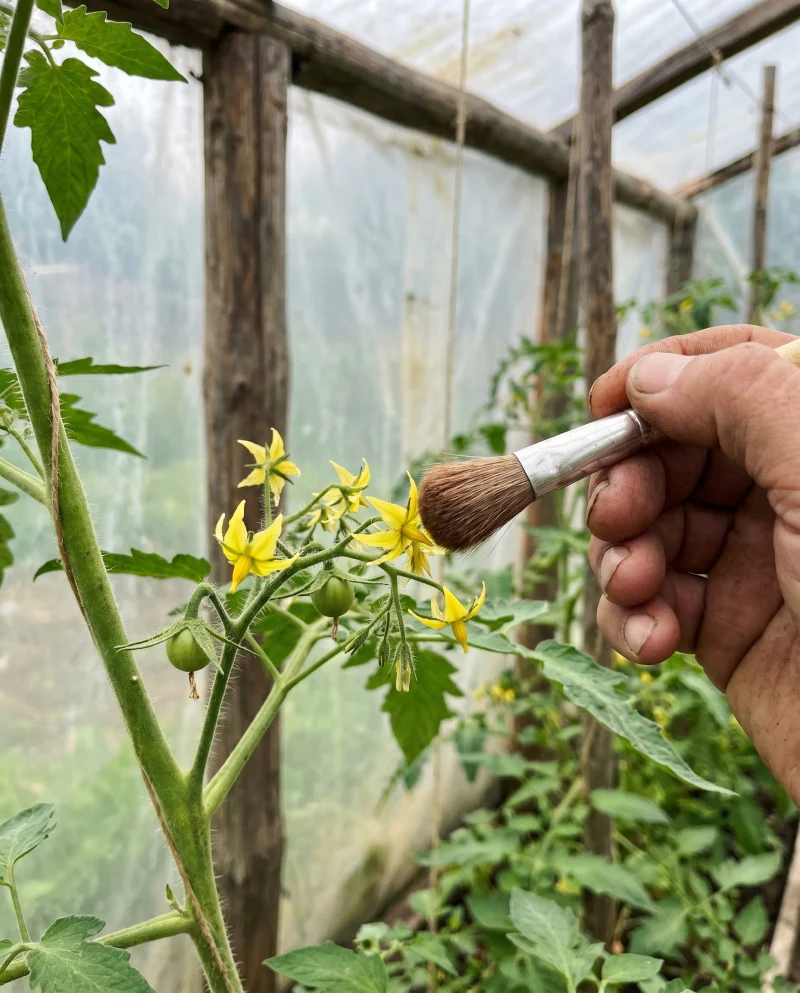
Brush helps especially on the balcony
With a smaller number of plants a soft brush is worth using. It can be a clean makeup brush, paint brush or very soft watercolor brush.
Go with it from flower to flower and touch them only lightly. The goal is not to disassemble the flower, but to create gentle movement and transfer pollen where natural pollinator is missing.
This method is suitable especially for cherry tomatoes in pots. On balconies there is usually less insects and plants often stand in the windbreak, so hand help makes great sense.
Electric brush as a quick aid
A less known trick uses an ordinary electric toothbrush. Do not apply it to the flower, but to the inflorescence stem or to the support close to the plant.
Short vibration imitates bumblebee movement. One to two seconds per inflorescence is enough and then continue further.
This method is used especially where there are more plants and brush would be slow. Always work carefully so you do not break fragile flower stalks.
Moisture and temperature decide more than it seems
If it is too humid in the greenhouse, pollen releases poorly and can stick. Morning ventilation, appropriate root watering and enough space between plants help.
Too dry and hot air causes flowers to wilt quickly. With growing under glass therefore monitor temperature and during hot days shade or ventilate before the plants overheat.
Tomatoes set fruits best in stable conditions. Sudden fluctuations between cold night and hot day can reduce pollination success even with good care.
Mistakes that reduce the number of fruits
The most common mistake is too strong shaking. The plant does not need to be shaken, a gentle movement that vibrates the flowers is enough.
The second mistake is spraying flowers with water at pollination time. If you wet the flowers exactly when pollen should work, you unnecessarily complicate the whole process.
The third problem arises with overfertilization with nitrogen. The plant then grows lushly, forms many leaves, but flowers and fruits may not hold as well as you would expect.
How to support bumblebees and bees
If you grow tomatoes outside, it pays to attract natural helpers. Plant marigold, basil, lavender, phacelia or other flowering plants near the bed.
In a greenhouse leave doors or windows open during the day if the weather allows. Insects then find flowers easier and at the same time air circulation improves.
Avoid unnecessary chemical sprays during flowering. If you have to intervene against pests, do it in the evening and always choose the gentlest possible method.
What to do when flowers keep falling off
If fruits do not set even after regular help, check watering. Tomatoes do not like root drying and subsequent sudden overwatering.
The soil should be evenly moist, not soaked. It is better to water less often and thoroughly at the roots than every day only on the surface.
Check also nutrition. During flowering and fruit setting the plant needs besides nitrogen also potassium, calcium and other elements that support tissue firmness and fruit quality.
Short procedure that is worth repeating
- Every morning check open flowers on plants.
- Gently shake the stem, support or string.
- With smaller plants use a clean soft brush.
- In the greenhouse ventilate so pollen is not wet and stuck.
- During heatwaves protect plants from overheating and fluctuations.
Small movement can change the whole harvest
Tomato pollination is not a complicated technique, but simple help at the right time. Plants in a greenhouse, foil tunnel, pot or on a protected balcony appreciate it the most.
When you combine gentle shaking, good ventilation, reasonable watering and balanced nutrition, flowers have a much greater chance to turn into fruits. It is precisely a few seconds a day that can decide whether you will count individual tomatoes in summer or fill whole bowls.