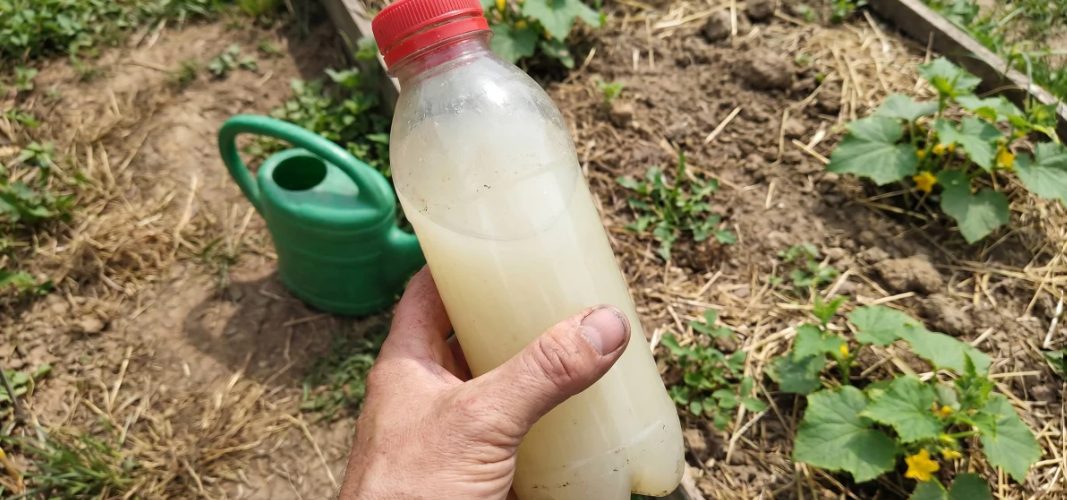
Homemade solution for cucumbers for rich harvest can be simple, cheap and at the same time very effective if you use it correctly. Cucumbers grow quickly, drink a lot and during flowering and fruiting need regular nutrition, so it pays to know bread kvass, ash infusion, onion decoction and gentle milk spray.
Cucumbers belong among the most grateful crops in the garden, but only as long as they have stable water, warmth and nutrients. When the soil is exhausted or the plants suffer from stress, it is immediately visible on leaves, flowers and fruits.
Homemade solutions can help mainly when you use them preventively and in moderation. They are not a replacement for good soil, but they can be an excellent supplement during the whole season.
Homemade solution for cucumbers for rich harvest: when it has the greatest sense
Homemade solution for cucumbers for rich harvest has the greatest sense from the beginning of flowering until the period of regular harvest. Then the plant spends the most energy on new shoots, flowers and fruits.
If cucumbers grow slowly, leaves pale or few fruits form, it can be a lack of nutrients, drought stress or poor soil. First, however, always check watering and plant health.
The best results are achieved by alternating gentle nutrition, not constant pouring of strong concentrates. Cucumbers have sensitive roots and overfertilization can damage them.
Bread kvass as growth support
Solution from fermented bread belongs among old homemade recipes. It uses fermentation during which substances from old bread release into the water and a nutritious infusion for plants arises.
For preparation use a 20-liter bucket and fill it approximately to two thirds with old bread. The bread can be dry, but must not be moldy.
Pour lukewarm water over it, weigh down with a plate or lid so it does not float, and let it ferment for at least 7 days in a warm place. Do not cover the bucket completely airtight because gases form during fermentation.
How to use bread solution on cucumbers
Strain the finished bread kvass and always dilute it with water. A safe ratio is approximately 1 part infusion to 3 parts water.
Pour approximately 0.5 liter of diluted solution under each bush. Use it once a week from the beginning of flowering to the period of strong fruit setting.
Pour the watering exclusively at the roots and not on leaves. The soil should be mildly moist before use so the plant does not accept nutrition too suddenly.
Ash infusion supplies potassium and phosphorus
Wood ash is valuable mainly for its potassium, phosphorus, calcium and trace elements content. With cucumbers potassium is very important because it supports fruit formation and better water management.
Use only clean wood ash from untreated wood. Ash from coal, painted wood, briquettes with additives or waste does not belong in the garden.
For preparation of infusion mix 2 glasses of sifted ash with 1 liter of boiling water. Let it infuse for 24 hours and then strain the solution.
How to safely apply ash infusion
Ash infusion is concentrated, so dilute it before use. It is practical to add the strained infusion into 10 liters of water and use it as root watering.
Pour it at the roots approximately once every 10 to 14 days during flowering and fruiting. Do not use it too often because ash increases soil alkalinity.
If you have naturally alkaline soil, save on ash. With repeated use it pays to measure soil pH so you do not worsen nutrient uptake for plants.
Onion peels strengthen plant resistance
Onion peels contain substances that are used in the garden as gentle support for resistance. Decoction from them is suitable especially when you want to strengthen plants without strong chemistry.
Put 4 to 5 large handfuls of onion peels in a larger pot. Pour water, bring to boil and then remove from heat.
Let the decoction cool and infuse. Then strain it and use it for gentle leaf spray or as weak root watering.
When to reach for onion decoction
Onion decoction is suitable as preventive support during humid weather, weaker stand or after stress periods. Spray the leaves gently, best in the evening or early morning.
Do not use it in strong sun. Drops on leaves can cause spots and the plant will suffer unnecessarily.
If leaves are already heavily affected by mold or pests, decoction alone is not enough. First remove damaged parts and improve stand ventilation.
Milk spray against powdery mildew and weak leaves
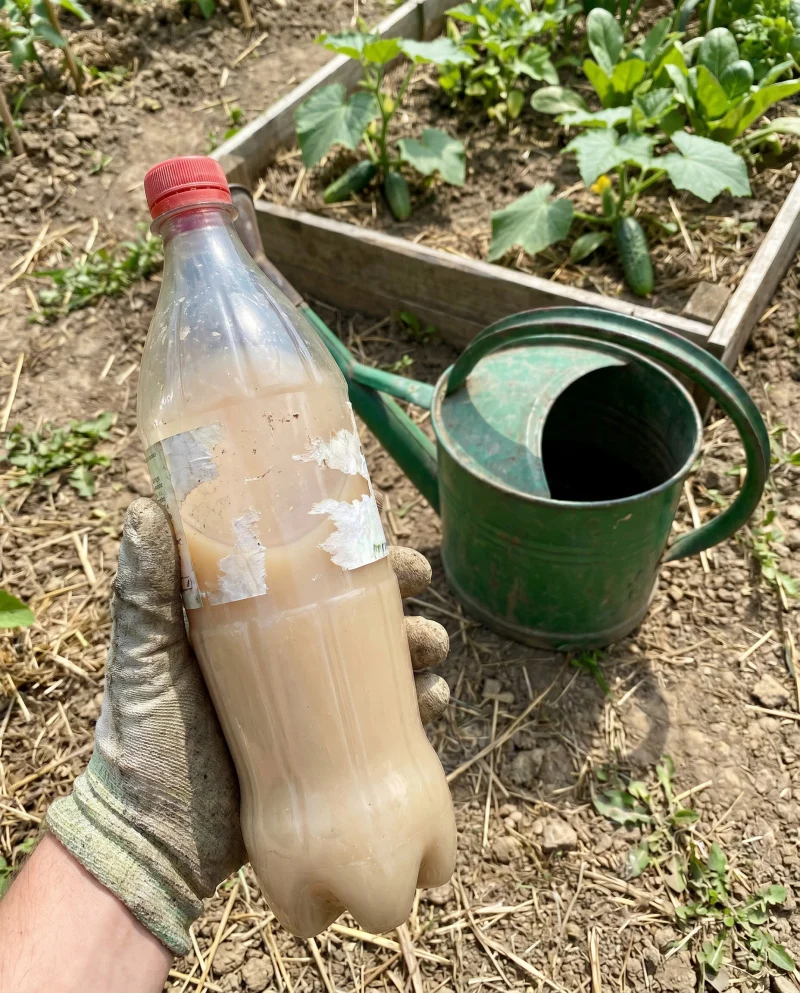
Milk spray is used mainly as gentle prevention against powdery mildew. It creates an environment on leaves that does not suit some fungal diseases.
For ordinary use a weaker dilution 1 part milk to 2 to 3 parts water is better. Ratio 1:1 can be unnecessarily strong for some plants and leaves more coating on leaves.
Use low-fat milk or whey. Spray with fine mist on the upper and lower side of leaves.
How often to repeat milk spray
During humid weather or in a greenhouse you can use milk spray once a week. If the stand is healthy and weather dry, less often is enough.
After rain the effect decreases, so the spray can be repeated. Do not do it every day, leaves would remain unnecessarily burdened.
The best time is evening or early morning. After application the leaves should have time to dry naturally.
Why cucumbers need regularity
Cucumbers do not like extremes. Long drought, then a lot of water, then strong fertilizer dose – all this causes stress and can lead to bitter or deformed fruits.
Use homemade solutions as part of regular care. One week bread watering, later ash infusion or onion decoction according to plant state.
You do not have to use everything at once. The plant needs balance, not overload with several homemade recipes in one day.
Watering is the basis of every harvest
Cucumbers form fruits with high water content, so without regular watering they will not fruit fully. Homemade fertilizer never replaces water.
Water at the roots and use settled, not ice-cold water. Cold water from a well can slow plants, especially after a warm day.
Mulch from straw or dried grass helps keep soil moist and protects roots from overheating. With cucumbers this is a great advantage.
What not to do with homemade solutions
Do not use moldy bread. Molds do not belong in the bed or in the fermentation solution because they can bring more harm than benefit.
Do not pour strong concentrates on dry soil. Roots can get a shock and the plant starts to wilt, although you wanted to help it.
Do not spray leaves during a sunny day. With milk, onion decoction and other homemade sprays spots and leaf burns threaten.
Most common mistakes when fertilizing cucumbers
The first mistake is too much nitrogen. The plant then forms many leaves, but few flowers and fruits.
The second mistake is weak watering. If cucumber suffers from drought, it does not accept nutrition correctly and fruits can be bitter.
The third mistake is mixing several strong solutions at once. Such intervention can damage roots or leaves.
The fourth mistake is waiting until the plant completely weakens. Homemade solutions work best preventively or at the first symptoms of a problem.
- Prepare bread kvass only from non-moldy old bread.
- Dilute finished bread solution approximately in the ratio 1:3.
- Use ash infusion in moderation, especially if you have alkaline soil.
- Apply onion decoction as gentle prevention on leaves or at the roots.
- Dilute milk spray rather weaker, for example 1:2 or 1:3.
- Apply sprays in the morning or evening, never in strong sun.
- Alternate homemade nutrition, but do not use them all at once.
What to remember with cucumbers
Homemade solution for cucumbers for rich harvest can help plants if you use it in moderation and at the right time. Bread kvass supports growth, ash supplies potassium, onion peels strengthen resistance and milk spray can help with powdery mildew prevention.
The biggest difference, however, comes from the combination of healthy soil, regular water, mulch, airy stand and appropriate nutrition. When cucumbers do not get stress, they will flower longer, set fruits better and the harvest can pleasantly surprise you.