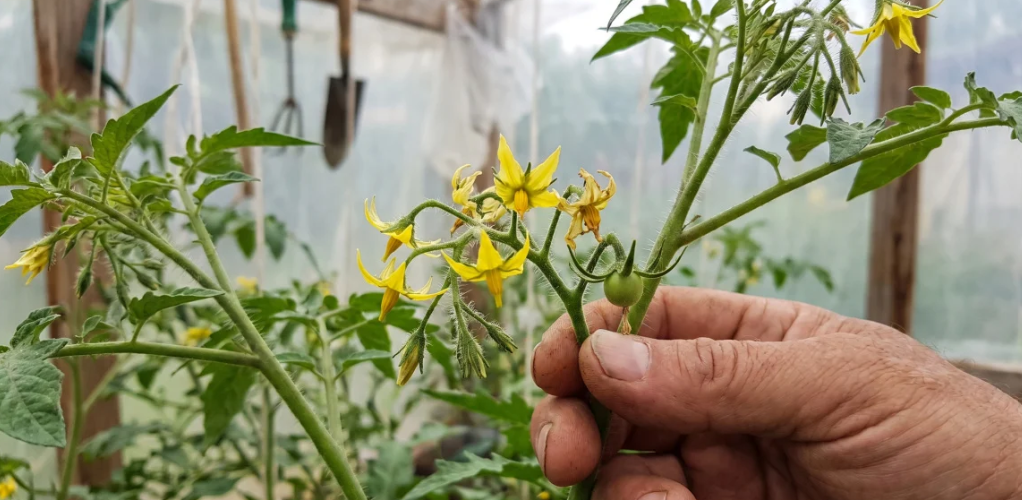
This depends on your harvest! During tomato flowering it is necessary to follow these simple rules.
Watering tomatoes during flowering belongs among the most important steps that affect the number of flowers, successful pollination and the future harvest. If plants are just preparing the first inflorescences, it is the ideal time to set the correct water regime for them so they enter flowering strong, balanced and without unnecessary stress.
Tomatoes grow very quickly in this period. They build leaves, stems, root system and at the same time prepare for the formation of the first flowers.
That is why random watering once with a large amount of water and other times long drying does not suit them. Stable soil moisture is in this phase often more important than any miraculous fertilizer.
Watering tomatoes during flowering: why it decides about the harvest
Watering tomatoes during flowering affects several processes at once. The plant needs water for nutrient transport, pollen formation, keeping flowers and later also for fruit development.
If a tomato experiences drought just before flowering or during it, it can drop some flowers. The plant thus defends against overload because it does not have enough water to nourish future fruits.
Overwatering harms equally. Waterlogged soil squeezes air from roots and the plant then absorbs nutrients worse, although there is apparently enough water.
Why not to water tomatoes from above
Watering over leaves is one of the most common mistakes. Tomatoes do not like wet leaves, stems or flowers, especially if moisture stays on the plant longer.
Wet leaves create good conditions for molds and fungal diseases. In a greenhouse the problem worsens even more because air moves less there and the stand dries slower.
Always direct water at the roots. Ideally water a small distance from the stem so moisture supports root growth to the sides and does not keep the plant neck constantly wet.
Where exactly to pour water at the roots
Do not pour water directly on the stem. Make a shallow basin or watering circle around the plant approximately 10 to 15 centimeters from the stem.
This way water gets to the root zone, but the plant neck remains safer. You reduce the risk of rot and support a wider root system.
With larger plants you can gradually expand the watering circle. Tomato roots grow and therefore there is no sense to pour water always on the same small place.
Water temperature is more important than it seems
Cold water from the tap or well can suddenly cool the roots. Tomatoes react to such a shock with slowed growth, leaf curling or worse nutrient uptake.
The best is settled water warmed to outdoor temperature. If you have a barrel, let the water heat in the sun during the day and use it in the morning or evening.
Warm does not mean hot. Water should be pleasant, not hot, so it does not harm the roots.
When to water tomatoes
The best time for watering is morning, approximately between six and eight o’clock. The plant has the whole day to use the water and the soil does not cool during the night.
If you do not manage in the morning, early evening is also suitable. Water, however, so the surroundings of the plants do not turn into wet and cold environment during the night.
Late evening watering is not ideal especially in a greenhouse. Moisture remains in the stand all night and diseases have better conditions.
How much water do tomatoes need before flowering
Before flowering most well rooted tomatoes need approximately 3 to 4 liters of water per bush at one watering. The exact amount depends on plant size, soil, weather and growing method.
In light sandy soil water drains faster, so water more often. In heavier clay soil moisture stays longer, so adjust the dose and frequency accordingly.
The best control is simple: with a finger or small spade check the soil a few centimeters below the surface. The surface can be dry, but below there can still be enough moisture.
How often to water before flowering
In warm and dry weather water approximately 2 to 3 times a week. This is not a fixed rule, however, because the actual state of the soil decides.
During cold and rainy days limit watering. Tomatoes then consume less water and waterlogging would be worse than short mild drying.
Regularity is important. The plant copes better with a stable regime than with sudden extremes.
Why not to let the soil dry completely
Short drying of the surface does not hurt, but completely dry soil at the roots is a problem. The plant gets into stress and can slow flower formation.
When it then gets a lot of water at once, the change is too sudden. Such fluctuations can later contribute to fruit cracking or problems with calcium uptake.
Tomatoes like deeper watering and subsequent mild drying of the top layer. Not everyday surface sprinkling.
Mulching helps keep moisture
Mulch is a big helper with tomatoes. Straw, dried grass or composted mulch reduces water evaporation and protects soil from overheating.
Mulch also prevents soil from splashing on lower leaves during rain or watering. This helps reduce the risk of soil-borne diseases.
Do not put mulch right at the stem, however. Leave a small free space around it so the plant neck remains drier and airier.
Watering in a greenhouse has its own rules
In a greenhouse it is necessary to monitor air humidity more. Even when you water at the roots, water evaporates and with weak ventilation remains too humid inside.
After morning watering ventilate the greenhouse. Open doors or windows so humid air exchanges and leaves remain dry.
During flowering ventilation is important also for pollination. Tomato pollen needs suitable temperature and humidity, otherwise it releases worse.
How watering affects pollination
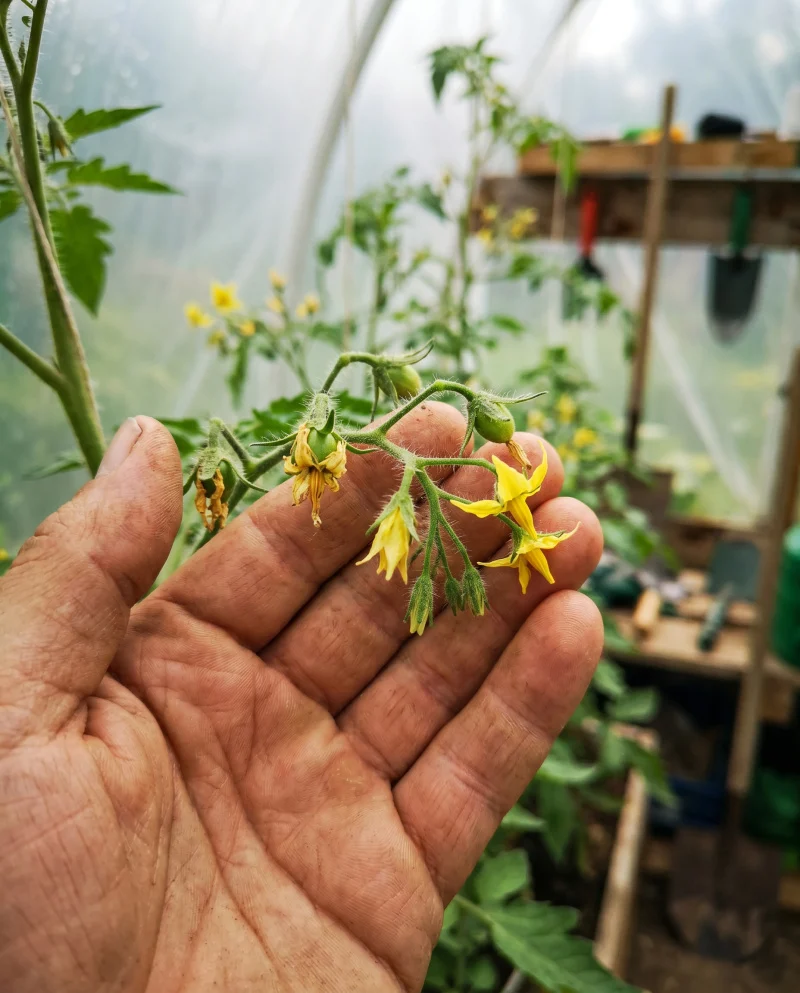
Tomatoes are self-pollinating, but need gentle air movement or shaking of the plant so pollen releases. Too high humidity after unsuitable watering can glue pollen.
If the air in the greenhouse is stuffy and humid, flowers may look nice, but may not set fruits well. Therefore water in the morning and ventilate regularly.
During flowering you can gently shake the plants or go along the support. Do it during drier weather when pollen is crumbly.
Common mistakes with tomato watering
The first mistake is watering from above. Wet leaves, stems and flowers increase the risk of molds and can worsen pollination.
The second mistake is cold water. Tomato roots react sensitively and the plant can slow unnecessarily.
The third mistake is irregularity. Long drought and subsequent large dose of water stresses the plant more than an even regime.
The fourth mistake is evening watering in a closed greenhouse. Moisture stays in the stand all night and diseases have better conditions.
- Always water at the roots, not on leaves and flowers.
- Use settled water warmed to outdoor temperature.
- The best time for watering is morning.
- Before flowering give a well rooted bush approximately 3 to 4 liters of water.
- In heat water approximately 2 to 3 times a week according to soil.
- Do not let the root zone dry completely.
- In the greenhouse ventilate after watering so humidity does not increase.
What to remember with tomatoes
Watering tomatoes during flowering and just before it decides how many flowers the plant keeps and how well it sets fruits. The most important is to water at the roots, use settled warm water and avoid wet leaves.
When you set a regular regime already before the opening of the first flowers, tomatoes enter flowering stronger and calmer. Stable soil moisture, morning watering, mulch and good ventilation are simple steps that can significantly improve the whole harvest.