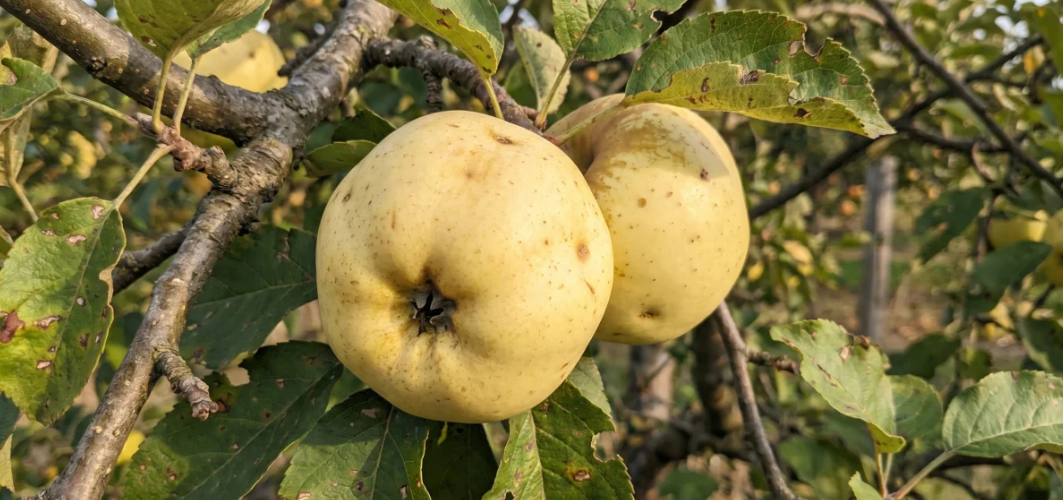
The taste of childhood returns to the orchards: these historical apples ripen from summer to winter and each is suitable for something different.
Old apple tree varieties are returning to gardens for their pronounced taste, aroma and diversity that you often cannot find in ordinary shops. They are not, however, automatically resistant to every disease nor suitable for every space, therefore success is decided by the choice of variety, rootstock and suitable pollinator.
Old or historical varieties are usually considered apple trees grown for many decades, often even before the spread of modern commercial cultivars. Some originated in the nineteenth century, others are substantially older.
Their importance is not only nostalgic. They preserve genetic diversity, different ripening times and tastes from sharply acidic through spicy to almost honey-sweet.
Old apple tree varieties are not one identical group
Among historical varieties you will find very resistant trees as well as more sensitive apples. Some tolerate frost well, others require a warmer place and regular protection against scab or powdery mildew.
The claim that every old variety grows without sprays is therefore not accurate. The result is decided by the specific variety, local climate, soil, air flow and disease pressure in the surroundings.
Before buying, look for experiences of growers from a similar area. A variety that grows without problems in a cold basin may not function equally well in a warm and humid orchard.
The greatest attraction remains the taste
Modern commercial apples are often selected also according to appearance, firmness and ability to handle transport. Old varieties originated in different conditions and many were valued mainly for taste or specific kitchen use.
Some are suitable for direct consumption, others excel only in cake, must, puree or after several weeks of storage. A freshly picked winter apple may be hard and sour, but after resting it gains fuller taste.
When choosing, the question of which variety is the best is therefore not enough. It is important whether you want early fruit, apples for baking, storage or distinctly sweet dessert taste.
Antonovka belongs among the most resistant options
Antonovka is known for pronounced frost resistance and strong growth. It creates more acidic, aromatic apples suitable for must, puree, preserving and baking.
The tree can grow to large dimensions on a strong rootstock. For a small garden therefore choose a weaker growing rootstock or count with sufficient space.
The fruits are not a typical sweet dessert apple. Their advantage is fresh acidity, aroma and kitchen use.
Koštela offers very sweet fruits
Koštela belongs among old varieties associated with traditional Polish orchards. The apples are sweet, mildly aromatic and have low acidity.
The variety may start fruiting later and yields may not be the same every year. With a strongly growing tree patience and regular training pruning are needed.
It suits growers who look for a sweet apple for direct consumption. Lovers of pronounced acidity may find it too mild.
Papierovka brings one of the first apples of the season
Papierovka, also known as Transparent Summer or Oliwka Inflancka, ripens very early. In warmer areas the fruits are harvested already during summer.
The apples are juicy, fresh and pleasantly sourish, but quickly become mealy. They are not suitable for long storage.
Harvest them gradually and process shortly after picking. They are excellent for puree, first summer cakes and compotes.
Leather rennets excel in the kitchen and storage
Under the name leather or grey rennets several related or similarly designated varieties are grown. Typical is a rougher russeted skin and firm, aromatic flesh.
The taste is usually wine-sourish, spicy and pronounced. The apples hold shape well when baking and often improve after resting.
When buying, verify the exact variety name. Folk names mix between regions and two trees marked as grey rennet may not be identical.
Cox’s Orange offers excellent taste, but is not without demands
Cox’s Orange belongs among known English historical varieties. The fruits have complex sweet-sour taste with spicy tones.
The tree, however, may not be the simplest choice for a complete beginner. In unsuitable conditions it can be more sensitive to diseases and needs a good site.
It suits a protected position, permeable soil and airy crown. Do not choose it only according to the reputation of excellent taste.
Raspberry varieties attract with pronounced aroma
Oberland Raspberry and other raspberry types have characteristic scent and sometimes pinkish colouring of the flesh near the skin. They taste best fresh.
Their exact properties can differ according to clone and nursery. With rarer varieties a reliable origin of planting material is important.
Buy the tree from a grower who states the exact name, rootstock and health state. A random sucker from an old orchard may not preserve the properties of the original tree.
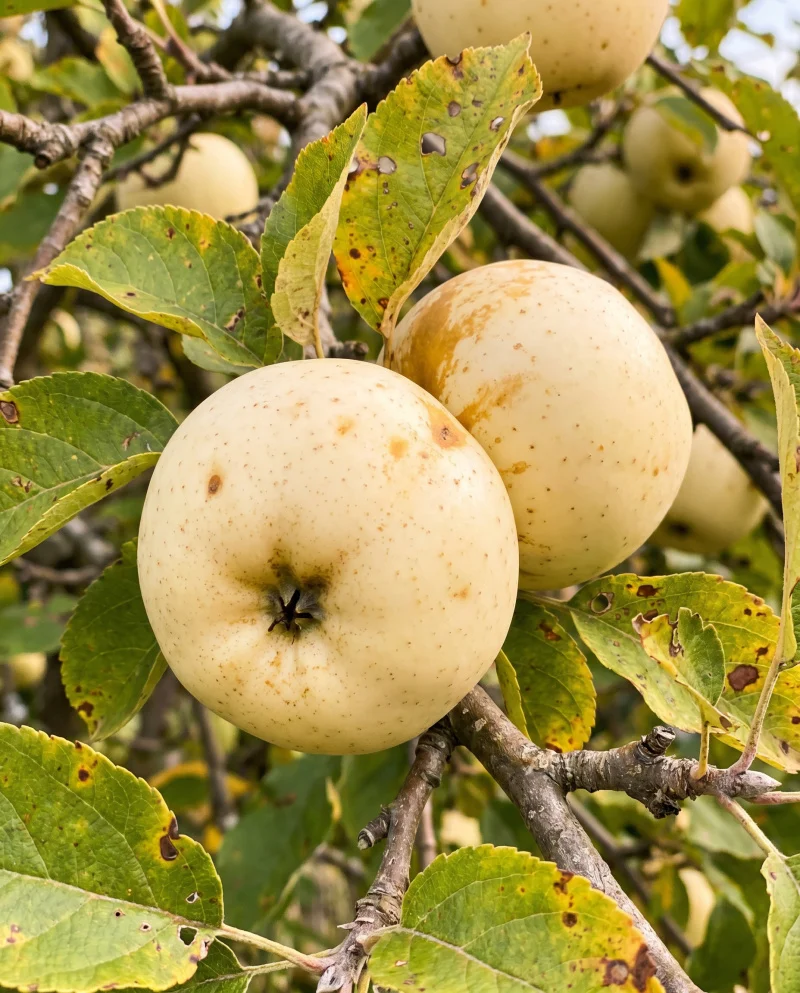
A variety cannot be reliably preserved by seed
An apple tree grown from a pip will not be an exact copy of the tree from which the apple came. Seeds arise by pollination and carry a combination of properties of two parents.
A historical variety is preserved vegetatively, most often by grafting or budding onto a rootstock. This creates a genetically identical variety.
If you have a valuable old tree in the garden, take suitable scions and turn to an experienced fruit grower or nursery. Do not wait until the tree completely dies.
The rootstock determines the size of the tree and the start of fruiting
The same variety can create a small tree or a mighty apple tree on different rootstocks. The rootstock influences growth, the onset of fruiting, the need for support and resistance to drought.
Weakly growing rootstocks bring smaller trees and earlier harvest, but need quality soil, regular watering and often permanent support.
Strong rootstocks create large, longer-living trees with deeper roots. One waits longer for the harvest, however, and harvesting and pruning are more demanding.
Not every standard tree belongs in a small garden
A traditional standard needs a lot of space and in adulthood can shade a considerable part of the garden. It is excellent for an orchard, large plot or landscape.
Near the house a bush, half-standard or tree on a medium-strong rootstock is more practical. You preserve the taste of the old variety without a huge crown.
Before planting, verify the final size. Data about the height of a young seedling says nothing about the dimensions of the adult tree.
Most apple trees need a suitable pollinator
Many varieties are not reliably self-pollinating. For a good harvest they need pollen from another genetically different apple tree that flowers at a similar time.
It is not enough to plant two trees of the same variety. They are genetically the same and do not provide suitable cross-pollination.
The pollinator does not have to grow directly on your plot. An apple tree in a neighbouring garden can help if it flowers in the same period and insects fly between the trees.
The ripening time is not the flowering time
An early and a winter variety can flower at a similar time even if their fruits ripen with an interval of several months. Pollination is therefore chosen according to the flowering group.
When buying, request information about suitable partners. Two randomly selected varieties may not flower simultaneously.
Some varieties have pollen of limited usability or are triploid. Such a tree may need two further compatible varieties.
An ornamental apple tree can help with pollination
Some ornamental apple trees flower abundantly and provide suitable pollen. In a small garden they can supplement fruit varieties without the need for another large tree.
Even with an ornamental apple tree the flowering time must match. Choose it according to the nursery recommendation, not only according to the colour of the flowers.
Flowering trees attract bees and bumblebees. During flowering do not use preparations dangerous for pollinators.
Old trees can be long-lived, but the rootstock and care decide
An apple tree on a strong rootstock can live and fruit for many decades with good care. A tree on a weakly growing rootstock generally has a shorter life and higher demands.
It is therefore not accurate to promise every old variety sixty years without problems. Lifespan is influenced by soil, trunk damage, diseases, pruning and water.
The longest last trees with a well-established crown and healthy root collar. Grass or mulch must not be heaped directly at the trunk.
Choose the site for decades
An apple tree needs enough sun and air flow. In a deep basin with frequent frosts the flowers can regularly freeze in spring.
Long-term waterlogged soil is unsuitable. Roots need air and with standing water are more susceptible to damage.
Before planting check the distance from the house, fence, cables and pipes. A small seedling can change into a wide tree over the years.
The soil does not have to be perfect, but must drain water
Apple trees grow in various soils, but best in deeper, fertile and permeable ground. A very shallow, waterlogged or strongly compacted place limits growth.
Do not put a large amount of fresh manure or strong fertilizer into the planting hole. It can damage roots and create uneven growth.
Improve the soil with mature compost scattered over a wider area. Roots should grow into the surrounding ground, not stay in a small rich hole.
The grafting place must remain above the soil
When planting find the thickened place where the variety is connected with the rootstock. Leave this place above the soil level according to the nursery recommendation.
Too deep planting can support rooting of the variety above the rootstock and change the strength of growth. The root collar can at the same time suffer from moisture.
After planting water the tree thoroughly and with a weaker rootstock fix it to a stake. Check the tie regularly so it does not cut into the bark.
The first years decide the shape of the crown
A young tree needs training pruning that creates firm distribution of the main branches. A neglected crown is later repaired more difficultly.
Remove the competing leader, damaged shoots and branches growing at an unsuitable angle. Do not, however, make radical pruning every year.
Strong shortening supports the growth of many upright shoots and can delay fruiting. Adapt the pruning to the rootstock and shape of the tree.
Without chemical interventions does not mean without control
Even more resistant varieties regularly monitor. Scab, powdery mildew, aphids, codling moth and bark damage can affect historical as well as modern trees.
First use prevention: airy crown, removal of affected fruits, collection of leaves and support of natural enemies.
If a protective intervention is needed, use only a permitted preparation according to the label. The designation old variety is not a guarantee of ecological harvest without work.
Remove fallen and mummified fruits
Rotten apples left on the tree or under the crown can be a source of infection and an attractant for wasps or rodents. Collect them regularly.
Remove mummified fruits also during winter. Do not put diseased material into cold compost if you cannot ensure its safe decomposition.
Cleanliness of the orchard reduces disease pressure regardless of the age of the variety. It is a simple step that is often neglected with large old trees.
Regulate the harvest if the tree is overloaded
Some apple trees set too many fruits in a favourable year. The apples remain small, branches break and the tree may fruit weakly the following season.
After the natural June drop thin the clusters so that space remains between the fruits. Remove damaged and the smallest apples.
With a large tree hand thinning is demanding, but at least accessible branches can be lightened. Support heavily loaded branches.
The harvest time differs with every variety
Summer apples are harvested and consumed quickly. Autumn varieties last shorter and winter ones often need a period of storage to gain the best taste.
A ripe apple separates easily from the branch with gentle lifting and twisting. Forceful tearing damages the stalk and fruiting wood.
Harvest apples intended for storage carefully into a shallow container. Process bruised and damaged pieces first.
Not every old apple belongs in the cellar
Consume Papierovka early because it quickly loses firmness. Rennets and several winter varieties can last substantially longer under correct conditions.
Store only healthy, dry and unbruised fruits. Check them regularly and remove spoiling pieces.
The ideal store is cool, dark and ventilated, but not freezing. Do not place apples tightly next to vegetables sensitive to ethylene.
Spread the varieties throughout the whole season
One summer, one autumn and one winter variety will prolong the harvest for several months. At the same time they increase the chance of good mutual pollination.
In a small garden you can plant a multi-variety tree on which several cultivars are grafted. It requires, however, regular balancing of the growth of individual branches.
Another possibility is one fruit tree and a smaller ornamental apple tree as pollinator. Always verify the compatibility of flowering.
Old varieties help preserve diversity
When an old tree dies without taking scions, a specific local clone can be lost forever. Preservation of varieties therefore depends on nurseries, gene-bank orchards and home growers.
The most valuable are local varieties long adapted to the region. Their names, however, are often unclear and correct identification should be confirmed by a specialist.
Planting a historical apple tree is a practical way of protecting cultural and genetic heritage. At the same time you gain fruit with properties that the modern assortment may not offer.
Most common mistakes when choosing an old apple tree
- the conviction that every old variety is completely resistant to diseases
- buying a tree without information about the rootstock and final size
- planting one cross-pollinating variety without a suitable partner
- choice according to taste without regard to climate and soil
- too deep planting of the grafting place
- expectation of long storability from a summer variety
- attempt to preserve a variety by sowing pips instead of grafting
Practical set for a smaller garden
Choose two compatible varieties on a weaker or medium-strong rootstock. One can ripen in summer and the other in autumn or winter.
Before purchase compare flowering groups, resistance and final size. Inform the nursery about the altitude, soil type and amount of space.
After planting ensure support, watering and training pruning. During the first years do not let grass grow tightly at the trunk.
The taste of the past needs modern decision-making
Old apple tree varieties bring a wide range of tastes, harvest times and kitchen use. Their growing at the same time helps preserve varieties that gradually disappear from old orchards.
Success, however, will not bring only a known variety name. Choose a suitable rootstock, compatible pollinator and a place where the tree will not suffer from waterlogging or lack of space.