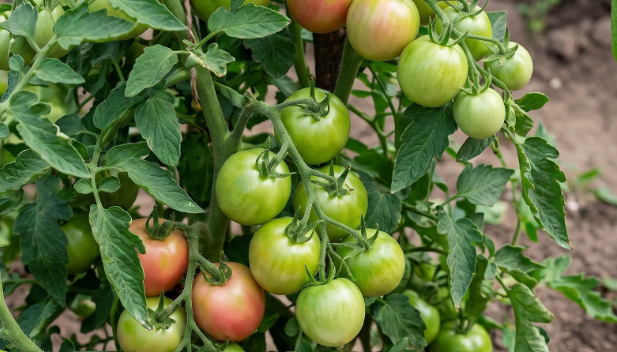
The first reddened tomatoes are always a little celebration for the gardener. But it is precisely in this period that the plant spends the most strength on filling the fruits. If you leave it without support, the tomatoes can become watery, less sweet, and dark spots often appear on the lower part of the fruits — a sign of blossom end rot.
The good news is that this can be avoided if you carry out proper feeding in time.
Why blossom end rot appears
Many people think that this is a fungal disease. In reality the most common cause is completely different — the plant lacks calcium, or it cannot absorb it because of uneven watering, strong heat or excess nitrogen fertilizers.
Therefore it is important not only to apply the necessary elements, but also to maintain stable soil moisture.
What to feed tomatoes with during ripening
At this time tomatoes no longer need large doses of nitrogen. Instead they respond well to potassium and calcium.
For watering prepare a simple solution:
For 10 liters of water:
- 1 tablespoon of potassium sulfate;
- 15–20 ml of liquid calcium fertilizer or calcium nitrate (if you use dry calcium nitrate — apply it separately, according to the manufacturer’s instructions).
Under each adult bush pour approximately 1 liter of the solution onto well-moistened soil.
If you want to get even sweeter fruits
Potassium is responsible not only for the size of the harvest. It is exactly what helps the fruits accumulate more natural sugars, makes them more aromatic and improves the taste.
Additionally, once every 10–14 days you can sprinkle a little sifted wood ash around the bushes, after which carefully loosen the soil and water. Ash is a natural source of potassium and other useful microelements.
What else is important to remember
- Water the tomatoes abundantly, but not every day. The soil should get wet deeply, not only on the surface.
- Do not allow sharp fluctuations: after the soil dries out, do not flood the beds with a large amount of water.
- Remove old leaves under the clusters where the fruits have already started ripening. This way the bush will ventilate better, and nutrients will go exactly to filling the tomatoes.
If you now give the tomatoes a little attention, they will reward you with a generous harvest — the fruits will be dense, juicy, sweet and without unpleasant blossom end rot. It is precisely in the ripening period that proper care decides what your tomatoes will taste like.