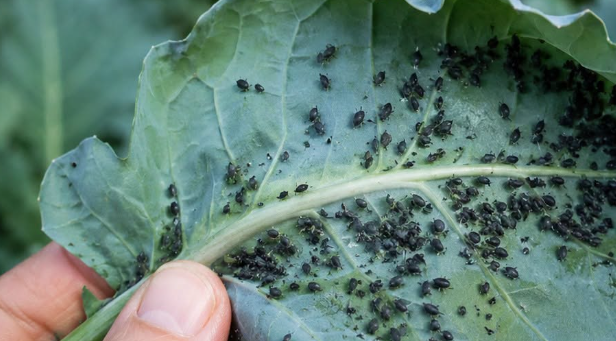
At first it seems that nothing terrible has happened: a few tiny black insects on the young shoots. But already in a few days the leaves start to curl, the tops stop growing, and the plant weakens right before your eyes.
Black aphids suck the juice from young leaves and stems. As a result, flowers fall off, ovaries develop worse, and the harvest can significantly decrease. In addition, the pest leaves a sticky coating on which fungal diseases develop quickly.
What will help get rid of aphids?
- If there are still few insects, first wash them off with a strong stream of water. Often this is enough to significantly reduce their number.
- A soap solution works well. Grate approximately 100 g of laundry soap, dissolve in 10 liters of warm water and thoroughly spray the affected places, especially the underside of the leaves.
- If the aphids have already actively multiplied, prepare a garlic infusion. Chop 200 g of cloves, pour 1 liter of water and leave for a day. Before use dilute 50 ml of the infusion in 10 liters of water and treat the plants in the evening or in cloudy weather.
- Do not hurry to destroy ladybugs. Exactly they are one of the best natural enemies of aphids and help restrain their spread without any chemistry.
- Also pay attention to ants. They often “protect” aphids and transfer them to new plants. If you do not limit the anthills, the fight against the pest can drag on.
After any treatment inspect the plants after 4–7 days. If the aphids have appeared again, repeat the procedure. Exactly regularity most often decides whether it will be possible to save the harvest.
Do not put off the fight for later. The earlier you notice the first colonies of black aphids, the more chances that your vegetables, berry bushes and fruit trees will remain healthy and delight with a generous harvest.