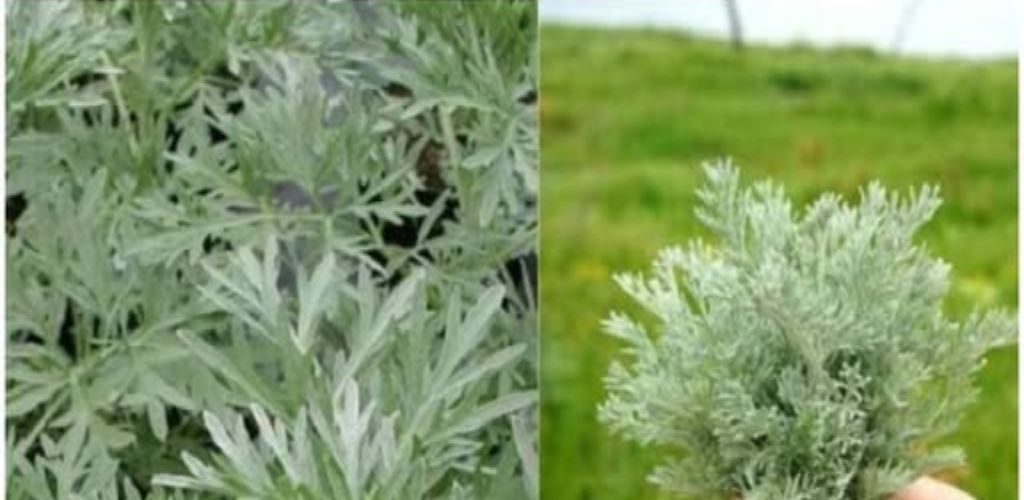
Between May 14 and June 14, wormwood begins to bloom, but does not yet have time to blossom. It is during this period that the tops of the plant should be collected, choosing ecologically clean places, away from roads and landfills.

It is best to do this at dawn, reading a prayer or wishing health to yourself and others.
Where does wormwood grow and what does it look like?
We have several types of wormwood, but the most common is bitter wormwood.
It forms dense thickets on wastelands, along fences, roads and abandoned fields.
This is a herbaceous perennial plant up to 1 meter high, blooming in July-August.
Useful properties of wormwood
Wormwood has long been used in folk medicine.
It:
✔ Improves appetite and normalizes digestion.
✔ Has anti-inflammatory properties.
✔ Has a calming effect and acts as a mild sleeping pill.
✔ Regulates blood pressure – increases in small doses, and decreases in large ones.
However, wormwood-based preparations should be used with caution, strictly following the dosage and course of treatment under the supervision of a physician.
How to make wormwood infusion
📌 Recipe:
🔹 Pour 1 teaspoon of crushed raw material with 2 glasses of boiling water.
🔹 Infuse for 20 minutes.
🔹 Take 1/4 glass three times a day 30 minutes before meals.
Collection and storage of wormwood
✔ Basal leaves are collected before flowering, during the budding period.
✔ The tops of flowering stems are harvested at the beginning of flowering.
✔ Stems up to 25 cm long are cut with scissors or a sickle.
✔ Dry in the shade, in a draft, at a temperature of 30-40 ° C.
✔ Storage period – 2 years.
Wormwood in folk medicine and traditions
Wormwood was highly valued by healers of past centuries.
So, Avicenna used it for:
✔ Digestive disorders and gastritis.
✔ Liver and gallbladder diseases.
✔ Increased stomach acidity.
✔ Inflammation of the bladder and hemorrhoids.
✔ Joint diseases.
✔ Problems with the nervous system, melancholy and depression.
There was a belief that if a traveler wears wormwood as a belt or holds it in his hand, he will not get tired and will enjoy the journey.
It was also believed that washing the feet in a decoction of wormwood helps to make long walks easier.
Ukrainian healers treated all stages of alcoholism with an infusion of wormwood and thyme.
Contraindications and possible side effects
Wormwood is a strong plant and can be harmful if used incorrectly.
📌 What is important to know:
❌ Do not use for more than a month! Then a break of 2-4 weeks is necessary.
❌ Overdose can cause nervous disorders, convulsions, hallucinations.
❌ If used incorrectly, headaches and exhaustion of the nervous system are possible.
Even Avicenna, who highly valued wormwood, warned:
“Bitter wormwood dries out the head, and its juice causes headaches.”
📌 Before using any folk remedies, be sure to consult a doctor!