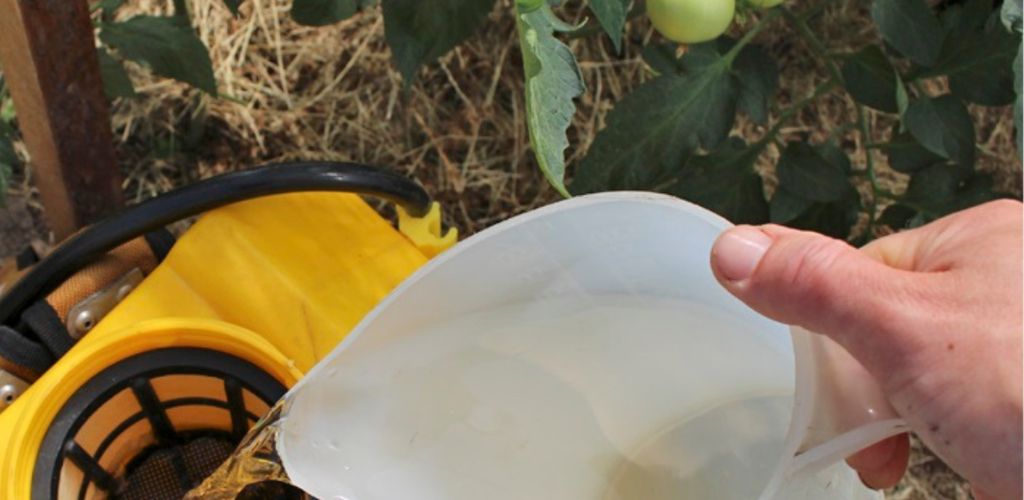
Tomatoes are big consumers of nutrients. Even if we grow them in fertile soil, without “external” help, that is, through fertilization, we will not have tasty, fleshy and abundant tomatoes.
In addition to soil fertilization, foliar feeding (through the leaves) is a quick and effective method to save or stimulate plants exactly when they need it.
🟩 Why is it worth applying foliar fertilization?
- Nutrients go directly to where the plant needs them
- It is quickly absorbed, especially nitrogen, magnesium and microelements
- A deficiency can be quickly corrected or one prevented
- You can reduce fertilizer waste
✅ What products can you use in Romania for foliar fertilization of tomatoes?
1. Foliar mineral fertilizers (commercial)
These are easy to apply and have balanced compositions. Here are some popular recommendations on the Romanian market:
- After planting or transplanting seedlings:
- Kristalon Yellow (Yara) – 13-40-13, ideal for root development
- Plantafol 10.54.10 (Valagro)
- Agromaster Start 13-40-13 (Compo Expert)
- During the fruit formation period:
- Kristalon Orange – 6-12-36, supports fruiting
- Plantafol 5.15.45
- Agromaster 3-11-38 + microelements
- Maintenance fertilization (every 2-3 weeks):
- Aminofeed (Agro-CS) – contains amino acids + microelements
- Agricola Vegeta (Fertillia) – with balanced macro and microelements
2. Natural products you can make at home
Alternating chemical fertilizers with natural ones is beneficial. Here are some simple recipes:
- Nettle maceration:
Put fresh nettles in a barrel of water (chlorine-free), leave for 7 days, stir daily. Dilute 1:10 and spray. It is rich in nitrogen and stimulates growth. - Compost/vermicompost tea (wormwood humus):
1 kg of humus + 10 liters of water, left for 6-12 hours. Can be used undiluted. - Onion peel infusion:
2 cups of peel + 500 ml of hot water, leave for 24 hours, make up to 3 liters. It has an antifungal and fertilizing effect. - Infusion of clean wood ash:
1 cup of ash + 1 liter of hot water, left for 24 hours, then topped up to 10 liters. Very rich in potassium and calcium – perfect in the second half of the season.
3. Calcium fertilizers – against apical rot
Calcium deficiency is seen through black spots on the top of the fruit (apical rot). Solution:
- Calcium nitrate (e.g. Calcinite from Yara) – 15 g per 10 liters of water.
Apply 1-2 times per season, during the flowering and beginning of fruiting phase.
4. Boron – for more fruit set
Boron deficiency = flowers that do not set fruit. Apply during the flowering period:
- Food grade boric acid (pharmacy) – 5 g per 10 liters of water
- Boroplus (Compo), Folibor, Fertiboro – commercial boron products
For maximum efficiency, you can add:
- 1 tablespoon of vinegar (slightly acidifies the solution)
- 100 ml glycerin (keeps the leaf moist)
- 1 tablespoon 10% ammonia (stimulates absorption)
Warning: boron becomes toxic in high doses – do not exceed concentrations!
🌤️ How to apply foliar fertilization correctly?
✔ In the evening or on cloudy days, without wind
✔ The water should be lukewarm (20-25°C), not cold
✔ Fine spray, on the upper and lower sides of the leaves
✔ Alternate foliar fertilization with root fertilization
✔ Alternate organic vs. mineral
✔ Don’t overdo it – constantly wet leaves can promote diseases
💡 Recommendation: combine foliar fertilization with preventive treatments with Trichoderma , Bacillus subtilis (biological, e.g. Top Bacter , TrichoMix , Polisulf ).
Foliar fertilization is not a substitute for soil feeding, but it is a secret weapon that can make the difference between frail tomatoes and competition tomatoes. Applied correctly, it can help you avoid losses and achieve healthy, tasty, and uniform tomatoes!