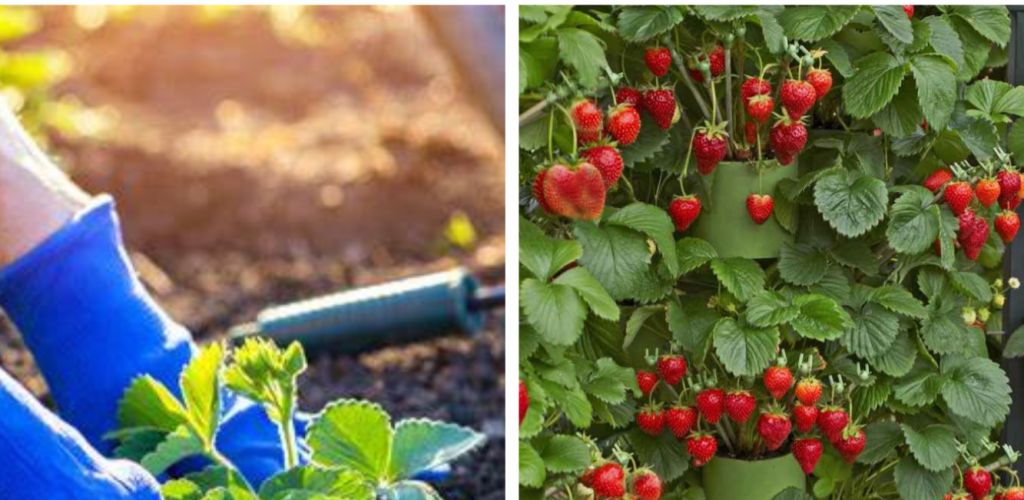
Proper care and knowing what this plant wants will help you grow strawberries well. These tips will help you say goodbye to small, watery, and tasteless berries.
What should be done?
- Place the beds in a sunny spot. There may be a little shade there.
- The land before planting must be fertilized with organic matter.
- After planting, add potassium and phosphorus.
- Choose fertile, loose soil, preferably with a neutral pH.
- Don’t forget to water the bushes regularly, especially during flowering and fruiting.
- Don’t be afraid to use fertilizers that contain phosphorus and potassium.
To make the berries large, you need 5 liters. water diluted 15 gr. potassium sulfate. This solution must be applied before planting.
Young beds with berries should be fed with potassium monophosphate. Dissolve 10 grams of fertilizer in a bucket of water.
And during the flowering and ripening period of the crop, you need to apply foliar fertilizer.
In spring, apply organic fertilizers – humus or compost and minerals – potassium, phosphorus, nitrogen.
In this detailed guide, you will learn the main secret of fertilizing strawberries, what types of fertilizers to use, in what quantities, and how to apply them correctly for optimal results.
1. Nutritional needs of strawberries
Strawberries have specific nutrient requirements depending on the growth stage :
- During the vegetative growth period (early spring) – they need nitrogen (N) for healthy foliage and vigorous growth.
- Before flowering – requires phosphorus (P) to stimulate flower development and root growth.
- During the period of fruit formation and ripening – they need potassium (K) for sweetness, size and disease resistance .
- After harvest – applying a balanced fertilizer helps the plant recover for the next season.
2. Types of fertilizers recommended for strawberries
Organic fertilizers (natural and safe for soil health):
- Compost – applied in fall or spring, improves soil structure and provides essential nutrients.
- Well-fermented manure – applied in the fall or diluted in water for liquid fertilization in the spring.
- Wood ash – excellent source of potassium .
- Compost tea – organic liquid fertilizer that is applied by watering at the roots.
- Bone meal – rich in phosphorus , ideal for stimulating flowering.
Mineral fertilizers (for quick correction of deficiencies):
- Ammonium nitrate (N) – for rapid vegetative growth.
- Superphosphate (P) – for root and flower development.
- Potassium sulfate (K) – for sweet and juicy fruits.
- Complex NPK fertilizers 10-10-10 or 5-15-30 – ideal for general applications.
3. How and when to apply fertilizers for strawberries
Fertilization at planting
- Before planting, incorporate compost or manure into the soil (2-3 kg/m2).
- Add bone meal (50-80 g/m2) for a strong root start.
- If the soil is clayey, add wood ash for better drainage.
Fertilizing in early spring (March-April)
✔ Apply fermented manure or liquid compost (1 L per plant) to stimulate foliage. ✔ Use ammonium nitrate (15-20 g/m2) if the soil is low in nitrogen. ✔ Offer compost tea every two weeks for consistent feeding.
Fertilization before flowering (May-June)
✔ Apply superphosphate (P) – 20 g/m2 to stimulate flowers. ✔ Water the plants with potassium sulfate solution (10-15 g/10 L water) to increase future fruit. ✔ Mulching with straw or shredded leaves helps retain moisture and improves soil fertility.
Fertilization during the fruiting period (June-July)
✔ Use NPK fertilizer with a high potassium ratio (5-15-30). ✔ Add compost tea or seaweed extract every two weeks. ✔ Apply a thin layer of wood ash (1 cup/m2) to improve fruit sweetness.
Post-harvest fertilization (August-September)
✔ Apply compost or fermented manure to restore the soil. ✔ Water the plants with potassium sulfate solution (10 g/10 L water) to strengthen the roots. ✔ Remove dry leaves and weeds to reduce the risk of diseases.
4. Natural fertilizer recipes for strawberries
Liquid fertilizer with compost
✔ 1 kg of mature compost ✔ 10 L of water ✔ Leave to soak for 24-48 hours, strain and water the plants.
Poultry manure fertilizer
✔ 500 g dry bird droppings ✔ 10 L water ✔ Leave to ferment for 3 days, then dilute 1:10 and apply to the root.
Foliar spray to stimulate growth
✔ 1 teaspoon baking soda ✔ 1 L water ✔ Spray on leaves once a month to prevent diseases.
5. Additional Tips for Healthy and Sweet Strawberries
✔ Avoid over-fertilization – too much nitrogen can lead to excessive foliage at the expense of fruit. ✔ Proper irrigation – water regularly, but avoid waterlogging the soil. ✔ Ensure optimal pollination – the presence of bees helps fruit formation. ✔ Use organic mulch – retains moisture and reduces the risk of disease. ✔ Rotate crops – do not plant strawberries in the same place for more than 3 consecutive years.
Don’t forget to control humidity.