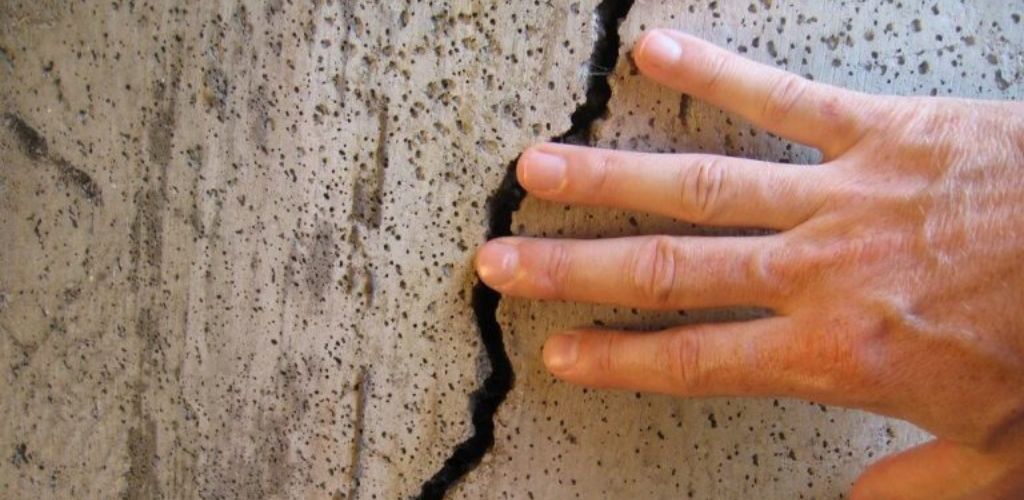
Concrete is a strong and durable building material, which, however, can be subject to destruction under the influence of various factors. For example, even concrete can develop cracks or chips, which can lead to serious consequences if the problem is not fixed in time.
In this article, I will tell you how to properly repair cracks in concrete.
First of all, before you fix the damage, you need to understand its causes.
Concrete deformation can occur for several reasons:
- Poor quality filling of the structure.
- Temperature changes.
- Shrinkage processes.
- Soil heaving.
- Poor quality reinforcement.
- Corrosion of reinforcement.
- Exposure to salts and sulfates.
- Mechanical impacts.
It is important to find the cause of the cracks in order to choose the right method to eliminate them.
There are cracks that do not pose a danger. For example, horizontal cracks with a small opening. The width of such cracks should not exceed certain values: in an aggressive environment – no more than 0.2-0.3 mm, and outdoors, under the influence of external factors (frost, moisture, ultraviolet) – no more than 0.4 mm.
There are several different materials for sealing cracks in concrete: epoxy resin, cement-concrete mixture, liquid glass, sealants and self-expanding cords.
The composition is selected depending on the width and location of the crack, as well as whether the concrete has hardened and whether the cracks continue in the future.

For horizontal cracks, you can use almost any construction compound that is suitable for the type. For sealing vertical cracks, it is better to choose thicker mixtures or self-expanding cords.
It is also important to choose the right method for sealing cracks.
The most common and effective methods are the following:
- Injection. In this method, holes are drilled in the direction of the crack and special compounds, such as sand-concrete mixture, epoxy resin or liquid glass, are filled through them under pressure. This process ensures adhesion and the crack will no longer spread.
- Shotcreting. This is a more labor-intensive process in which cracks are sealed with a special composition of sand-concrete mixture with the addition of polymers (for example, resin, bitumen or latex). With this method, an additional concrete layer is applied.
- Sealing. This method involves filling the crack with a special sand-concrete mixture with polymers to improve adhesion to the surface and then covering it with a sealant.
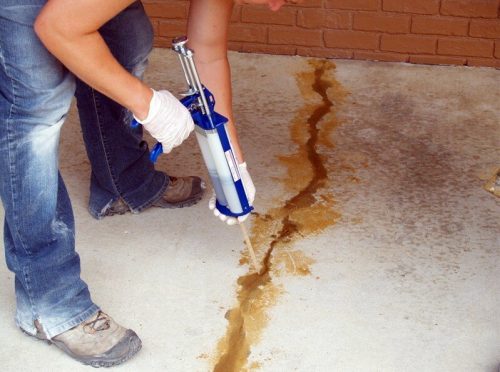
These methods require the use of specialized construction equipment. Without such equipment, it will not be possible to seal the cracks, and all work must be carried out in compliance with all technologies.