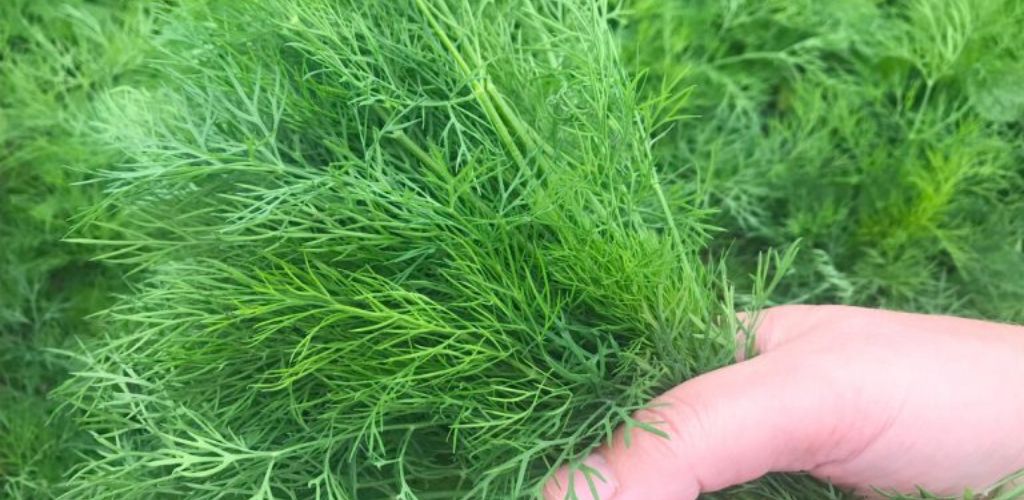
No matter how hard I tried, my dill stubbornly refused to reach the desired splendor and beauty, as shown in the photographs. I tried, fertilized it, looked after it, watered it abundantly. However, for three years I looked with envy at my neighbor’s plot, where the dill grew waist-length and was distinguished by its special splendor.
Watching her dill and comparing it to mine, I realized that I was missing some important detail in the growing process.
And in the end, everything turned out to be much simpler than I thought. But until my neighbor shared with me the secret to successful dill growth, I could not understand what exactly I was doing wrong.
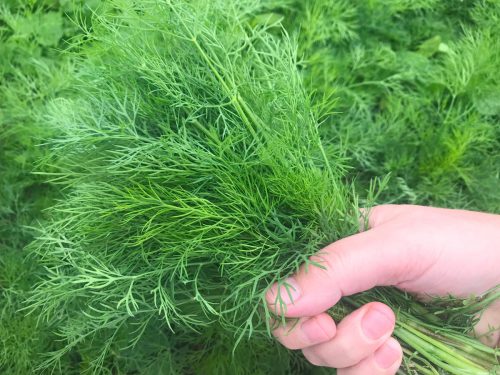
It all starts with choosing seeds
Yes, it really is. Why did I decide to write this article right now, before the start of the new season? So that you don’t repeat my mistakes and immediately buy the right seeds.
My mistake was choosing the wrong variety.
About 25 years ago there was not a great variety of varieties and hybrids on the market. At that time the choice was limited, and I bought what was available. Every year I chose the seeds of “Gribovsky”.
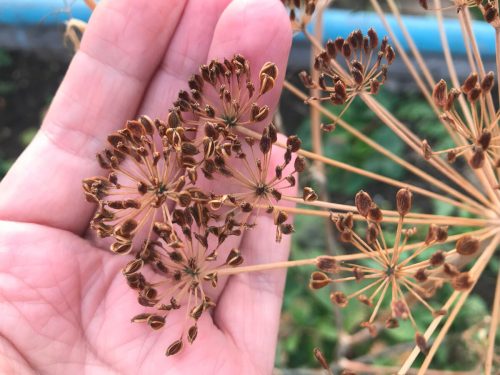
This is a really good dill, but it is not a bushy variety, that is, it is not originally intended for abundant growth of greenery. This is a variety that blooms quickly, giving beautiful inflorescences, ideal for preservation.
The seeds of “Gribovsky”, prepared for the winter, become an excellent seasoning for various dishes.
However, to obtain lush greenery, it is necessary to choose other varieties and hybrids designated as “bush”. These include “Alligator”, “Kibray”, “Izumrudny Puchok”, “Shashlychny” and others. It is important to pay attention to this designation in the description on the package when buying.
And it continues with proper watering As it turned out, the secret lies in ordinary water. A conversation with a neighbor opened my eyes to my mistakes in watering.
Many people may make the same mistake. To grow lush dill, you need to water it abundantly, taking into account its shallow root system.
Dense and deep roots contribute to the growth of the stem, not the leaves. I have been convinced of this after conducting many experiments.
How to water dill correctly?
Ideally, twice a day. It is necessary to water even on cloudy days when there is no rain, especially in the heat. Watering should be regular but moderate: 10 liters per 1 m² in the morning and evening. If it is impossible to water in the morning, then the volume of water for evening watering is doubled.
You cannot skip evening watering, as dill grows actively at night and requires appropriate conditions for this.
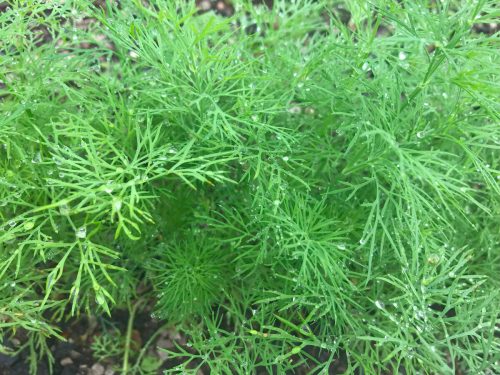
If watering is done only in the evening, then 20 liters of water should be poured for each m² of plantings.
Add 1 tablespoon of 10% ammonia water to the water every four days to protect against pests and as a light nitrogen fertilizer. Avoid using mineral fertilizers so that the greens do not accumulate nitrates.
And it ends with a special agricultural technique
As it turned out, everything is quite simple. The final stage is a special agricultural technique that stimulates dill bushiness. This method was revealed to me by a neighbor.
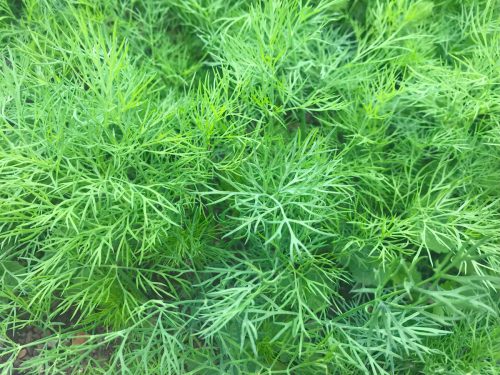
To get lush dill, you need to trim it regularly. Previously, I simply pulled out the overgrown bushes, while my neighbor trimmed them at a height of 10-15 cm. Then she watered the plants with water with ammonia water, and after a couple of weeks, the dill was actively growing again. She used this method several times during the summer, and she always had lush dill.
What kind of dill do you have growing: bushy and lush or tall with beautiful inflorescences?