Several years ago, my husband planted a new apple tree. This year, we were expecting the first apples to appear.

Imagine my disappointment and grief when I discovered an anthill under a tree in the spring. A few days later I noticed the first aphids on the branches.
It’s clear that the ants decided to settle their “cows” right above the newly-made anthill.
If the presence of the anthill itself did not puzzle me much, then I can’t say the same about the aphids on the apple tree.
I decided to clean up the anthill. To get rid of the aphids along with it.
Several years ago I already had experience of fighting an anthill.
Then I bought “Muravyed” granules. I sprinkled them on the anthill and the insects disappeared. I don’t know if they died or moved to another place. But the fact remained a fact, there were no more creatures.
This time I decided to use my neighbor’s method.
Especially since it is completely and utterly safe.
It can even be used in a greenhouse.
I’ll tell you two options at once. Both work. But in one case, the ants simply move to another place.
If you do not have the task of getting rid of the anthill, but only to limit the area of their movement. For example, to prevent ants from getting to the berries.

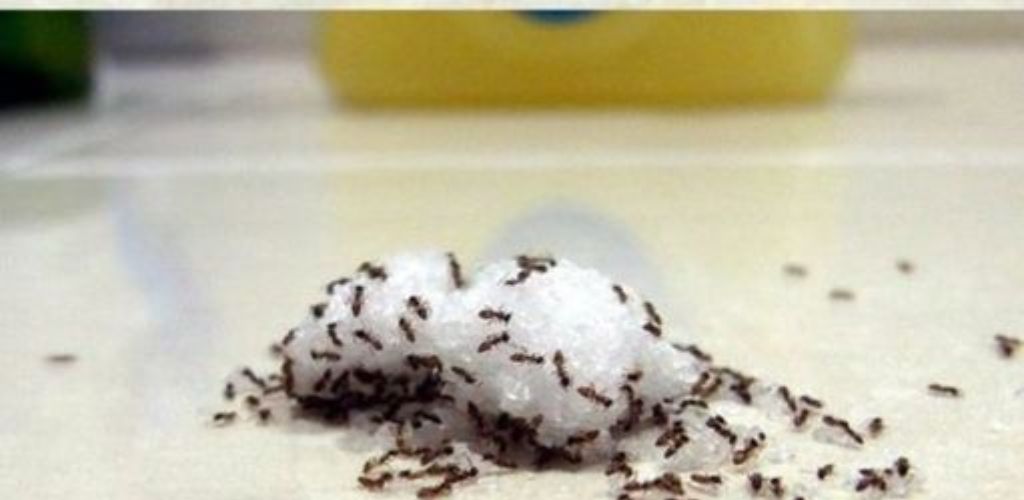
You can use regular baking soda.
We sprinkle soda in front of the berry bushes.
The ants produce acid. In combination with alkali, which is soda, it reacts, as a result of which the insects die.
But keep in mind that the soda will have to be constantly renewed. Alternatively, you can cover the entire anthill with soda. Then the insects will try to find another home.
Last year I removed an anthill from under a plum tree using baking soda.
Another method that does not harm insects, but makes them leave their nesting place is the most common ammonia-anise drops. The most common anise essential oil will do.
The thing is that ants really don’t like the anise scent. And they try to stay as far away from it as possible.
How to proceed in this case. Using a garden trowel, make a small depression right on the site of the anthill. 10-15 centimeters is quite enough.
Apply drops or oil to a cotton pad (piece of cotton wool, cloth). Pour it in generously.
We put a cotton pad in the created depression and sprinkle it with earth. Now all that remains is to watch how the ants quickly begin to leave their home. In a day or two, there will be no trace left of it.