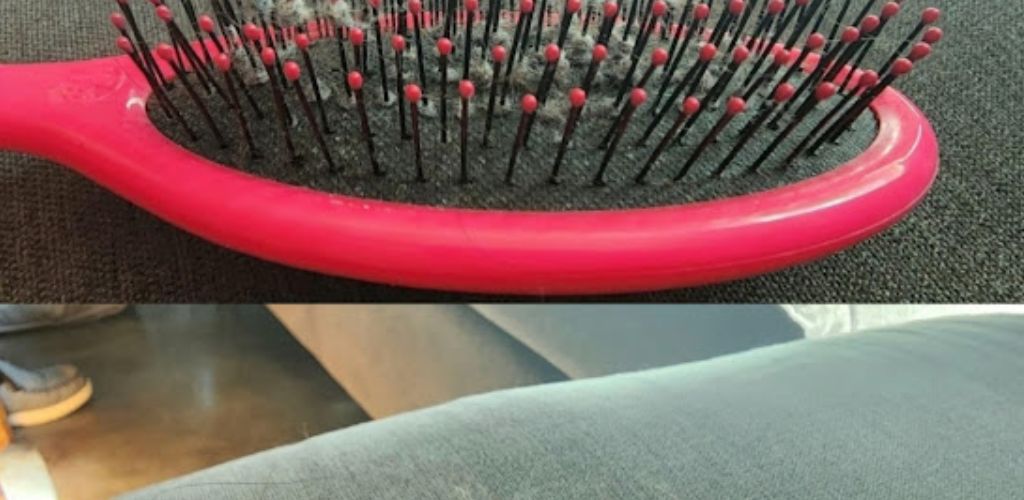
That weird, lint-like gunk clinging to your brush isn’t just hair—it’s a gross cocktail of scalp debris, product buildup, and environmental grime. Here’s what it’s made of (brace yourself) and how to keep your brush—and hair—cleaner.
What Exactly Is That Gray Fuzz?
🧴 Scalp Oil & Skin Flakes – Dead skin cells (dandruff!) + natural oils = sticky “lint.”
💇 Hair Sheds – Strands wrap around bristles, trapping other gunk.
🧼 Product Residue – Dry shampoo, hairspray, serums, and mousse build up over time.
🏡 Dust & Airborne Junk – Floating particles from your bathroom (think: towel fibers, pollen, even makeup fallout).
Result? A disgusting hairbrush biofilm that you’ve probably been re-depositing onto your hair every time you brush. (Shudder.)
How to Clean It Off (For Good!)
Step 1: Remove Hair
- Use a comb, tweezers, or a brush cleaning tool to pull out trapped strands.
Step 2: Soak & Scrub
- Mix 1 tbsp shampoo or dish soap + warm water in a bowl.
- Soak the brush for 10 mins, then scrub with an old toothbrush (focus on bristle bases).
Step 3: Disinfect
- Spray with rubbing alcohol (kills bacteria) or soak in 1:1 vinegar-water for 5 mins.
- Rinse and air-dry bristle-side down.
How to Prevent Future Fuzz Bombs
🚿 Wash Your Brush Weekly – Especially if you use heavy products.
🧴 Clarify Your Hair – Buildup starts on your scalp! Use a clarifying shampoo 1x/week.
💨 Dry Brushes Thoroughly – Moisture = mold risk.
🗑️ Replace Old Brushes – Worn bristles trap more gunk.
Final Thoughts
That gray fuzz is basically a crime scene of everything your scalp sheds—but now you know how to evict it for good. When was the last time YOU cleaned your brush? …Yeah, go do it now. 😷
Pro tip: Clean brushes = healthier hair + less frizz! ✨