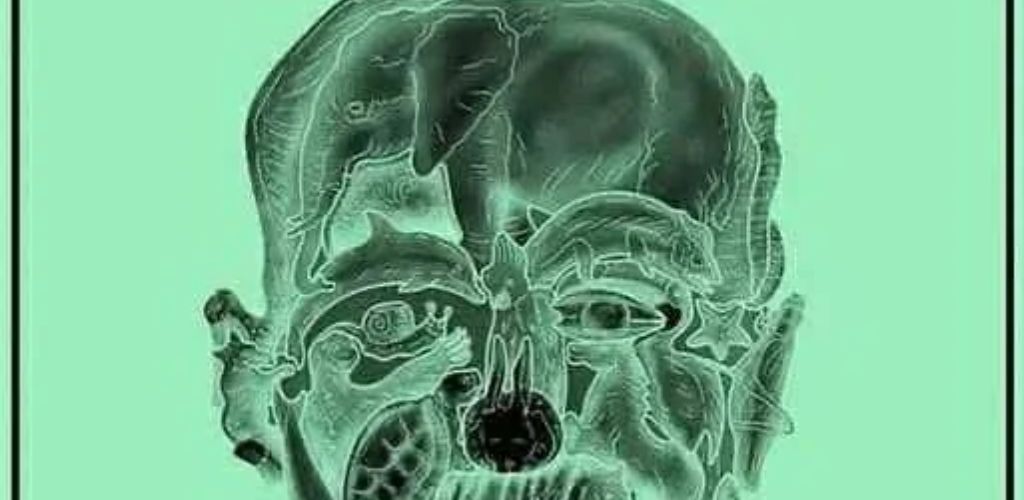
You’ve probably seen those viral optical illusions:
“The first animal you see reveals your personality!”
They’re fun, fascinating — and often go viral in seconds.
But here’s the truth:
👉 Your brain doesn’t reveal your “worst flaw” based on what you see first.
Instead, it reveals something even more interesting:
How your mind processes visual information.
Let’s explore the science behind these illusions — and why what you see first says more about your brain’s shortcuts than your character.
🖼️ The Famous “Rabbit-Duck” Illusion (and Others Like It)
One of the most well-known ambiguous images is the rabbit-duck illusion, first published in 1892.
Depending on how you look at it, you might see:
- A rabbit (ears pointing right)
- Or a duck (bill pointing right)
Other popular versions include:
- Young woman / Old woman
- Candlestick / Two faces
- Vase / Two silhouettes
These are called ambiguous figures — images that can be interpreted in multiple ways.
🧪 What Science Says: It’s About Perception, Not Personality
Psychologists use these images to study:
- Perceptual set – How expectations influence what you see
- Top-down processing – How your brain uses past experiences to interpret visuals
- Cognitive flexibility – The ability to switch between interpretations
🔬 Studies show that what you see first can depend on:
- Time of year (e.g., more people see a rabbit around Easter)
- Your current mood or focus
- Cultural background
✅ It’s not about flaws — it’s about how your brain works.
🔍 Why You Might See One Animal First
| Context | If you just saw a rabbit, you’re more likely to see it again |
| Expectation | If someone says “look for an animal,” you might spot one faster |
| Mood | Happy moods may make you see more playful animals |
| Age | Children often switch between images more easily than adults |
| Creativity | More creative people tend to see multiple interpretations quickly |
🧠 Your brain is not broken — it’s adapting.
✅ What You Can Learn (Without Judgment)
Instead of labeling traits as “flaws,” let’s reframe the conversation:
| You see the rabbit first | Your brain may be primed for novelty or speed |
| You see the duck first | You might process things more deliberately |
| You switch back and forth | High cognitive flexibility — a sign of mental agility |
| You only see one | Your brain is using efficient shortcuts — normal and healthy |
✅ There’s no right or wrong answer — just different ways of seeing.
🌱 A Healthier Way to Understand Yourself
Instead of fear-based quizzes, try these real tools for self-awareness:
- Journaling – Reflect on your thoughts and patterns
- Personality assessments – Like the Big Five or MBTI (used by psychologists)
- Mindfulness – Notice your reactions without judgment
- Therapy or coaching – For deep, lasting growth
💬 True self-improvement isn’t about fixing “flaws.”
It’s about understanding and growing — with kindness.
Final Thoughts
Optical illusions are fun.
They spark curiosity.
They remind us that two people can see the same thing differently — and both be right.
But they don’t reveal your “worst flaw.”
They reveal something better:
The amazing, adaptable, pattern-seeking brain you carry every day.
So next time you see a viral quiz like this…
enjoy it.
Share it.
Laugh at it.
But don’t let it define you.
Because you’re not a flaw.
You’re a work in progress — beautifully human.