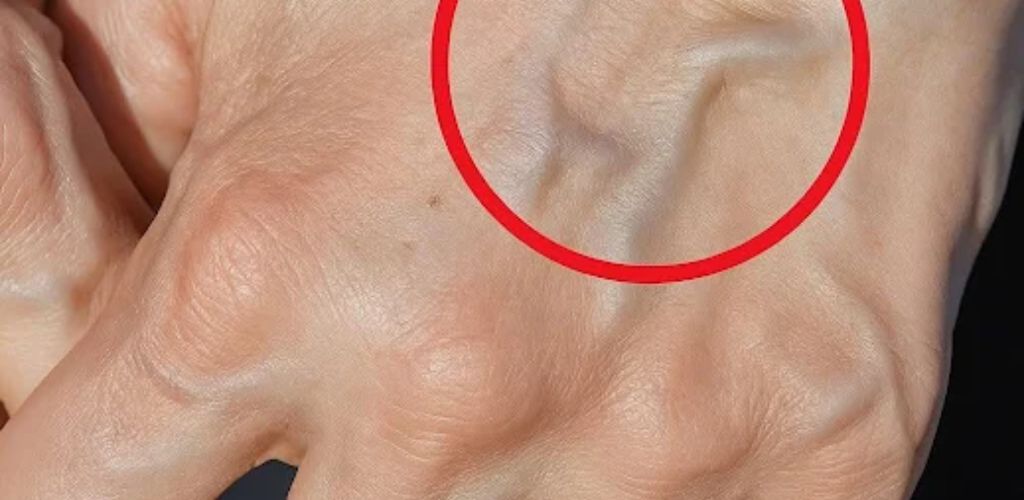
Have you ever looked down and noticed a new, bulging vein on your leg, arm, or foot — one you don’t remember being there before?
You’re not alone.
Veins that seem to “appear out of nowhere” are more common than you think — and in most cases, they’re harmless.
But sometimes, a sudden change in your veins can be a signal from your body — one worth paying attention to.
Let’s explore the real reasons veins become visible, when it’s normal, and when to see a doctor — so you can respond with awareness, not anxiety.
🧠 Why Do Veins Suddenly Become Visible?
Veins are always there — but they can become more noticeable due to natural changes in your body. Here’s why:
✅ Common & Harmless Causes
| Aging | Skin thins and loses elasticity, making veins more visible — especially on hands and arms |
| Low body fat | Less fat under the skin = more visible veins — common in athletes or lean individuals |
| Exercise & heat | Increased blood flow causes temporary dilation and bulging |
| Hormonal changes | Pregnancy, menopause, or birth control can affect circulation and vein appearance |
| Genetics | Some people naturally have more visible veins — it runs in families |
💡 Think of it like a garden hose under a thin sheet — the less coverage, the more you see.
🩺 When a New Vein Might Be a Warning Sign
While most new veins are normal, certain changes can signal underlying circulatory issues — especially if accompanied by other symptoms.
🚩 Red Flags to Watch For
| Pain, aching, or heavinessin the legs | Varicose veins or chronic venous insufficiency |
| Swelling in one leg(not both) | Deep vein thrombosis (DVT) — a medical emergency |
| Redness, warmth, or tendernessalong a vein | Superficial thrombophlebitis (inflammation with clot) |
| Skin changes(darkening, hardening, ulcers) | Advanced venous disease |
| Sudden bulging after injury | Possible trauma to a vein or blood vessel |
✅ If you have pain, swelling, or skin changes, see a vascular specialist or doctor.
🔍 Common Types of “New” Veins
1. Spider Veins
- Tiny, web-like red or blue veins on legs or face
- Caused by sun exposure, hormones, or genetics
- Harmless — mostly a cosmetic concern
2. Varicose Veins
- Large, twisted, bulging veins — usually on legs
- Can cause aching, swelling, or restless legs
- Caused by weak vein valves and poor circulation
✅ Treatable with compression, lifestyle changes, or medical procedures.
3. Reticular Veins
- Blue-green veins under the skin — often feed spider veins
- Not painful, but may indicate early vein weakness
4. Hand Veins
- Prominent veins on the back of hands — common with age or muscle gain
- Usually normal — not a health risk
✅ What You Can Do to Support Healthy Veins
| Stay active | Walking, cycling, or leg exercises improve circulation |
| Avoid long periods of sitting or standing | Take breaks to stretch and move |
| Elevate your legs | Helps blood flow back to the heart |
| Wear compression socks (if recommended) | Supports vein function in legs |
| Stay hydrated | Keeps blood volume optimal and veins flexible |
| Protect your skin | Use sunscreen to prevent thinning and fragility |
🍎 A heart-healthy diet (low salt, rich in fiber and antioxidants) also supports circulation.
❌ What NOT to Do
🚫 Don’t panic over a new vein — most are normal signs of aging, fitness, or genetics
🚫 Don’t try DIY vein treatments — no creams or home remedies can safely “remove” veins
🚫 Don’t ignore leg pain or swelling — vascular issues can worsen without care
❗ Never self-diagnose or delay medical care for concerning symptoms.
💉 When Medical Treatment May Be Needed
Some people seek treatment for cosmetic reasons or discomfort. Safe, doctor-supervised options include:
| Sclerotherapy | Spider veins and small varicose veins — involves injecting a solution to close the vein |
| Laser therapy | Surface-level veins — uses light to collapse the vessel |
| Endovenous ablation | Larger varicose veins — uses heat to seal the vein shut |
| Compression therapy | Managing swelling and preventing progression |
🩺 Always consult a board-certified dermatologist or vascular specialist — not a spa or clinic offering “quick fixes.”
Final Thoughts
Seeing a new vein doesn’t mean something’s wrong.
In most cases, it’s just your body doing what bodies do:
- Aging
- Responding to exercise
- Showing your unique genetics
But your veins also deserve care — especially if you have pain, swelling, or skin changes.
So stay informed.
Stay active.
And if you’re ever unsure?
👉 Talk to a doctor.
Because true health isn’t about hiding your veins —
it’s about supporting your body with knowledge, not fear.