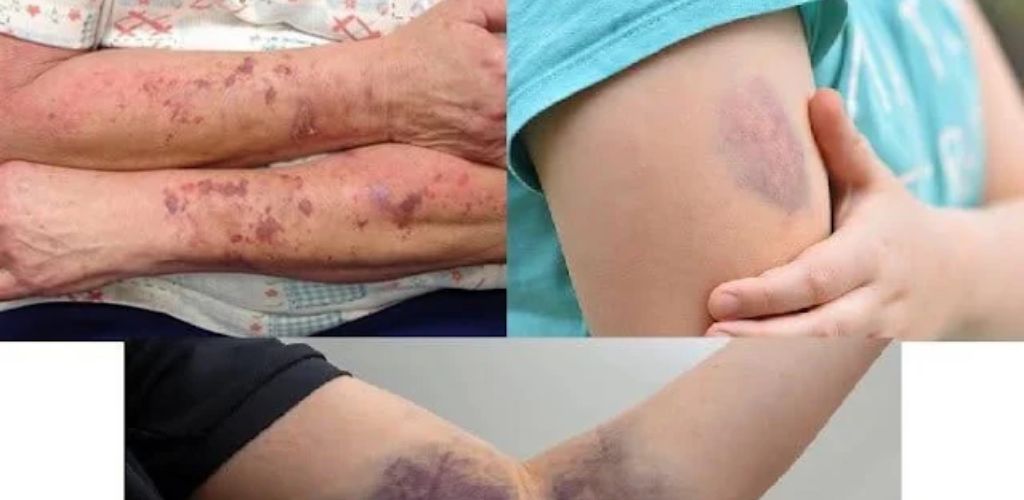
Have you noticed bruises appearing on your arms, legs, or torso — with no memory of bumping into anything?
You’re not alone.
Many people experience unexplained bruising, especially as they age. While most cases are harmless, sometimes they can be a clue to an underlying health issue.
Let’s explore the common causes of easy bruising, when it might be a sign of something more serious, and when it’s time to talk to your doctor — so you can respond with awareness, not fear.
🧠 Why Do Bruises Form?
A bruise (or contusion) happens when small blood vessels under the skin break and leak blood into surrounding tissue.
Common causes:
- Bumping into furniture (and not remembering)
- Thin or aging skin
- Certain medications
- Vitamin deficiencies
✅ Most bruises are not a cause for concern.
✅ Common & Harmless Causes of Easy Bruising
| Aging skin | Skin and blood vessels become more fragile over time |
| Sun damage | Weakens collagen in the skin, making it easier to bruise |
| Medications | Blood thinners, aspirin, corticosteroids, and NSAIDs can increase bruising |
| Supplements | Fish oil, vitamin E, and ginkgo biloba may affect blood clotting |
| Exercise | Micro-tears in capillaries from weightlifting or intense workouts |
✅ These types of bruising are normal — especially on arms and legs.
⚠️ When Bruising Could Signal a Health Issue
While rare, unexplained bruising with other symptoms could indicate an underlying condition.
1. Low Platelet Count (Thrombocytopenia)
- Platelets help blood clot
- Low levels can lead to easy bruising, nosebleeds, or bleeding gums
- Causes: autoimmune disorders, infections, or certain medications
2. Vitamin Deficiencies
- Vitamin C deficiency (scurvy) – Weakens blood vessels
- Vitamin K deficiency – Needed for clotting
- More common in people with poor nutrition or malabsorption issues
3. Bleeding Disorders
- Conditions like von Willebrand disease or hemophilia (even mild forms)
- Often diagnosed in childhood, but mild cases may go unnoticed
4. Liver Disease
- The liver produces clotting factors
- Cirrhosis or hepatitis can impair blood clotting
- Often accompanied by jaundice, fatigue, or abdominal swelling
5. Autoimmune Diseases or Cancer (Rare)
- Conditions like leukemia or lupus can affect blood cells
- But bruising alone is not a diagnosis — always look at the full picture
🚫 Never self-diagnose. These conditions come with multiple symptoms, not just bruising.
🚩 When to See a Doctor
Seek medical advice if you have:
- Bruises that are large, frequent, or in unusual places (back, abdomen)
- No known cause and no recent injury
- Bleeding gums, nosebleeds, or heavy periods
- Family history of bleeding disorders
- Starting a new medication or supplement
🩺 A simple blood test can check platelets, clotting factors, and liver function.
✅ How to Reduce Bruising
| Eat a balanced diet | Rich invitamin C, K, and bioflavonoids(citrus, leafy greens, berries) |
| Protect your skin | Wear long sleeves or padding if prone to bumps |
| Review medications | Talk to your doctor about drugs that increase bruising |
| Avoid excessive sun | Protects skin from thinning and damage |
| Stay hydrated | Supports skin and blood vessel health |
Final Thoughts
Finding a random bruise doesn’t mean something’s wrong.
Most of the time, it’s just life, aging, or a forgotten bump.
But if bruising is frequent, severe, or paired with other symptoms — it’s okay to ask questions.
Because true health isn’t about fear.
It’s about understanding your body, knowing the signs, and seeking care when needed.
And that kind of awareness?
It’s always worth having.