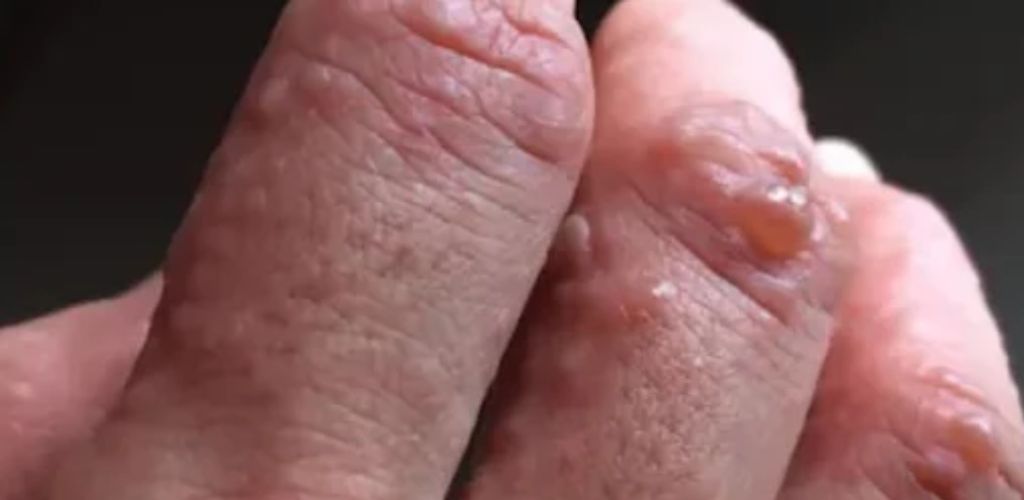
Have you noticed tiny red spots on your arms — or on your legs, chest, or back?
They might be so small you almost miss them.
No pain. No itch.
Just pinpoint red dots that seem to appear out of nowhere.
Before you panic, take a breath.
These spots — often called petechiae or cherry angiomas — are common and usually harmless.
But in some cases, they can be a clue to an underlying condition — especially if they’re new, spreading, or accompanied by other symptoms.
Let’s explore what small red spots on your skin really mean, when to pay attention, and when to talk to your doctor — so you can respond with awareness, not fear.
🔍 What Are Those Tiny Red Spots?
There are several common causes of small red spots on the skin. Here are the most likely:
1. Cherry Angiomas (Most Common)
- What they are: Tiny, bright red or purple bumps caused by clusters of blood vessels
- Appearance: Round, dome-shaped, 1–5 mm in size
- Where they appear: Arms, torso, shoulders
- ✅ Harmless — more common with age (over 30)
- ❌ Not contagious or dangerous
📊 Affects up to 75% of adults — completely normal.
2. Petechiae (Worth Noticing)
- What they are: Tiny red, purple, or brown spots caused by broken capillaries under the skin
- Appearance: Flat, pinprick-sized, don’t blanch (turn white) when pressed
- Causes:
- Straining (coughing, vomiting)
- Injury or pressure
- Certain medications (like blood thinners)
- Infections (rarely, like strep or viral illnesses)
- Low platelet count (thrombocytopenia)
⚠️ When to be concerned: If they spread, don’t fade, or appear with fever, fatigue, or bruising
3. Heat Rash or Friction
- Small red bumps from sweat trapped in pores
- Common in hot, humid weather
- Often itchy or irritated
- Goes away on its own
✅ Common on arms and underarms.
4. Allergic Reaction or Irritation
- From soaps, lotions, fabrics, or insect bites
- May be itchy or raised
- Usually resolves once the irritant is removed
✅ Often appears in clusters or patches.
🚩 When to See a Doctor
While most red spots are harmless, see a healthcare provider if you have:
| 🔺 Spots thatmultiply quickly | Possible blood or immune issue |
| 🔺No known causeand no improvement | May need evaluation |
| 🔺Bleeding, oozing, or changing shape | Could be a skin lesion needing biopsy |
| 🔺 Accompanied byfever, fatigue, or unexplained bruising | May indicate infection or low platelets |
| 🔺 Appear after starting anew medication | Could be a side effect |
🩺 A dermatologist or primary care doctor can examine the spots and determine if testing (like a blood panel) is needed.
✅ What You Can Do at Home
For harmless red spots:
- Avoid scratching or picking
- Use gentle skincare products
- Keep skin moisturized
- Protect from sun exposure (UV can worsen some spots)
- Monitor changes — take a photo monthly to track
📸 Use your phone to document size, color, and spread.
❌ Debunking the Myths
| ❌ “Red spots always mean cancer” | No — cherry angiomas are benign |
| ❌ “Petechiae = leukemia” | Rare — most cases have benign causes |
| ❌ “They’re contagious” | No — unless caused by an infectious rash |
| ❌ “You must remove them” | Only if they bleed, change, or bother you cosmetically |
Final Thoughts
Small red spots on your arm are usually nothing to worry about — especially if they’re stable, painless, and not spreading.
But your skin can be a window to your health.
So if you notice new, sudden, or unusual changes — especially with other symptoms — don’t ignore them.
Because true health isn’t about fear.
It’s about paying attention, asking questions, and knowing when to seek help.
And sometimes, that starts with a tiny red dot.