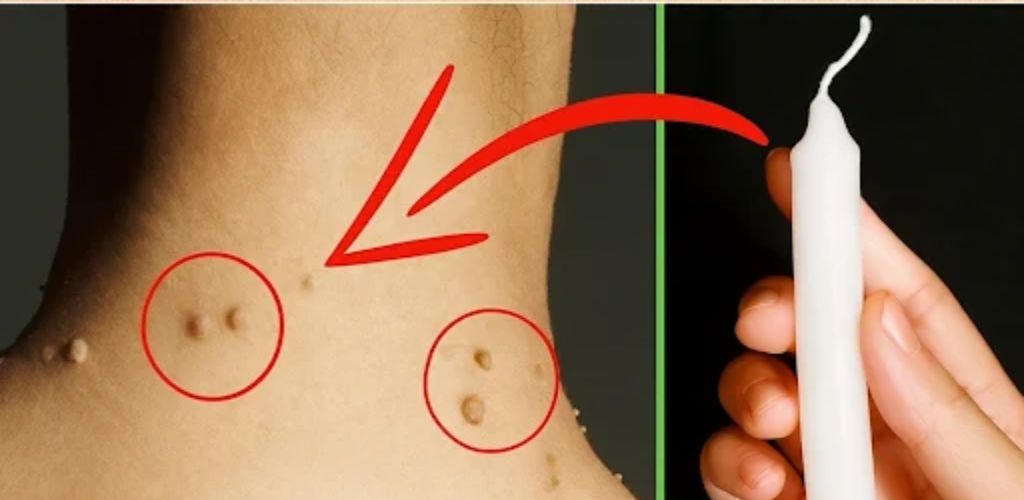
Have you noticed small, soft skin growths on your neck, underarms, eyelids, or groin?
You’re not alone.
Skin tags (medically called acrochordons) are one of the most common benign skin growths — affecting up to 60% of adults, especially after age 40.
They’re:
- ✅ Harmless — not cancerous or contagious
- ✅ Painless — unless irritated by clothing or jewelry
- ✅ Common in skin folds — where friction occurs
While they don’t require treatment, many people choose to remove them for cosmetic reasons or comfort.
Let’s explore the safe, effective ways to remove skin tags — and why you should avoid dangerous DIY methods like candle wax, nail polish, or string.
🧠 What Causes Skin Tags?
Skin tags form when clusters of collagen and blood vessels get trapped in thicker skin folds.
Risk Factors:
| Age | More common after 40 |
| Friction | From clothing, jewelry, or skin rubbing |
| Genetics | Run in families |
| Insulin resistance | Linked to prediabetes and metabolic syndrome |
| Pregnancy | Hormonal changes and weight gain increase risk |
✅ They’re not caused by poor hygiene.
✅ Safe & Proven Removal Methods
1. Ligation (Tying Off)
- A doctor ties a tiny thread or suture around the base of the tag
- Cuts off blood supply — the tag falls off in 5–7 days
- Quick, low-risk, and office-based
✅ One of the safest at-professional methods.
2. Cryotherapy (Freezing)
- Liquid nitrogen is applied to freeze the tag
- The tag darkens and falls off in 1–2 weeks
- May require 1–2 treatments
✅ Available at dermatology clinics and some urgent care centers.
3. Excision (Cutting)
- A doctor numbs the area and snips off the tag with sterile scissors
- Immediate results
- Minimal bleeding when done properly
✅ Best for larger or bothersome tags.
4. Electrocautery (Burning)
- Uses a small electric current to burn off the tag
- Done under local anesthesia
- Leaves minimal scarring when performed by a pro
✅ Often used for multiple tags.
🚫 Dangerous DIY Methods to Avoid
| ❌Candle wax | Causesburns, blisters, and scarring |
| ❌Nail polish remover or essential oils | Can irritate or damage skin — no proven effect |
| ❌Cutting with scissors or nail clippers | Risk ofinfection, bleeding, and scarring |
| ❌String or dental floss (at home) | Can lead toinfection or incomplete removal |
| ❌Apple cider vinegar (long-term use) | Can cause chemical burns — limited evidence |
⚠️ The skin around your neck, eyes, and armpits is thin and sensitive — not a place for risky experiments.
🛒 Over-the-Counter Options (Use with Caution)
Some FDA-cleared kits use cryotherapy (freezing) at home:
- Compound W Freeze Off
- Wartner Wart & Skin Tag Remover
✅ These use propane or dimethyl ether to freeze the tag
✅ Safer than fire or chemicals — but still carry risk of blistering
✅ Follow instructions carefully
❌ Not for use on the face or genitals without doctor approval.
🚨 When to See a Dermatologist
See a professional if:
- The growth is dark, bleeding, or painful
- It grows quickly
- You’re unsure if it’s a skin tag (could be a mole, wart, or skin cancer)
- It’s in a sensitive area (eyelid, genitals)
🔍 A dermatologist can remove it safely and confirm it’s benign.
Final Thoughts
Skin tags are common, harmless, and usually just a cosmetic concern.
But your skin deserves safe, respectful care — not risky home hacks that could leave scars or cause infections.
While the idea of removing a skin tag with a candle might sound simple, it’s not safe or effective.
Instead, choose a proven method — whether it’s a professional procedure or an FDA-cleared OTC freezing kit.
Because true beauty isn’t about quick fixes.
It’s about taking care of yourself — the smart, safe way.