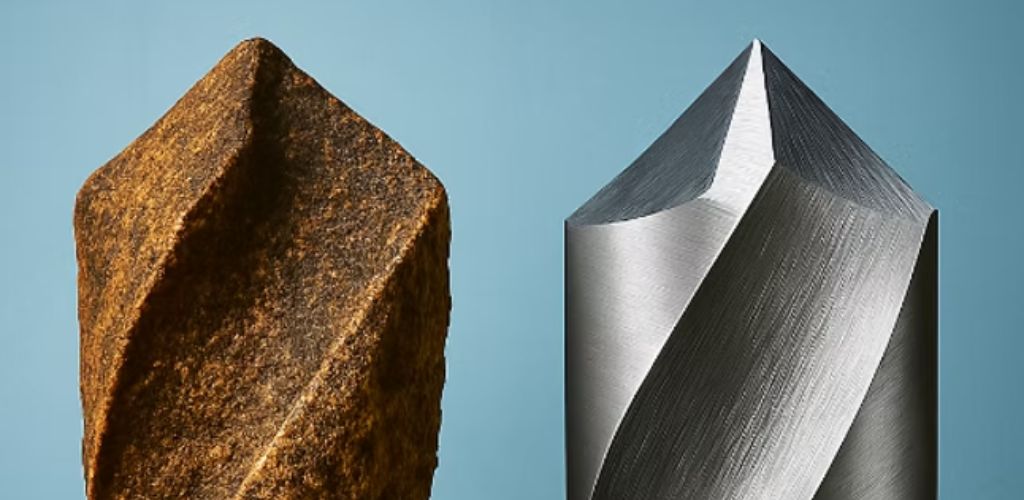
This image shows four real drill bits, each with a different point angle, which determines their performance when drilling different materials. The angles are noted directly on the image for easy visual comparison.
🔍 What is the toe angle?
The point angle (also called the sharpening angle or front cutting angle) is the angle formed between the two main cutting edges of the drill bit. This angle influences:
- The initial penetration into the material.
- Heat dissipation.
- The precision of the hole.
- The resistance of the edge.
📐 Drill bits shown in the image
| Drill Type | Point Angle | Main Application | Technical Advantages |
| Standard drill bit | 118° | Soft materials (wood, aluminum) | Fast cutting, lower initial effort |
| Drill bit for steel | 135° | Steels, hard metals | Less wear, better chip evacuation |
| Drill bit for plastics | 82° | Acrylics, PVC, fragile materials | Prevents cracking, more controlled cutting |
| Multipurpose drill | 130° | General use in workshops | Good balance between penetration and durability |
⚙️ Additional technical considerations
- Angle of incidence: Not visible in this image, but essential to avoid excessive friction. It is usually between 8° and 15°.
- Helix angle: Varies depending on the drill type; affects chip evacuation.
- Drill Bit Material: All shown are high speed steel (HSS), but may have coatings such as black oxide, titanium, or cobalt.
📌 Practical application
This image can be used for:
- Technical training in workshops or schools.
- Appropriate selection of drill bits according to the material.
- Quick visual comparison to avoid sharpening errors.
- Design of educational worksheets with annotations in Spanish and local context.