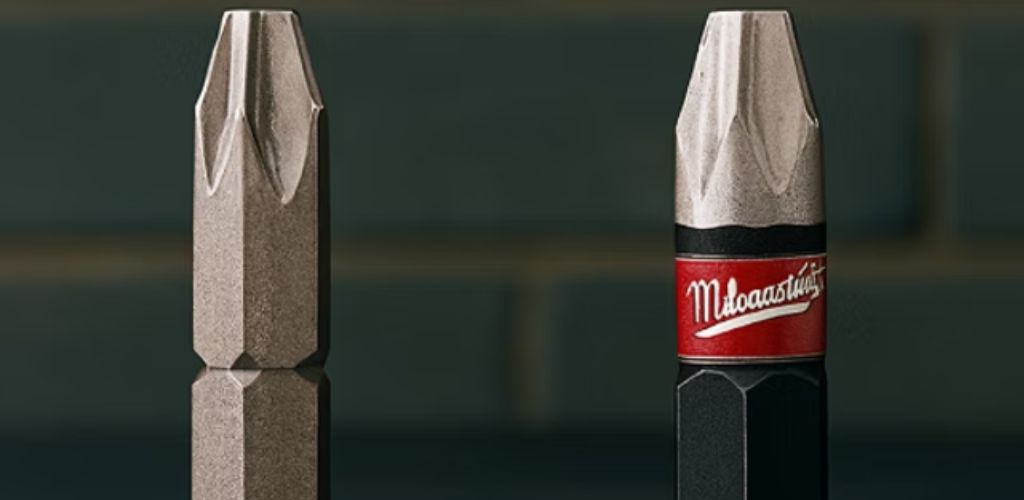
1️⃣ Material and Heat Treatment
American-made bits often use S2 tool steel alloyed with silicon, designed to withstand high torque and repeated impact. Their heat treatment is carefully controlled, achieving hardness levels of 58–60 HRC while maintaining toughness. Strict quality control ensures less variation between production batches, resulting in consistent performance.
Chinese-made bits vary widely. Some manufacturers also use quality S2 steel, while others rely on cheaper materials like chrome-vanadium (Cr-V) or even basic carbon steels. Heat treatment can be excellent in reputable brands, but in generic low-cost production the control is weaker, leading to inconsistent hardness and reliability.
💡 Technical insight: The country of origin does not determine performance—the key factor is the actual steel specification and the manufacturer’s quality control standards.
2️⃣ Tip Geometry
The geometry of the tip plays a crucial role in how well torque is transferred. A well-engineered bit fits the screw head perfectly, minimizing “cam-out” (slipping out of the slot). Premium brands—whether American or high-end Chinese—invest in precise grinding and advanced designs, such as ribbed tips, optimized flutes, and improved Torx profiles.
On the other hand, cheap generic bits often suffer from loose tolerances, causing faster wear not only on the bit but also on the screw head itself. For professionals or anyone who drives hundreds of screws, precision tip geometry is essential.
3️⃣ Service Life and Real Cost
Independent tests, such as those from Pro Tool Reviews, compared how many screws different bits could install before failing. Some high-end U.S.-made bits lasted 300–400 screws per bit, proving their durability. However, budget-friendly Chinese bits sometimes offered a better cost-per-screw ratio, even if they wore out faster.
📊 Example results:
- Bosch Ribbed (USA) → ~375 screws per bit → excellent durability.
- Kobalt (China) → ~286 screws per bit → lower cost but surprisingly efficient per screw.
This shows that higher durability does not always equal better overall value, especially for casual or medium-duty use.
4️⃣ Buying Factors to Consider
- Occasional use / DIY: A large economical pack is the best choice. It’s better to have multiple bits on hand than a single expensive one.
- Professional / high-demand use: Invest in S2 steel with optimized geometry, and if you use impact drivers, look for premium “impact-rated” bits tested for toughness.
- Critical applications: Always check technical specifications, including hardness rating and torque resistance. Don’t rely only on the country of origin—some Chinese-made bits with strict quality controls match or exceed many U.S.-made options.
Whether you’re a DIY enthusiast or a professional tradesperson, choosing the right screwdriver bits comes down to material, geometry, and testing—not the flag on the box. Some Chinese brands deliver outstanding results when manufactured with proper standards, while premium American brands remain reliable for heavy-duty tasks.
👉 If you found this guide helpful, don’t forget to subscribe, hit the like button, and share it with others who want to choose the best tools for their workshop! 🔧🪛