What Your Tongue Can Tell You About Your Health: 5 Symptoms
It lies quietly in the mouth, and yet we often forget about it.
But did you know that your tongue can reveal a lot about what’s going on in your body? A strange color, an unusual texture, a burning sensation… These little signs can be silent messengers of imbalances your body is trying to communicate. Intrigued? Here are five common tongue symptoms that deserve a quick peek in your bathroom mirror…
## White coating on your tongue? It could be excess yeast.
A white coating on your tongue, a slightly odd taste, and **bad** breath… This could indicate a fungal imbalance, often associated with the natural proliferation of yeast in the mouth. **Why does this happen?** When our mouths become too favorable an environment – **poor oral hygiene**, recent antibiotic use, weakened immunity, or even just dry mouth – these yeasts take the opportunity and make themselves comfortable. **What to do:**
* Gently brush your tongue twice a day.
* Rinse your mouth with **salt water or baking soda solution**.
* Avoid **sugary or fermented foods**, which feed the yeast.
* Remember yogurts or **fermented drinks rich in probiotics**!
If, despite all this, the plaque persists or thickens, a visit to the **oral surgeon** is necessary.
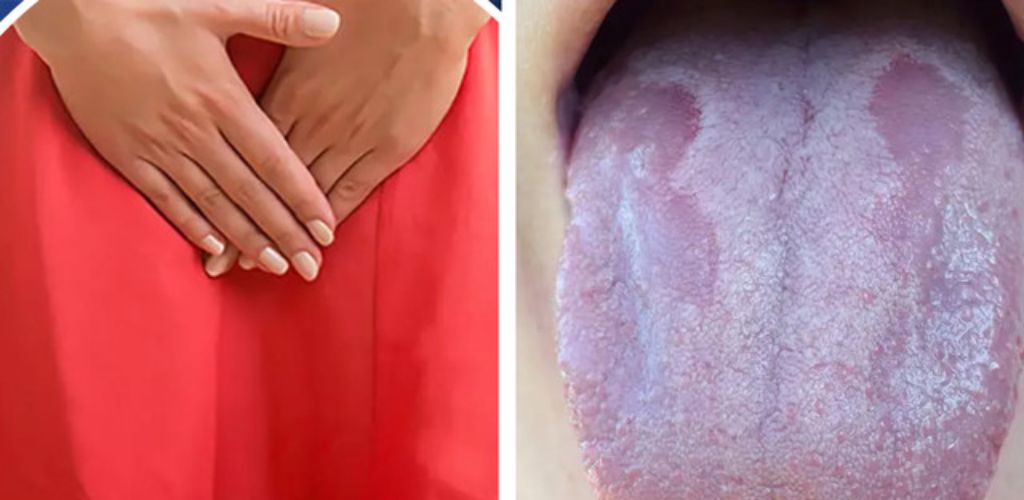
## Persistent white coating on the tongue? What if it’s also related to vaginal mycosis?
It’s not always obvious, but fungal infections aren’t limited to just one area of the body. **A white coating on the tongue**, accompanied by tingling, burning, or a metallic taste, can sometimes be combined with **vaginal candidiasis**. The culprit in both cases? **Candida albicans** is a yeast fungus naturally present in our bodies that can overgrow when imbalanced. **Why can both areas be affected at the same time?** Because it’s often a general imbalance of flora (digestive, oral, vaginal): taking antibiotics, prolonged stress, a diet that’s too sweet, or a weakened immune system can create a breeding ground for fungus in several places at once. **What to do:**
* Watch for the simultaneous appearance of oral and genital signs (itching, white discharge, redness).
* Balance your diet: less fast sugars, more fiber and probiotics.
* Seek medical advice: topical or systemic antifungal treatment may be necessary.
* And most importantly: do not self-medicate without consultation, as some fungal infections can mask other, more serious conditions.
## Red and smooth tongue: vitamin deficiency?
A red, shiny, almost “bald” tongue… This is a signal that may indicate a deficiency, in particular of vitamins B12, B9, or iron. These nutrients are essential for the vital activity of our cells and the proper functioning of our nerves. **Common culprits?** An unbalanced diet, certain digestive disorders, or **regular alcohol consumption** may be the cause. **Our vitamin tips:**
* Load up on **spinach, lentils, red meat, and seafood**.
*Eggs, cheese, and **fortified cereals** may also help.
*Consider consulting before taking **dietary supplements**.
And if you also feel tired, dizzy, or tingling, it’s best not to delay a visit to the doctor.
## Cracked tongue: a small canyon in your mouth?
Have you noticed small, crack-like grooves on your tongue? It’s often harmless and… quite common! It’s called fissured tongue, and it’s sometimes hereditary or associated with certain dermatological conditions. What does it look like? More or less deep grooves, visible to the naked eye. They’re often painless, but can sting a little if food particles get stuck in the cracks. What to do daily: *
Gently brush your tongue with a soft toothbrush.
* Drink enough water.
* Avoid very spicy or acidic foods if you feel discomfort.
Don’t worry unless pain or infection develops.
## Crimson tongue? Circulation issue!
A dark, almost blueish tint on your tongue? Sometimes it can indicate a minor circulation problem or a vitamin B2 deficiency. And sometimes… it’s just a **colored candy** left its mark! **What to look for if it’s persistent:**
* **Poor blood oxygenation**, especially in cold weather or with respiratory problems.
* A mild riboflavin (B2) deficiency, often overlooked.
**How to Fix It Naturally:**
* **Stay well protected in cold weather**.
* Engage in **moderate** physical activity to “jump-start” your system.
* Add eggs, **green leafy vegetables**, and dairy products to your diet.
If other signs develop, such as shortness of breath or unexplained fatigue, consult a doctor immediately.
It lies quietly in the mouth, and yet we often forget about it.