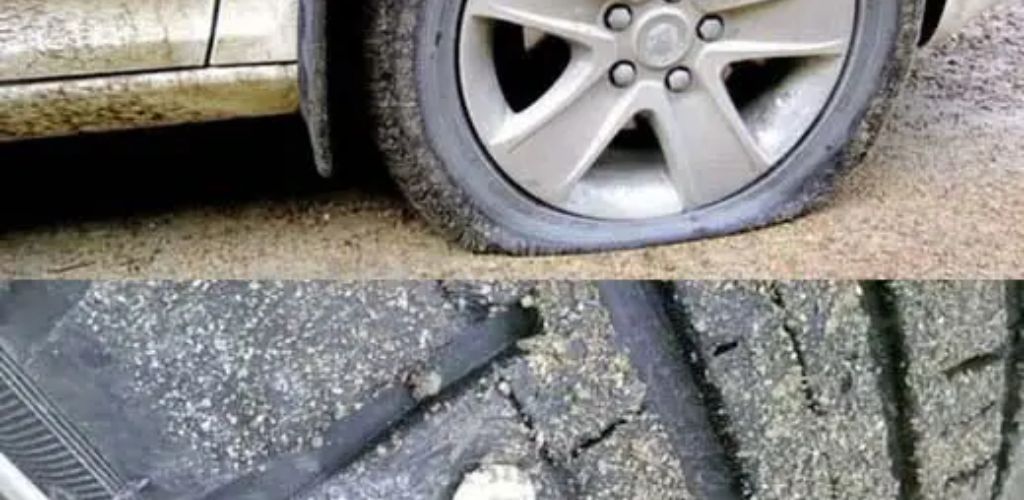
Imagine: you’re setting off for a busy day, music blasting in the car… and suddenly, that little thud. A flat tire! Without a spare, stress quickly mounts. But should you really call for help immediately? Or are there simple, quick, and accessible solutions to get back on the road without turning into a seasoned mechanic?
Mistakes to avoid
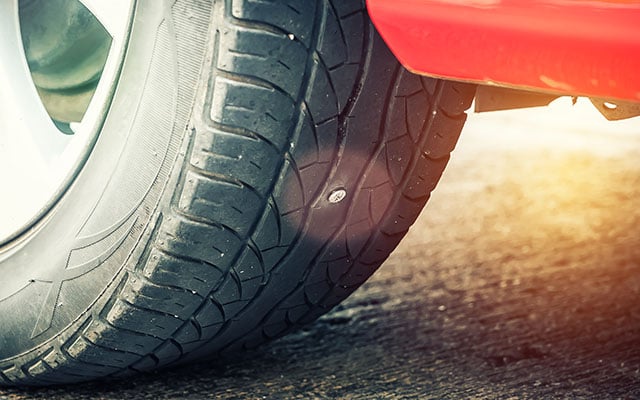
A common first reaction: continue driving slowly until the next repair shop. Bad habit! A flat tire weakens the rim and risks costing much more than expected. Another common pitfall: improvising with whatever you have at hand without knowing what you’re doing. Not only can this worsen the damage, but it’s also a waste of time. The good news? There are practical alternatives, designed specifically for these unforeseen situations.
The repair kit: the ally of modern tires
Today, most cars are equipped with tubeless tires, designed to be repaired quickly using specialized kits. These small kits, available at auto centers or online, take up almost no space in the trunk and can repair a problem in just a few minutes.
What do they contain?
- A strong needle and reinforced rubber wicks to plug the hole.
- A special glue that ensures waterproofing.
- And often, a mini-compressor or an air cartridge to reinflate the tire.
In practice, it’s almost as simple as a video tutorial: locate the object responsible (nail, screw, etc.), prepare the area, insert the glue-soaked wick with the needle, and then re-inflate. Result: in 15 to 20 minutes, you’re off again. Of course, you’ll have to go to the garage afterwards, but you’ll have saved time and avoided waiting for a tow truck.
The quick troubleshooting tip without a kit
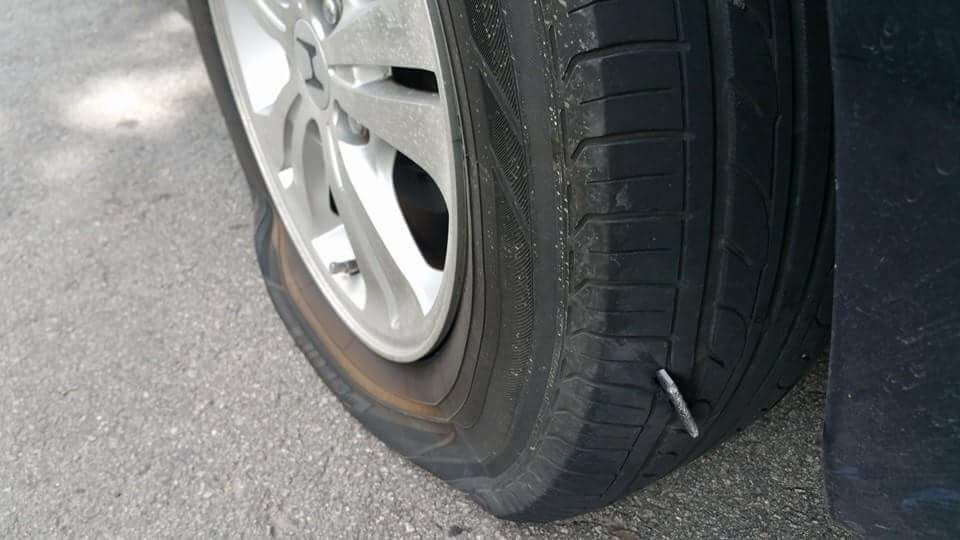
Don’t have a kit on hand? Don’t panic. A little makeshift trick can help you out: use… a screw! Yes, a simple screw slightly larger than the hole can slow down the air leak.
All you need to do is:
- Locate the puncture point.
- Screw in a screw to block the air.
- If necessary, take one from a secondary part of the car, such as the plastic sill of a door.
This solution isn’t ideal, but it may be enough to drive a few kilometers and reach a workshop safely. It’s a bit like a temporary band-aid while you wait for the real repair.
Focus on prevention to drive with peace of mind
As always, it is best to plan ahead:
- Stash a repair kit and a portable compressor in your trunk. They cost much less than a tow truck and take up little more space than a small bag.
- Inspect your tires from time to time. Small stones or stuck objects can signal an impending flat.
- Also consider the puncture repair spray: quick, easy to use, it seals small punctures very quickly.
These little habits can help you avoid a lot of worries and allow you to travel or simply go to work with peace of mind.