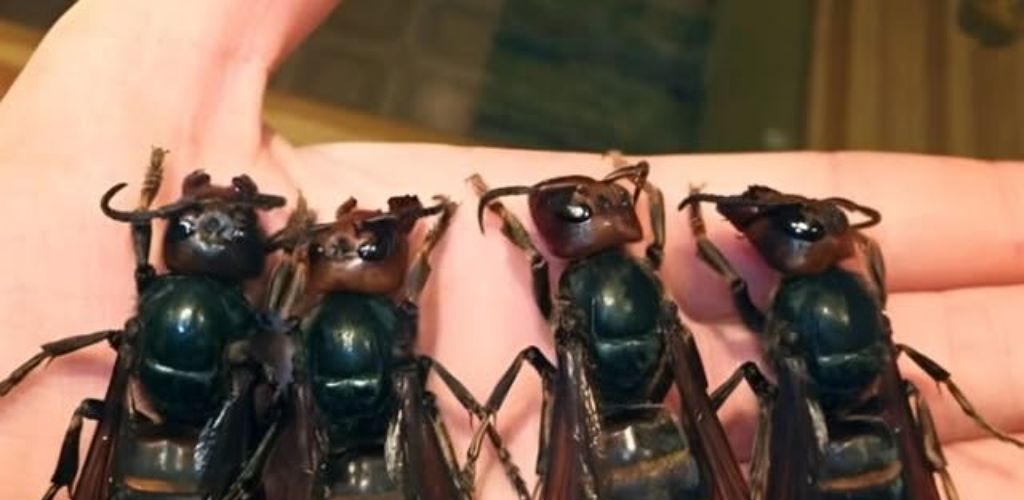
Since 2019, the United States has been facing the presence of an extremely dangerous invasive species: Vespa mandarinia, popularly known as the “killer hornet.” Originally from Asia, this impressively large insect – which can reach 4.4 cm in length – was first detected in Washington state, raising concerns among local authorities and communities.
Danger to bees and humans
This wasp is considered the largest and one of the most aggressive wasp species in the world. Among its most alarming features is its ability to decapitate thousands of bees in a very short time, using its powerful mandibles. Bee colonies are thus completely destroyed, and the brood is often used as food for the invasive wasp larvae.
The presence of these insects endangers not only bee populations – essential for plant pollination – but also public health. The potent venom released when they sting can cause severe reactions. Although human deaths are rare, the risk remains high, especially in the case of multiple stings.
Measures taken by authorities
The last appearance of such a wasp was confirmed in August 2021, near the city of Blaine, Washington, just a few kilometers from the site of the first discovery. In response, the Washington State Department of Agriculture (WSDA) has intensified monitoring efforts.
Special traps have been set up, and entomologists are tracking the capture, marking, and controlled release of specimens to locate nests. Due to the proximity to the Canadian border, measures have also been taken on the Canadian side to prevent the insect from spreading abroad.
A fight for ecosystem balance
The emergence and spread of the killer wasp is a wake-up call about the vulnerability of ecosystems to invasive species. Combating this threat is essential not only to protect bees and agriculture, but also to maintain the safety of human communities.
Careful monitoring, international collaboration, and public awareness remain key elements in the effort to limit the impact of this destructive insect.